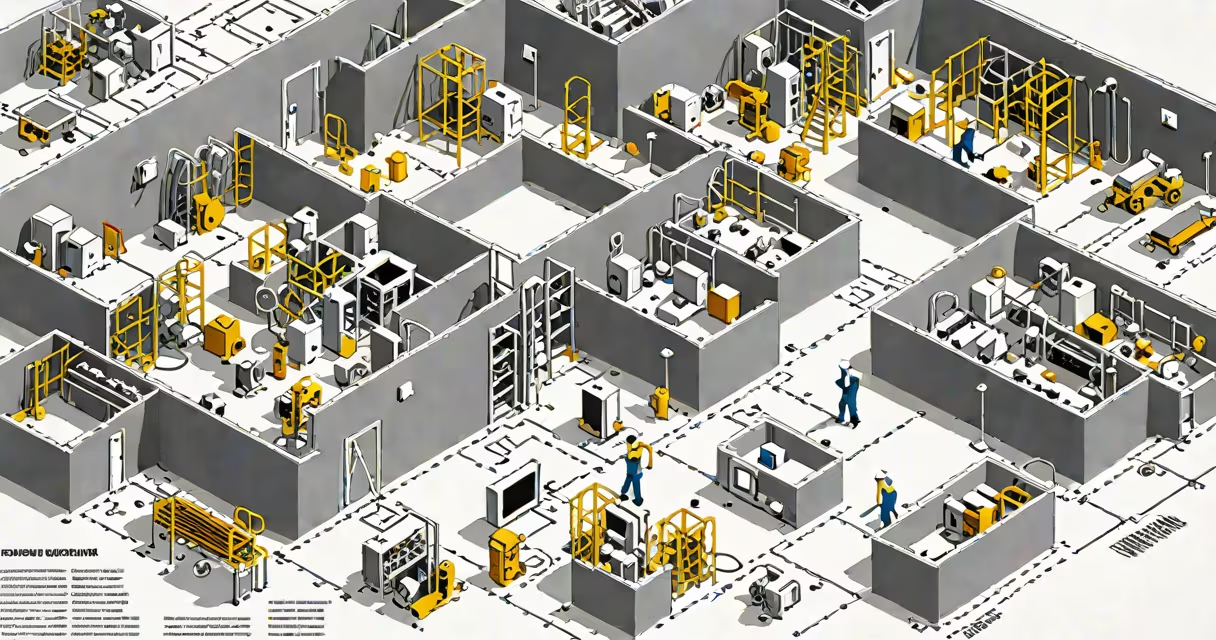
A computer aided facility management system (CAFM) is a software platform that integrates data on buildings, equipment, space usage, and maintenance activities into a single digital environment to improve operational efficiency and decision-making.
CAFM systems centralize information about physical infrastructure, enabling teams to track assets, schedule repairs, manage space allocation, and monitor energy use. They serve as a digital twin of a facility's physical components, linking real-world conditions to digital records. For example, a hospital using a CAFM system can instantly locate a malfunctioning MRI machine, view its service history, and dispatch a technician based on proximity and availability.
These systems evolved from basic spreadsheets and paper logs used in the 1980s. Today's CAFM platforms integrate with building automation systems (BAS), enterprise resource planning (ERP) tools, and Internet of Things (IoT) sensors. According to the International Facility Management Association (IFMA), organizations using integrated CAFM solutions report 30% faster response times to maintenance issues compared to manual tracking methods.
At its core, a CAFM system collects data from multiple sources-manual entries, IoT devices, work orders, and integration APIs-and stores it in a structured database. This data is then visualized through dashboards, maps, and reports tailored to different roles: facility managers, maintenance staff, and executives.
When a sensor detects a drop in temperature in a server room, the CAFM system triggers an alert. It cross-references the location against the facility's floor plan, checks the maintenance schedule for HVAC units in that zone, and assigns the task to the nearest available technician. The system logs the resolution time, parts used, and cost-all automatically.
For larger campuses, such as university campuses or corporate headquarters, CAFM systems support spatial analytics. A university might use one to track classroom occupancy rates during exam weeks, identifying underused rooms and reallocating them dynamically. This reduces wasted space and supports sustainability goals.
Modern CAFM systems typically include four functional layers:
| Type | Function | Example Use Case |
|---|---|---|
| Asset Management | Tracks equipment lifecycle, maintenance history, and warranty status. | Tracking the 12-year-old air handler in Building B and scheduling replacement before failure. |
| Space Management | Manages room assignments, occupancy, and utilization metrics. | Reassigning meeting rooms based on real-time reservation data and attendance. |
| Maintenance Management | Schedules preventive maintenance, tracks work orders, and manages vendor contracts. | Automatically generating a work order for a leaky faucet every 90 days. |
| Workforce & Task Coordination | Assigns tasks, monitors progress, and measures performance. | Notifying a technician via mobile app when a high-priority repair is assigned. |
Some systems specialize in one area-like a focus on predictive maintenance-but most large-scale implementations combine all functions. Cloud-based CAFM platforms, such as IBM Maximo and SAP EAM, offer scalability and remote access, while on-premise versions provide tighter control over data security.
CAFM is often confused with Computer-Aided Design (CAD) software. While CAD creates architectural blueprints, CAFM uses those same designs as a foundation for operational data. A CAD drawing shows where a pipe runs; a CAFM system shows whether that pipe is leaking, when it was last inspected, and who is responsible for fixing it.
Another frequent mix-up is equating CAFM with simple CMMS (Computerized Maintenance Management Systems). CMMS focuses solely on maintenance workflows. CAFM expands beyond that to include space planning, energy monitoring, and compliance reporting. A study by Gartner (2023) found that facilities using CAFM outperformed those using standalone CMMS in long-term cost reduction by 22% due to better cross-functional coordination.
CAFM systems do not replace human oversight-they improve it. An automated alert about a failing boiler does not decide whether to shut it down. That judgment still rests with trained facility operators. The system provides context, not decisions.
In 2021, Johns Hopkins Hospital deployed a cloud-based CAFM system across its 12-building campus. The goal was to reduce unplanned downtime in critical care areas and improve compliance with safety regulations.
The system integrated with existing HVAC controls, medical equipment trackers, and employee access logs. When a generator failed during a storm, the CAFM platform flagged the event within 14 seconds. It cross-referenced the generator's location with the nearest maintenance team, checked their current workload, and sent a priority alert to the lead engineer's phone.
Within 47 minutes, a technician arrived on-site. The system had already pulled up the unit's service history, showing that the battery needed replacement every 36 months. The repair took 2 hours, and the system logged the entire process-including parts used, labor time, and cost-for audit purposes.
Over six months, the hospital reported a 41% decrease in emergency maintenance calls and a 28% improvement in regulatory inspection scores. The data also revealed that 17% of equipment was being underutilized, leading to a space reallocation initiative that saved $1.2 million annually in energy and staffing costs.
As with any complex system, success depends on clean data entry and consistent user adoption. During rollout, one department resisted logging work orders manually. After introducing a mobile app with barcode scanning for equipment tags, participation rose from 43% to 91% in three months.
Facility management is no longer a back-office function. With rising energy costs, stricter environmental regulations, and increased demand for workplace safety, organizations need real-time visibility into their physical environments. A CAFM system turns scattered data into actionable intelligence.
For example, a manufacturing plant using a CAFM system detected a recurring issue with cooling fans in production zones. Historical data showed that failures occurred every 18 months, but the system flagged a pattern of increasing vibration readings six weeks before failure. Engineers preemptively replaced the fan, avoiding a $250,000 production halt.
CAFM systems are not limited to large enterprises. A small clinic with five exam rooms used a lightweight CAFM tool to track cleaning schedules, equipment calibration dates, and patient flow. After implementing the system, they reduced patient wait times by 19% and improved compliance with infection control standards.
Understanding the full scope of a computer aided facility management system helps avoid oversimplification. It's not just a digital logbook-it's a changing control center for physical assets, people, and processes. When implemented correctly, it transforms facility operations from reactive to proactive.