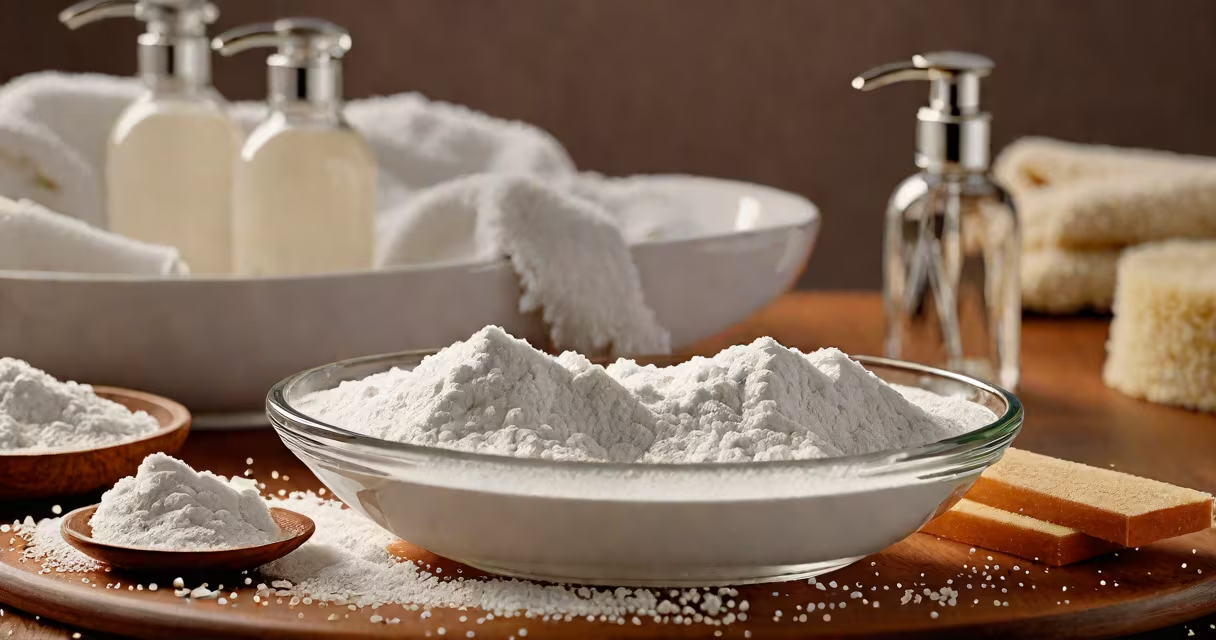
The baking soda trick for men is a popular online claim suggesting that applying or consuming sodium bicarbonate improves male performance, energy, or sexual function. There is no scientific evidence supporting these effects. Baking soda has documented uses in medicine and household care, but none confirm benefits for male stamina, libido, or erectile function.
Sodium bicarbonate, commonly known as baking soda, is a white crystalline powder with the chemical formula NaHCO₃. It is used in cooking, cleaning, and as an antacid. Its alkaline nature allows it to neutralize acids, which explains its role in reducing stomach acidity and treating mild heartburn. The human body maintains pH balance through kidneys and lungs, but external intake of baking soda can temporarily alter internal pH levels.
Some men report using baking soda in baths or mixtures with water to reduce body odor or soothe skin irritation. These applications are based on baking soda's ability to absorb moisture and neutralize acidic odors. However, direct application to sensitive areas may cause dryness or irritation due to its high pH. The U.S. Food and Drug Administration (FDA) classifies baking soda as Generally Recognized as Safe (GRAS) for limited internal use, but warns against excessive consumption.
Baking soda functions by reacting with acids to produce carbon dioxide gas. This reaction is visible when mixing baking soda with vinegar. In the digestive tract, baking soda neutralizes hydrochloric acid in the stomach, offering temporary relief from acid reflux. For this reason, it is sometimes included in over-the-counter antacids.
There is no physiological mechanism by which baking soda enhances male sexual performance. Erectile function depends on blood flow, nerve signaling, and hormonal balance-not pH changes in the mouth or gut. Claims that drinking baking soda water increases testosterone or endurance lack peer-reviewed support. A 2018 study published in the Journal of the International Society of Sports Nutrition found that sodium bicarbonate supplementation improved anaerobic exercise performance in athletes, but only when taken in controlled doses under medical supervision.
Using baking soda as a "natural" alternative to prescription medications for erectile dysfunction is unsafe. The condition requires evaluation by a healthcare provider. Self-treatment with unproven remedies delays diagnosis and risks complications. The American Urological Association states that lifestyle changes, medication, and psychological counseling are effective treatments-but not baking soda.
Many online posts equate baking soda with "natural energy boosters" or "male vitality enhancers." These claims often cite anecdotal reports rather than clinical trials. A 2021 review in the journal Nutrients found no evidence that oral baking soda improves physical performance or mental focus in healthy adults.
Another confusion arises from the term "baking soda trick," which implies a quick fix. Some videos show men mixing baking soda with lemon juice or water and claiming increased energy or confidence. These effects are likely placebo-driven. Placebo responses can be useful, but they do not substitute for medical treatment.
A non-obvious fact: baking soda can interfere with certain medications. It reduces the effectiveness of aspirin and may worsen kidney disease by increasing sodium load. People with hypertension or heart failure should avoid regular intake. The National Kidney Foundation notes that chronic high sodium intake contributes to fluid retention and elevated blood pressure.
Baking soda is effective in specific, well-documented roles:
For example, a man with persistent bad breath might dissolve half a teaspoon of baking soda in water and swish it for 30 seconds. This reduces oral acidity and inhibits bacterial growth linked to halitosis. Results appear within days, not minutes.
Claims that baking soda improves erections or sexual stamina are false. The idea may stem from misinterpreted studies on pH and sperm motility. While sperm thrive in slightly alkaline environments, ingesting baking soda does not affect vaginal or penile pH. The vagina naturally maintains a low pH (3.8-4.5) to prevent infection. Altering it with external substances can increase risk of yeast infections or bacterial vaginosis.
One man reported trying the baking soda trick for erectile dysfunction after seeing a video. He mixed a tablespoon of baking soda with water daily for two weeks. His symptoms did not improve. He later consulted a urologist and was diagnosed with early-stage diabetes, a known cause of erectile dysfunction. Treatment with metformin resolved his issues. He said, "I wasted time and money on a myth."
Baking soda is a weak base with a pH of approximately 8.3 when dissolved in water. It is stable at room temperature and decomposes into sodium carbonate, water, and carbon dioxide when heated above 50°C (122°F). This decomposition is why it's used in baked goods-it creates air bubbles during rising.
Despite its safety in small amounts, overdosing causes serious side effects. The Mayo Clinic lists symptoms of baking soda overdose as nausea, vomiting, muscle cramps, and confusion. Severe cases lead to metabolic alkalosis, which disrupts electrolyte balance and can cause seizures or cardiac arrhythmias.
For reference, the recommended daily limit for sodium bicarbonate is 2.4 grams (about half a teaspoon) for adults. Exceeding this amount regularly increases sodium intake beyond the American Heart Association's recommended 2,300 mg per day.
| Use | Effectiveness | Scientific Support |
|---|---|---|
| Relief of occasional heartburn | High | Yes - FDA-approved in antacids |
| Odor reduction in deodorants | Moderate | Yes - proven antimicrobial action |
| Improving athletic performance | Low to moderate | Yes - in controlled settings only |
| Enhancing male sexual function | None | No - no clinical evidence |
When evaluating health claims, prioritize peer-reviewed research over social media trends. The baking soda trick for men is not a solution. It is a reminder that not all widely shared advice is valid. Focus on evidence-based practices for lasting results.