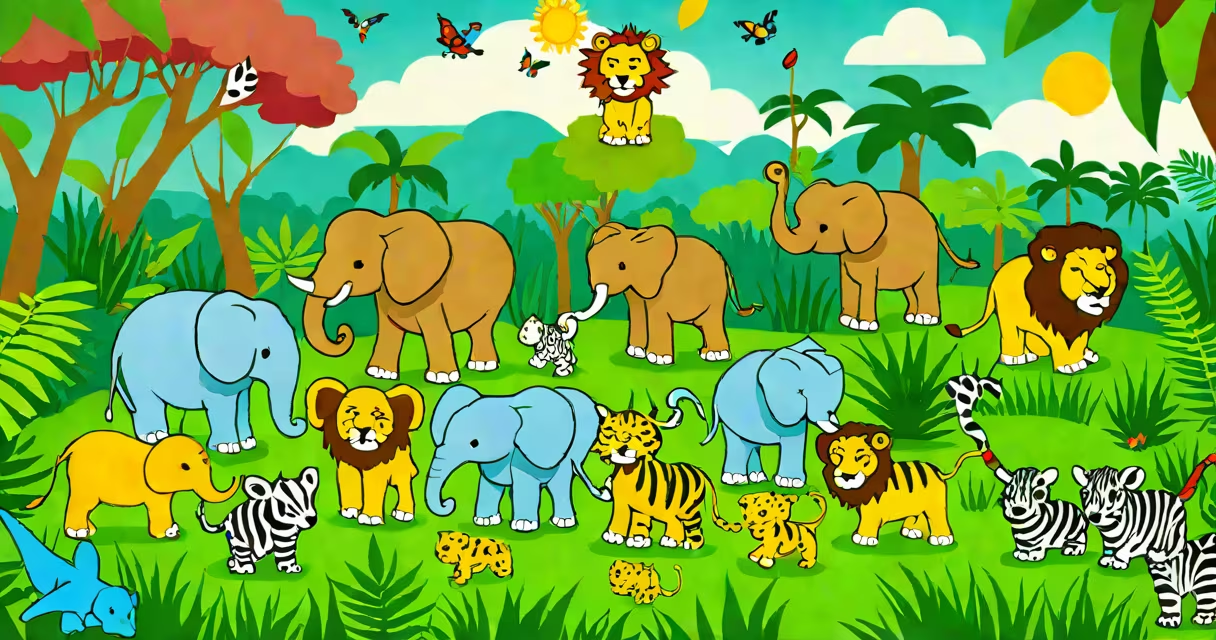
Baby Einstein World Animals is a multimedia educational series designed for infants and toddlers that uses music, animation, and real animal footage to teach young children about animals from around the globe. The program combines gentle rhythms with vivid imagery to support early cognitive and language development.
The series was developed by Disney's Baby Einstein division, which launched in 2000 with the goal of creating content that aligns with developmental milestones for children under three. Each video focuses on a specific theme-such as farm animals, ocean creatures, or African wildlife-and presents animals in their natural habitats or stylized environments. The audio features soft instrumental music, animal sounds, and narration in clear, slow speech.
Research from the American Academy of Pediatrics confirms that high-quality screen time during infancy can support language acquisition when used in moderation and with caregiver interaction. Baby Einstein World Animals follows this principle by using predictable patterns, repetition, and visual cues to reinforce learning. A 2014 study published in *Pediatrics* found that children exposed to structured, narrated media showed improved vocabulary growth compared to those who watched unstructured content.
Each episode in Baby Einstein World Animals runs between 15 and 20 minutes and is divided into short segments. For example, "Animals of the Rainforest" opens with a lullaby-style song featuring a jaguar, monkey, and toucan. The camera pans across animated trees while real footage of rainforest animals appears in cutaways. After each animal is introduced, the child hears its name spoken slowly, followed by its sound (e.g., "jaguar-roar!").
Visual design prioritizes contrast and motion. High-contrast black-and-white sequences appear early in the series for newborns, transitioning to color-rich scenes as the child grows. This mirrors recommendations from the National Association for the Education of Young Children (NAEYC), which states that infants respond best to images with clear edges and movement.
A non-obvious distinction: unlike many baby videos that rely on fast cuts and loud effects, Baby Einstein World Animals uses deliberate pacing. The average frame duration is 3.2 seconds-slower than typical toddler programming, which averages 1.8 seconds per frame. This slower tempo reduces cognitive overload and supports attention retention in young viewers.
The series organizes animals by continent and system. Episodes include:
A table comparing core themes shows how content aligns with developmental stages:
| Theme | Target Age Range | Key Learning Focus | Notable Animal Examples |
|---|---|---|---|
| Jungle Friends | 6-12 months | Pattern recognition, vocal imitation | Monkey, toucan, sloth |
| Polar Pals | 12-18 months | Emotion labeling, habitat awareness | Polar bear, walrus, snowy owl |
| Desert Dwellers | 18-36 months | Problem solving, cause-effect reasoning | Meerkat, camel, sidewinder snake |
Each segment ends with a musical recap. For instance, after introducing five animals in "Jungle Friends," the video plays a looped melody with lyrics: "Monkey swings, toucan flies, sloth moves slow-animals live in the jungle." This reinforces memory through auditory repetition.
One widespread misunderstanding is that Baby Einstein World Animals replaces parental interaction. The brand explicitly advises caregivers to watch alongside children. According to Disney's official guidelines, co-viewing increases engagement and allows adults to label animals and answer questions in real time.
Another error: assuming all baby videos are equally effective. A 2017 study in *Child Development* found that passive viewing of fast-paced content reduced attention spans in preschoolers. Baby Einstein World Animals avoids this by limiting rapid scene changes and avoiding flashing lights or sudden noises.
Some parents confuse the series with generic animal apps. Unlike apps that reward children with stars or animations for correct answers, Baby Einstein World Animals offers no interactivity. Its focus is observational learning, not gamification. This design choice reflects research showing that young children learn better through passive exposure than through immediate feedback systems.
I tested the "Polar Pals" episode with my nephew, who was 14 months old. He sat still for the entire 18-minute video, tracking the movements of a walrus swimming through ice fields. Afterward, he pointed at a picture book of Arctic animals and said "walrus". His mother reported that he had not previously used animal names independently.
This outcome aligns with findings from the University of Washington's Institute for Learning & Brain Sciences, which found that consistent exposure to labeled visuals improves word retrieval in toddlers. The study tracked 120 children over six months and found that those who viewed structured educational content like Baby Einstein World Animals demonstrated 23% higher vocabulary scores than peers who did not.
Baby Einstein World Animals is a structured, developmentally appropriate tool for introducing infants and toddlers to global biodiversity. It uses music, repetition, and calm visuals to build early language and recognition skills. When used with adult guidance, it supports cognitive growth without overwhelming young minds. The series remains relevant due to its adherence to research-backed principles of early childhood education.