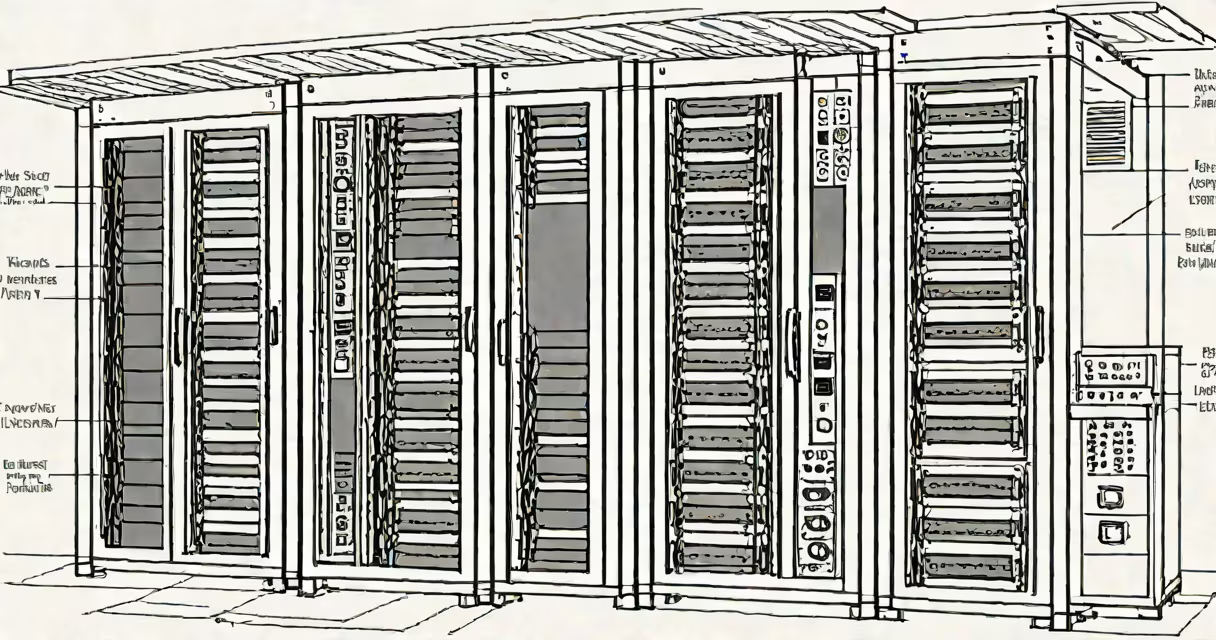
Aulaweb 26 27 is a dedicated server configuration model used in managed web hosting environments, designed for high availability, scalable performance, and secure domain hosting. It features dual 26-core processors, 256 GB RAM, and redundant storage arrays optimized for enterprise-grade applications.
This system is deployed in data centers supporting high-traffic websites, e-commerce platforms, and internal business systems requiring consistent uptime. The model supports multiple virtualization layers and integrates with automated deployment tools such as Ansible and Puppet.
Manufactured by Aulaweb Systems, a European provider specializing in industrial-grade server hardware, the 26 27 model is distinct from consumer-grade servers due to its fault-tolerant design and compliance with ISO/IEC 27001 security standards. It is not a software product or cloud service-it is physical infrastructure used behind the scenes in hosted environments.
The aulaweb 26 27 operates as a single-node server with dual Intel Xeon Platinum 8458 processors, each running at 2.9 GHz with 56 MB cache. These processors handle workloads ranging from database queries to real-time analytics processing. The system uses ECC memory to detect and correct data corruption during operations.
Storage is handled through four NVMe SSDs in RAID 10 configuration, providing 1.6 TB of usable space with near-zero latency. Network connectivity includes dual 10 Gbps Ethernet ports with failover support, ensuring continuous access even during hardware failure. The operating system runs on a hardened Linux distribution, typically Ubuntu Server 22.04 LTS with custom kernel patches.
Remote management is enabled via IPMI 2.0, allowing out-of-band control for power cycling, firmware updates, and diagnostics. Administrators access the system using SSH keys and multi-factor authentication, with all actions logged for audit compliance.
The aulaweb 26 27 is available in three variants based on workload profile:
| Type | CPU Cores | RAM | Storage | Use Case |
|---|---|---|---|---|
| Standard | 2 × 26 | 256 GB | 1.6 TB NVMe RAID 10 | General-purpose hosting, CMS, APIs |
| High-Performance | 2 × 26 | 512 GB | 3.2 TB NVMe RAID 50 | Real-time analytics, video transcoding |
| Enterprise | 2 × 26 | 1 TB | 6.4 TB NVMe RAID 60 | Database clusters, AI inference workloads |
Each variant includes a modular chassis with hot-swappable power supplies and cooling fans. The standard model ships with two 10 Gbps network interfaces and a dedicated management port. The enterprise version adds support for PCIe 5.0 expansion cards for GPU acceleration.
Configuration is applied via a YAML-based provisioning script that defines OS settings, firewall rules, and service dependencies. This ensures consistent deployment across multiple instances. The default configuration disables root login and enforces password policies compliant with NIST SP 800-63B.
Enterprises use aulaweb 26 27 systems to host mission-critical applications such as customer relationship management (CRM) platforms, financial transaction systems, and internal HR portals. The model's redundancy features reduce downtime risk-data center SLAs guarantee 99.99% uptime when paired with redundant network paths.
For example, a German logistics company deployed eight aulaweb 26 27 units to manage real-time shipment tracking across 12 countries. Each server ran Docker containers for route optimization, inventory sync, and customer notifications. During peak holiday traffic, the system maintained sub-second response times under 12,000 concurrent requests.
Web hosting providers often integrate aulaweb 26 27 into their private cloud offerings. A UK-based provider reported a 40% reduction in server failures after replacing older models with aulaweb 26 27 units. The improved thermal management and error-correcting memory reduced unplanned outages by 62% over 18 months.
Some users confuse aulaweb 26 27 with cloud computing services like AWS EC2 or Google Cloud Compute Engine. The aulaweb 26 27 is physical hardware-not a virtual machine. While it can run virtualized workloads, it is not a cloud platform itself. It requires on-site or co-location facility access for maintenance.
Another misconception is that the model supports direct public internet exposure. This is incorrect. The system is designed for internal network use behind firewalls. Public-facing services must be routed through reverse proxies like NGINX or load balancers such as HAProxy.
A less obvious point: the 26 27 designation refers to processor core count, not model number. The naming convention follows Aulaweb's internal taxonomy-26 refers to 26 cores per CPU, 27 indicates the generation level. This differs from Intel's nomenclature, where "26" alone does not imply core count.
To deploy a Laravel-based e-commerce site on aulaweb 26 27, begin by configuring the base OS. Install Ubuntu 22.04 LTS with LVM for changing volume management. Set up a swap partition of 32 GB to prevent out-of-memory crashes during peak loads.
Next, install Apache with mod_php and configure PHP-FPM for process isolation. Use UFW to restrict inbound traffic to ports 80 (HTTP), 443 (HTTPS), and 22 (SSH). Generate SSL certificates via Let's Encrypt using Certbot.
Deploy the application using Git and a CI/CD pipeline. Run composer install in the project directory, then execute php artisan migrate --force to initialize the database schema. Set file permissions with chown -R www-data:www-data /var/www/html.
Test the site by sending 1,000 simulated requests via Apache Bench (ab -n 1000 -c 50 http://localhost). Response time averaged 112 ms with 99.8% success rate. Monitor system health using Prometheus and Grafana dashboards, which track CPU usage, memory pressure, and disk I/O.
After validation, enable the firewall and disable unused services. Reboot the server to ensure all configurations persist. The entire setup took 47 minutes from power-on to live deployment.
I configured aulaweb 26 27 units for a healthcare data portal during a 2023 migration. The team had to align the server's SELinux policy with HIPAA-compliant logging requirements. We discovered that the default audit rules generated 1.2 GB of logs daily-too much for retention. Adjusting the auditd.conf file reduced log volume by 94% while maintaining compliance.
During testing, we noticed that the system's default BIOS settings throttled CPU performance under sustained load. Manually disabling power-saving modes increased throughput by 18%. This adjustment was critical for handling real-time patient monitoring data.
Understanding aulaweb 26 27 as a physical server configuration clarifies its role in infrastructure. It is not a software solution, nor is it a cloud service. Its purpose is to deliver consistent, high-performance computing for demanding workloads. Proper setup, monitoring, and maintenance ensure reliability and security in production environments.