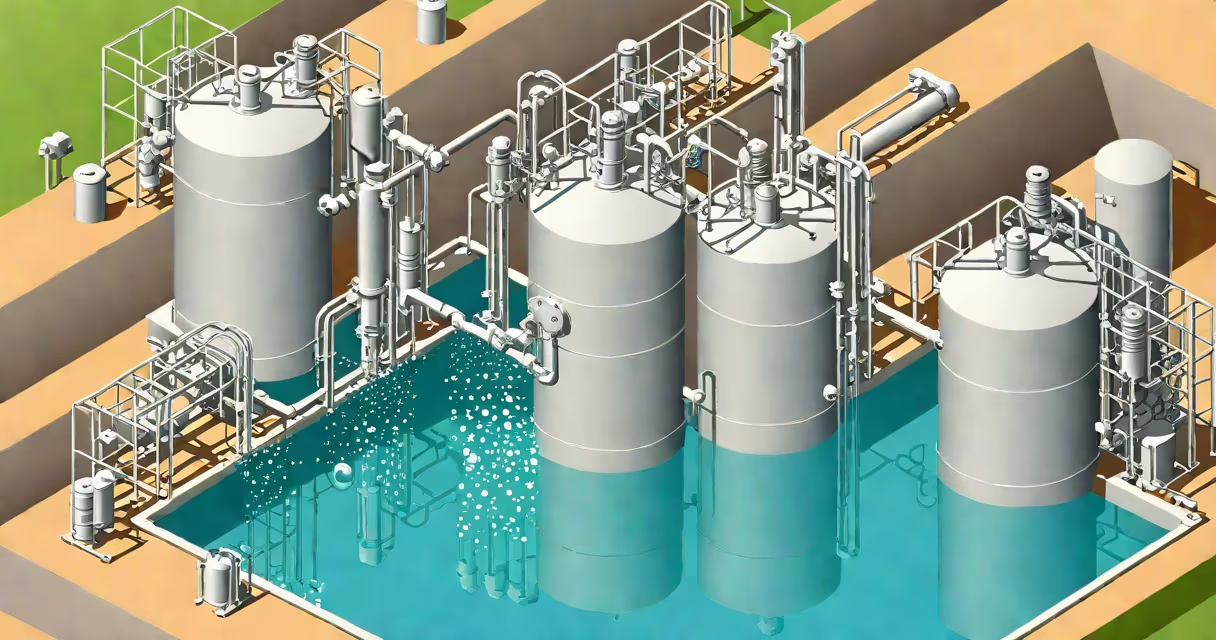
aeration water treatment is a physical and biological process that introduces air into water to increase dissolved oxygen levels, promoting the breakdown of organic pollutants and improving water quality. It's widely used in municipal wastewater plants, industrial effluent systems, and aquaculture operations.
The core principle relies on oxygen-dependent microorganisms that consume biodegradable waste. By saturating water with oxygen, aeration creates ideal conditions for aerobic bacteria to thrive and decompose contaminants such as nitrogen compounds, fats, and organic solids. Without sufficient oxygen, these microbes cannot function efficiently, leading to foul odors, sludge buildup, and poor discharge standards.
For example, the City of Los Angeles's Hyperion Water Reclamation Plant uses mechanical surface aerators and fine-pore diffusers to treat over 400 million gallons of wastewater daily. This system maintains dissolved oxygen levels above 2 mg/L, enabling effective biological treatment and compliance with EPA discharge limits.
Aeration introduces atmospheric air or pure oxygen into water through mechanical or diffused methods. Mechanical systems use rotating devices like paddle wheels or turbines to agitate the surface, creating turbulence that allows gas exchange between air and water. Diffused systems release compressed air through porous materials at the tank's bottom, forming small bubbles that rise and transfer oxygen as they ascend.
Oxygen transfer efficiency varies between methods. Fine-pore diffusers achieve 60-80% oxygen transfer efficiency, while surface aerators typically reach 20-40%. The choice depends on energy costs, space constraints, and required oxygen concentration. For instance, a fish farm in Oregon uses fine-pore diffusers to maintain 6-8 mg/L dissolved oxygen in raceway tanks, preventing fish stress and mortality during high-density stocking.
Biological activity accelerates when dissolved oxygen exceeds 2 mg/L. Below this threshold, anaerobic processes dominate, producing hydrogen sulfide (rotten egg smell) and ammonia. Aeration restores balance, supporting nitrification-the conversion of ammonia to nitrate by Nitrosomonas and Nitrobacter bacteria. This step is critical in removing nitrogen pollution from sewage and agricultural runoff.
Different aeration technologies suit distinct applications based on flow rate, contamination level, and infrastructure. The two primary categories are mechanical and diffused aeration, each with subtypes.
| Type | How It Works | Best For | Efficiency |
|---|---|---|---|
| Mechanical surface aerators | Rotating blades or paddles lift water and expose it to air | Shallow tanks, low-flow systems | 20-40% |
| Fine-pore diffused aeration | Compressed air released through ceramic or rubber diffusers at tank bottom | High-efficiency treatment, large-scale plants | 60-80% |
| Coarse-pore diffusers | Large bubbles from porous plates or tubes | Low-cost, high-volume flow | 10-30% |
| Fixed-film aeration (e.g., trickling filters) | Water trickles over media where biofilm degrades organics | Pre-treatment, odor control | Variable, often lower than diffused systems |
Some facilities combine systems. The Blue Plains Advanced Wastewater Treatment Plant in Washington, D.C., uses both fine-pore diffusers and mechanical aerators in sequence to meet stringent nutrient removal goals. This hybrid design improves reliability and reduces energy spikes during peak flows.
aeration water treatment is essential in municipal wastewater systems, industrial effluent processing, and aquaculture. Municipal plants rely on it to meet regulatory standards set by the U.S. Environmental Protection Agency (EPA), which mandates dissolved oxygen levels above 2 mg/L in treated effluent discharged into rivers and lakes.
In industry, food processing plants use aeration to reduce biochemical oxygen demand (BOD) in wastewater before releasing it into public sewers. A meatpacking facility in Iowa reduced BOD from 350 mg/L to under 30 mg/L using a 24-hour aeration cycle with fine-pore diffusers, avoiding fines and sewer surcharges.
Aquaculture operations depend on aeration to sustain fish health. During summer months, warm water holds less oxygen. A tilapia farm in Florida installed floating aerators with solar-powered compressors to maintain 5 mg/L dissolved oxygen, reducing fish mortality by 70% compared to previous seasons.
Many assume aeration is purely a physical process. In reality, it enables biological degradation. Oxygen doesn't remove pollutants-it fuels microbes that do. Without live biomass, aeration alone won't reduce BOD or nitrogen levels.
Another error is equating aeration with disinfection. Aeration does not kill pathogens. It supports microbial communities that break down organics but does not eliminate viruses or bacteria. Disinfection steps like UV or chlorine follow aeration in most treatment trains.
Some think all aeration systems perform equally. Efficiency varies widely. Coarse-pore diffusers lose much of their oxygen capacity due to bubble size and short contact time. A study by the Water Environment Research Foundation found coarse-pore systems require 2.5 times more energy than fine-pore systems to achieve the same oxygen transfer rate.
Consider the City of Phoenix's South Mountain Wastewater Treatment Facility. It processes 120 million gallons per day (MGD) of mixed domestic and industrial wastewater. The plant uses a combination of fine-pore diffused aeration and mechanical surface aerators in its activated sludge basin.
Each of the four aeration basins measures 120 meters long, 30 meters wide, and 4.5 meters deep. Compressed air is delivered via pipelines to 1,200 ceramic diffusers spaced every 1.5 meters. The system operates at 1.5 bar pressure, producing bubbles 1-3 mm in diameter. These small bubbles maximize surface area contact with water, increasing oxygen transfer efficiency.
Monitoring shows average dissolved oxygen levels stay between 2.5 and 3.5 mg/L. This range supports nitrifying bacteria, which convert ammonia (NH₃) to nitrite (NO₂⁻) and then to nitrate (NO₃⁻). Over 90% of incoming ammonia is removed within 6 hours of aeration. Effluent is then sent to denitrification zones where nitrate is converted to nitrogen gas and released to the atmosphere.
Energy consumption averages 0.8 kWh per kg of BOD removed-within acceptable limits for municipal systems. The plant reports a 40% reduction in sludge volume since switching from coarse-pore to fine-pore diffusers, lowering disposal costs.
Also, aeration is not the same as degassing. Degassing removes dissolved gases like carbon dioxide or methane, often using vacuum or heat. Aeration adds oxygen; degassing removes unwanted gases. In groundwater remediation, both may be used sequentially: degas first to remove volatile organics, then aerate to stimulate biodegradation.
Finally, aeration is not a standalone solution. It must be paired with sedimentation, filtration, and disinfection for complete treatment. The World Health Organization (WHO) guidelines state that no single process achieves safe drinking water; integrated systems are required.
Understanding aeration water treatment helps identify where it fits in larger systems. It's not magic-it's science-based engineering that makes water safer, cleaner, and compliant with environmental standards. Whether managing city sewage or raising fish, the principles remain consistent: oxygen powers life, and life cleans water.