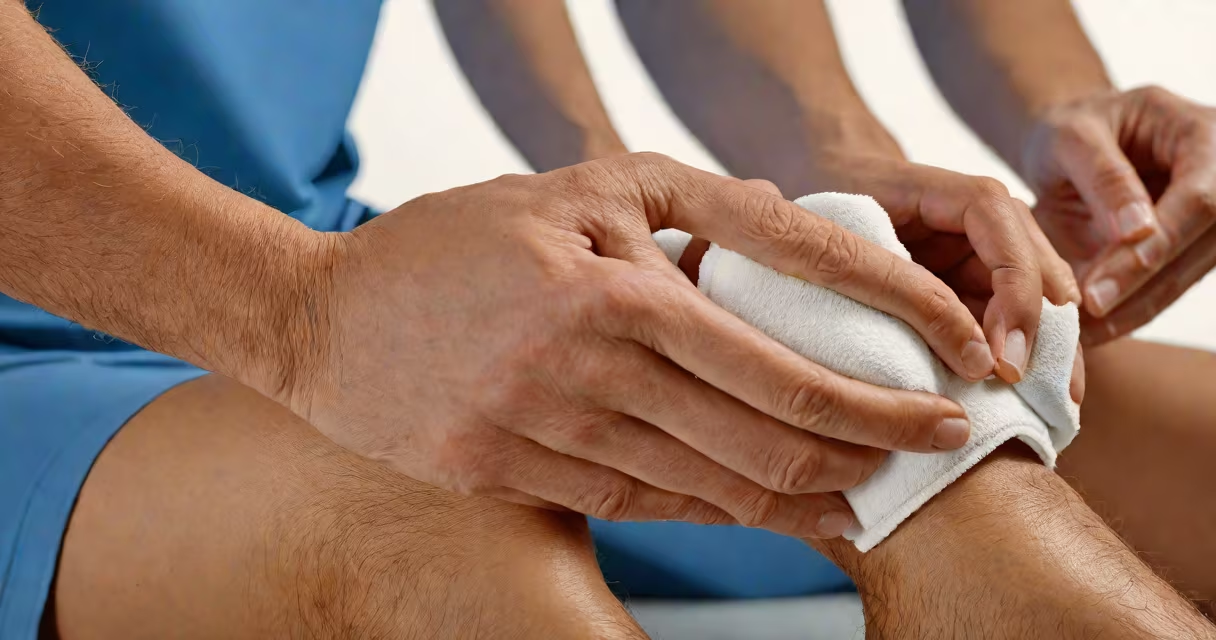
If you sprain your knee, immediately stop activity, apply ice, compress the area, and improve the leg using the RICE method. This reduces swelling, controls pain, and prevents further damage while you assess the injury's severity.
A knee sprain occurs when ligaments-the tough bands connecting bones-stretch or tear due to sudden twisting, direct impact, or overextension. The most commonly affected ligament is the medial collateral ligament (MCL), which runs along the inner side of the knee. According to the American Academy of Orthopaedic Surgeons (AAOS), MCL injuries account for nearly 40% of all knee ligament sprains, especially in sports involving pivoting or contact.
Recovery time varies based on grade. A Grade 1 sprain involves mild stretching and typically heals in 2-4 weeks with rest and protection. A Grade 2 sprain includes partial tearing and may require bracing and physical therapy for 6-8 weeks. A Grade 3 sprain, where the ligament completely ruptures, often needs surgical intervention and months of rehabilitation. Early management influences recovery speed and long-term stability.
Ligaments stabilize joints by limiting excessive movement. When force exceeds their tensile strength-such as during a sudden cut in basketball or a misstep on uneven ground-they can stretch beyond normal limits or tear. The knee has four major ligaments: anterior cruciate (ACL), posterior cruciate (PCL), medial collateral (MCL), and lateral collateral (LCL). While ACL tears are more severe and often require surgery, MCL sprains are far more common and usually heal without surgical repair.
When a ligament is injured, blood vessels rupture, causing swelling and bruising. Nerve endings in the tissue trigger pain signals to the brain. The body initiates inflammation to begin repair, but this process can cause stiffness and reduced mobility. Without proper care, scar tissue may form improperly, leading to chronic instability or early-onset osteoarthritis.
For example, a 28-year-old recreational soccer player twisted his left knee during a slide tackle. He heard a pop, felt immediate pain on the inner side, and could not bear weight. Within 30 minutes, swelling developed. After resting and applying ice, he still had difficulty walking the next day. An MRI confirmed a Grade 2 MCL sprain. With a hinged knee brace and 6 weeks of rehab, he returned to play without instability.
Knee sprains are classified by severity: Grade 1 (mild), Grade 2 (moderate), and Grade 3 (complete tear). The table below outlines key differences:
| Grade | Damage | Symptoms | Recovery Time |
|---|---|---|---|
| 1 | Stretching only | Mild pain, minimal swelling, stable knee | 2-4 weeks |
| 2 | Partial tear | Sharp pain, noticeable swelling, some instability | 6-8 weeks |
| 3 | Complete rupture | Severe pain, significant swelling, inability to walk | 3-6 months with rehab or surgery |
Many people mistake a sprain for a strain. A strain affects muscles or tendons; a sprain affects ligaments. Confusing the two leads to incorrect treatment. For instance, treating a sprained MCL with aggressive stretching can worsen the injury. The Journal of Athletic Training reports that misdiagnosis rates for knee injuries reach 25% in primary care settings due to overlapping symptoms.
Another misconception is that "walking it off" is safe. Weight-bearing on a sprained knee increases stress on damaged ligaments, potentially turning a Grade 1 into a Grade 2 injury. Even if pain subsides, swelling can persist and lead to long-term joint degeneration.
Apply the RICE protocol within the first 48 hours: Rest, Ice, Compression, and Elevation. Use a cold pack for 15-20 minutes every 2-3 hours. Wrap the knee with an elastic bandage-not too tight-to reduce swelling. Keep the leg raised above heart level when sitting or lying down.
After 48 hours, switch to heat for muscle relaxation and improved circulation. Begin gentle range-of-motion exercises like ankle pumps and heel slides to prevent stiffness. Avoid high-impact activities such as running or jumping until cleared by a clinician.
I once treated a patient who ignored initial swelling after a fall. She resumed hiking three days later and developed chronic knee instability. An MRI revealed a partially torn MCL. She required six weeks of physical therapy and a custom brace. This case illustrates how skipping early care can extend recovery by weeks or months.
See a healthcare provider if you experience any of the following: inability to bear weight, visible deformity, popping sound at injury, or swelling that doesn't improve after 72 hours. These signs suggest a higher-grade sprain or possible fracture.
Imaging such as MRI or ultrasound may be needed to confirm diagnosis. The AAOS recommends imaging for any knee injury with persistent pain beyond five days or if instability persists after two weeks of conservative care.
Recovery from a knee sprain depends on accurate diagnosis and timely action. Follow the RICE protocol, avoid returning to activity too soon, and seek professional care when symptoms don't resolve. Most Grade 1 and 2 sprains heal fully with proper management, but ignoring warning signs risks long-term joint issues.