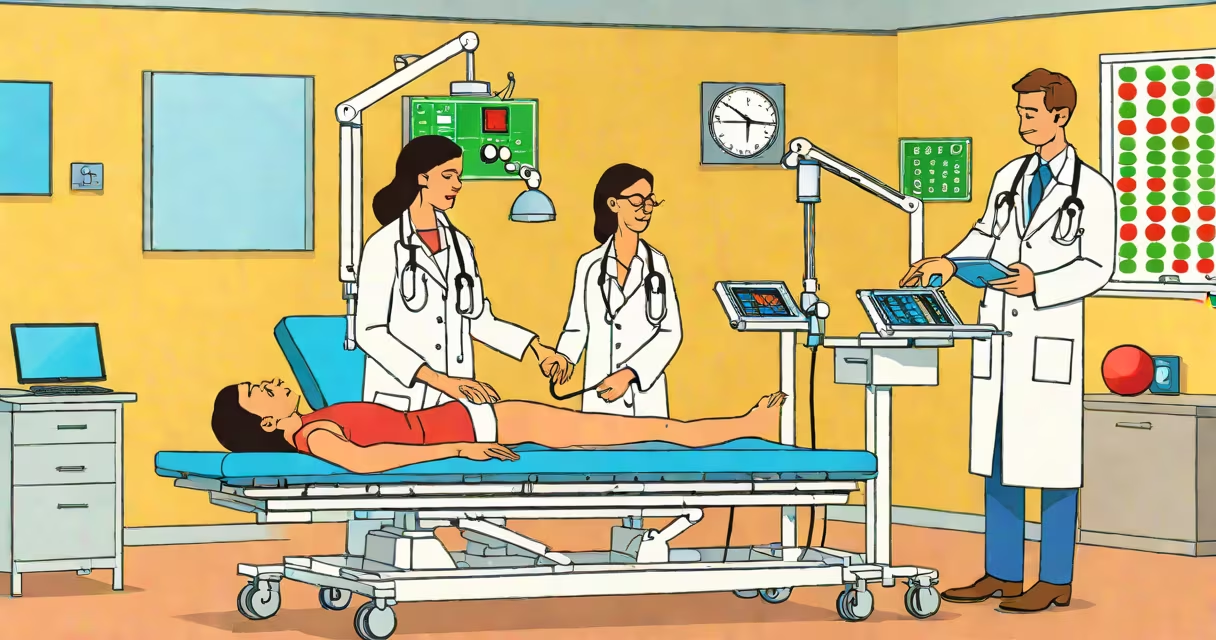
To become a licensed physical therapist in the United States, you must complete a Doctor of Physical Therapy (DPT) degree from an accredited program, pass the National Physical Therapy Examination (NPTE), and meet state-specific licensing requirements. This path typically takes three years after earning a bachelor's degree.
The DPT is the standard entry-level degree required for practice. It replaced the previous master's degree requirement in 2016, as mandated by the American Physical Therapy Association (APTA). All current DPT programs are accredited by the Commission on Accreditation in Physical Therapy Education (CAPTE), which ensures curricula meet national standards for clinical competency and scientific rigor.
Most applicants enter DPT programs with a bachelor's degree in a science-related field such as biology, kinesiology, or exercise science. While no specific undergraduate major is required, coursework in anatomy, physiology, chemistry, and physics is essential. The average DPT program spans 3 years and includes 30 weeks of supervised clinical rotations across diverse settings like outpatient orthopedics, neurology, pediatrics, and acute care.
DPT programs are structured around three core components: foundational sciences, clinical skills development, and hands-on patient care. The first year focuses on advanced human anatomy, biomechanics, neuroscience, and pharmacology. Students take courses in movement science, neuromuscular function, and evidence-based practice.
In the second year, students begin clinical education through required rotations. These rotations are coordinated by the program and placed in approved facilities. A typical DPT curriculum includes at least three clinical experiences, each lasting 6 to 10 weeks. Rotations may occur in hospitals, rehabilitation centers, sports clinics, or home health agencies.
The third year emphasizes integration of knowledge. Students complete a capstone clinical rotation and often participate in research projects or quality improvement initiatives. Some programs offer elective rotations in specialized areas such as vestibular rehabilitation, wound care, or geriatric physical therapy.
| Program Phase | Duration | Key Components |
|---|---|---|
| Year 1 | 1 academic year | Advanced anatomy, physiology, biomechanics, neuroscience |
| Year 2 | 1 academic year | Two clinical rotations (6-10 weeks each) |
| Year 3 | 1 academic year | Capstone rotation, research project, NPTE preparation |
After completing a CAPTE-accredited DPT program, graduates must pass the NPTE administered by the Federation of State Boards of Physical Therapy (FSBPT). The exam covers evaluation, treatment planning, intervention techniques, and professional responsibilities. It consists of 250 multiple-choice questions and lasts approximately 5 hours.
Each U.S. state sets its own licensing rules. Most require proof of graduation from an accredited DPT program, passing the NPTE, and submission of fingerprints for a background check. Some states also require additional jurisprudence exams covering state-specific laws governing physical therapy practice.
For those seeking specialization, a post-professional residency or fellowship is available. Residencies last 12 months and focus on advanced clinical skills in areas like orthopedics, neurologic, or sports physical therapy. Fellowships extend to 24 months and emphasize leadership, teaching, and complex patient management. According to the APTA, over 1,200 residencies and 300 fellowships were accredited in 2023.
Many assume that physical therapy school is shorter than it is. The misconception that a two-year master's degree still qualifies someone for licensure persists, but since 2016, all new physical therapists must hold a DPT. The APTA confirms that no new DPT programs accept students with only a bachelor's degree as a direct entry point.
Another common error is believing that online DPT programs are widely available. There are no fully online DPT programs accredited by CAPTE. Clinical education requires in-person supervision and hands-on patient interaction. Even hybrid programs include mandatory on-site clinical placements.
A lesser-known fact: some DPT programs allow students to earn a graduate certificate in areas like pain science, movement dysfunction, or integrative medicine. These certificates do not count toward licensure but can improve career options in research, teaching, or private practice.
Consider Alex, who earned a Bachelor of Science in Exercise Physiology from the University of Colorado in 2021. He applied to 12 CAPTE-accredited DPT programs and was accepted into the University of Utah's program. Over three years, he completed coursework in musculoskeletal assessment, cardiovascular rehabilitation, and pediatric physical therapy.
This timeline reflects the standard progression: 4 years of undergraduate study, 3 years of DPT education, and 1-3 months for licensure processing. Total time from start to independent practice averages 7-8 years.
When selecting a DPT program, prioritize CAPTE accreditation. The APTA maintains a searchable database of accredited programs. As of 2024, 220 programs across 46 states are accredited. Programs with high NPTE pass rates (above 95%) and strong placement rates in clinical settings are preferred.
Some programs offer early assurance pathways for high school seniors or transfer students. These programs guarantee admission upon completion of specified prerequisites. However, they require a commitment to a single institution and limit flexibility.
I once observed a DPT class at Oregon Health & Science University during a visit to their simulation lab. Students practiced gait analysis using motion-capture sensors and virtual patients. The realism of the setup underscored how much technical skill and clinical judgment are now embedded in physical therapy education.
What schooling is needed for physical therapy demands rigorous academic preparation, extensive clinical experience, and ongoing professional development. The DPT is not just a credential-it is a foundation for lifelong learning in patient-centered care.