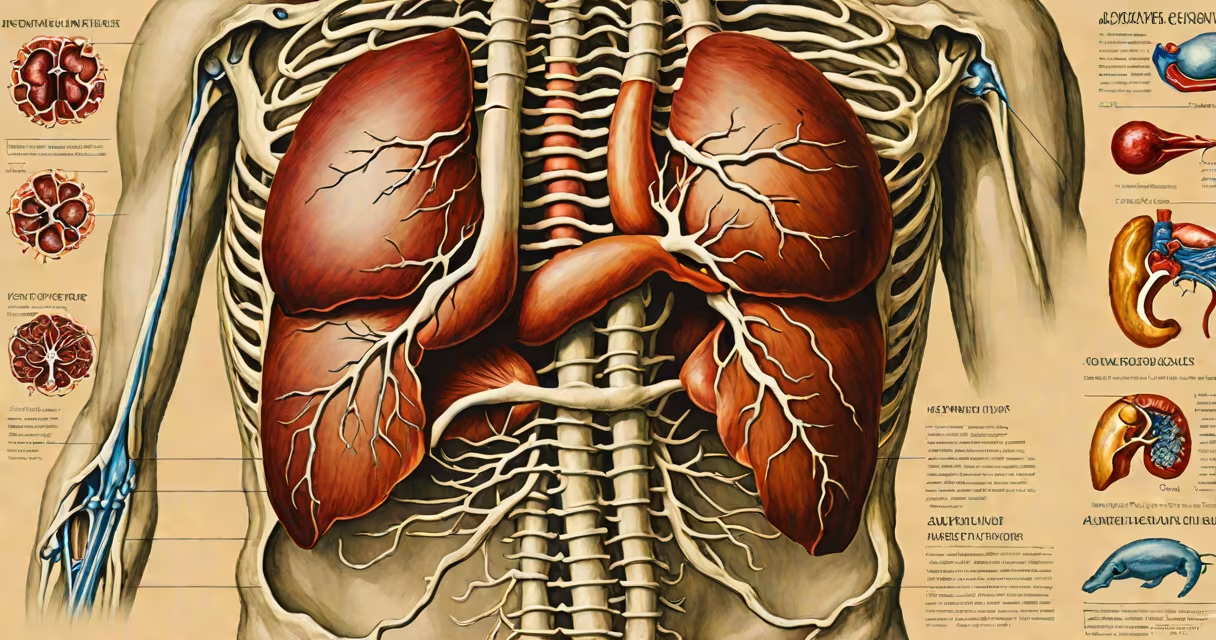
The upper abdomen contains the liver, stomach, pancreas, spleen, and gallbladder-key organs involved in digestion, metabolism, and blood filtration. These structures lie beneath the diaphragm and above the transverse plane dividing the abdomen into quadrants.
Each organ performs distinct functions critical to maintaining internal balance. The liver processes nutrients and detoxifies blood. The stomach breaks down food through acid and enzyme action. The pancreas secretes digestive enzymes and insulin. The spleen filters old red blood cells and supports immune function. The gallbladder stores bile produced by the liver and releases it during fat digestion.
These organs share space in the epigastric and left hypochondriac regions of the abdomen. Pain or discomfort in this area may signal issues ranging from gastritis to pancreatitis. Understanding their roles helps identify symptoms and seek timely care.
Digestion begins in the upper abdomen when food enters the stomach. Hydrochloric acid and pepsin initiate protein breakdown. The stomach's muscular walls churn food into chyme, which then moves into the small intestine.
As chyme travels through the duodenum, the pancreas releases bicarbonate to neutralize acidity and enzymes like amylase, lipase, and protease to further break down carbohydrates, fats, and proteins. The liver produces bile, stored in the gallbladder, which emulsifies dietary fats for efficient absorption.
After nutrient absorption, waste products move to the colon. The liver also filters toxins, metabolizes drugs, and regulates glucose levels via glycogen storage and release. The spleen removes damaged red blood cells and activates immune responses against pathogens.
Four primary organs dominate the upper abdomen: the liver, stomach, pancreas, and spleen. The gallbladder, though smaller, is important for fat digestion.
| Organ | Primary Function | Location (Approximate) |
|---|---|---|
| Liver | Detoxification, protein synthesis, bile production | Right upper quadrant, under the diaphragm |
| Stomach | Food breakdown via acid and mechanical churning | Epigastric and left upper quadrant |
| Pancreas | Enzyme secretion for digestion; insulin regulation | Deep behind the stomach, extends across the back |
| Spleen | Filters blood, recycles iron, supports immune response | Left upper quadrant, behind the stomach |
| Gallbladder | Stores and concentrates bile; releases it during meals | Under the liver, right upper quadrant |
Each organ operates within a narrow physiological range. For example, normal blood glucose levels remain between 70-100 mg/dL when fasting. The pancreas maintains this balance by releasing insulin in response to rising glucose. Disruption leads to conditions like diabetes mellitus.
When the liver fails to process ammonia effectively, toxic buildup can cause hepatic encephalopathy-a condition marked by confusion, altered consciousness, and coma. This underscores how tightly interconnected these systems are.
Pain in the upper abdomen often prompts concern about heart attacks. However, cardiac pain typically radiates to the left arm or jaw and occurs during exertion. Upper abdominal pain localized to the epigastrium suggests gastrointestinal causes such as peptic ulcer disease or gastritis.
Another frequent error is attributing bloating solely to gas. While gas contributes to distension, many cases stem from delayed gastric emptying, irritable bowel syndrome, or food intolerances. A study published in *Gastroenterology* found that 65% of patients reporting bloating had no evidence of excessive gas on breath testing.
For instance, a 42-year-old woman presented with persistent upper abdominal pressure after meals. Imaging revealed a 3 cm gallstone blocking the cystic duct. She underwent laparoscopic cholecystectomy and recovered fully within ten days. Her symptoms were not due to gas but mechanical obstruction.
Upper abdominal pain lasting more than 24 hours, especially with fever, jaundice, vomiting blood, or black stools, requires urgent assessment. These signs may indicate pancreatitis, liver failure, or gastrointestinal bleeding.
Jaundice-yellowing of the skin and eyes-is a red flag for liver or biliary tract disease. Bilirubin levels above 1.2 mg/dL confirm hyperbilirubinemia. Elevated liver enzymes such as ALT and AST suggest hepatocellular injury. The American Gastroenterological Association recommends baseline liver function tests for anyone with unexplained upper abdominal pain.
I once observed a patient with chronic left upper quadrant pain who was initially diagnosed with anxiety. Further imaging showed splenic enlargement due to chronic infection. After treatment, symptoms resolved. This case illustrates how easily organ pathology can be overlooked without proper investigation.
Conditions like acute pancreatitis involve elevated serum amylase (>3x upper limit of normal) and lipase levels. CT scans show pancreatic swelling and fluid collections. Early diagnosis reduces mortality risk from 30% to under 5%.
Knowing what organs are in upper abdomen clarifies how symptoms relate to specific systems. The liver, stomach, pancreas, spleen, and gallbladder each play non-redundant roles in sustaining health.
Discomfort in this region should not be dismissed as "just indigestion." Persistent or worsening pain demands clinical evaluation. Early detection of diseases like cirrhosis, pancreatitis, or gallstones improves outcomes.