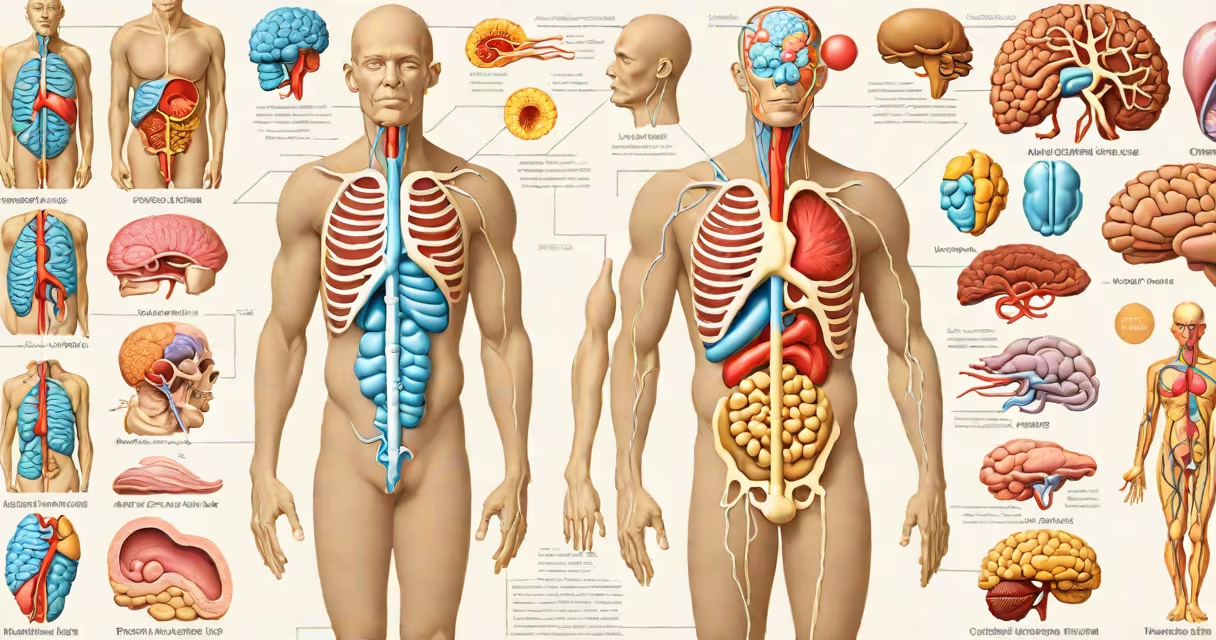
The term "11 organ system" refers to the eleven functional groupings of organs and tissues in the human body that collectively maintain physiological balance, support growth, and enable interaction with the environment. These systems include the integumentary, skeletal, muscular, nervous, endocrine, cardiovascular, lymphatic, respiratory, digestive, urinary, and reproductive systems.
Each system performs specific roles essential to survival. For example, the respiratory system exchanges oxygen and carbon dioxide, while the nervous system coordinates responses through electrical signals. These systems do not operate independently-they communicate via hormones, nerves, and fluid transport to regulate internal conditions such as temperature, pH, and nutrient levels.
Medical literature from the National Institutes of Health (NIH) confirms that the human body contains 11 primary organ systems, with no widely accepted scientific basis for adding or removing one. The classification aligns with standard anatomical and physiological textbooks, including Gray's Anatomy and Guyton and Hall Textbook of Medical Physiology.
Homeostasis-the maintenance of stable internal conditions-is achieved through interdependence among the 11 organ systems. For instance, during exercise, the muscular system contracts, increasing metabolic demand. The respiratory system responds by accelerating breathing to supply more oxygen. The cardiovascular system increases heart rate and blood flow to deliver oxygen-rich blood. The endocrine system releases adrenaline to boost energy availability. The urinary system adjusts electrolyte balance to prevent cellular damage.
This coordination happens automatically. A single event-like lifting a heavy box-triggers multiple systems simultaneously. Without integration, even basic tasks would fail. A disruption in one system often affects others: chronic lung disease reduces oxygen delivery, straining the heart and brain.
When systems fail, disease follows. Type 2 diabetes results from dysfunction in the endocrine system (insulin resistance), which then stresses the cardiovascular system due to poor blood vessel health. This illustrates how one system's failure cascades into others.
Each of the 11 organ systems consists of specialized structures and functions. Below is a breakdown of their core components:
| System | Key Organs/Structures | Main Functions |
|---|---|---|
| Integumentary | Skin, hair, nails | Protection, temperature regulation, sensation |
| Skeletal | Bones, cartilage | Support, movement, mineral storage |
| Muscular | Skeletal, cardiac, smooth muscle | Movement, posture, heat production |
| Nervous | Brain, spinal cord, nerves | Information processing, response coordination |
| Endocrine | Pituitary, thyroid, pancreas, adrenal glands | Hormone secretion for long-term regulation |
| Cardiovascular | Heart, blood vessels, blood | Oxygen/nutrient transport, waste removal |
| Lymphatic | Lymph nodes, spleen, thymus | Immune defense, fluid balance |
| Respiratory | Lungs, trachea, diaphragm | Oxygen intake, CO₂ elimination |
| Digestive | Mouth, esophagus, stomach, intestines, liver | Food breakdown, nutrient absorption |
| Urinary | Kidneys, ureters, bladder, urethra | Waste filtration, fluid/electrolyte balance |
| Reproductive | Ovaries/testes, uterus, penis, vagina | Sex cell production, hormone release, offspring creation |
Some systems have overlapping roles. The endocrine and nervous systems both regulate bodily functions, but the nervous system acts rapidly via nerve impulses, while the endocrine system uses slower hormone signaling. The lymphatic and immune systems are sometimes treated as separate, but they function as one integrated defense network.
A common misconception is that the reproductive system is optional for survival. While reproduction is not required for individual survival, the system plays a critical role in species continuity. Its absence leads to genetic stagnation and eventual extinction.
People often mistake the "11 organ system" as a recent invention or a marketing label. It is not. The classification dates back to early 20th-century medical education and remains standard in U.S. high school and college biology curricula. The American Association of Anatomists recognizes these 11 systems as the foundational structure for teaching human structure and function.
Another error is combining systems incorrectly. For example, some assume the circulatory and cardiovascular systems are distinct. They are not. The cardiovascular system includes the heart and blood vessels; the circulatory system encompasses the entire process of blood flow, including the lymphatic system's role in fluid return. Confusing these leads to inaccurate understanding of shock, edema, or clotting disorders.
One non-obvious fact: the digestive system extends beyond the gastrointestinal tract. The enteric nervous system-a network of neurons lining the gut-functions semi-independently from the central nervous system. It regulates digestion, motility, and secretion without conscious input. This "second brain" explains why stress affects gut health and why some medications cause nausea or diarrhea.
Consider a 65-year-old patient presenting with fatigue, swelling in the ankles, and shortness of breath. Blood tests show elevated B-type natriuretic peptide (BNP), indicating heart strain. Imaging reveals fluid around the lungs.
Diagnosis: congestive heart failure. The cardiovascular system fails to pump effectively. Fluid backs up into the lungs (respiratory system), causing dyspnea. Reduced blood flow impairs kidney function (urinary system), leading to sodium retention and edema. The endocrine system responds by releasing aldosterone to retain water, worsening the cycle.
Treatment targets multiple systems: diuretics reduce fluid volume (urinary and cardiovascular), ACE inhibitors lower blood pressure (cardiovascular and renal), and beta-blockers slow heart rate (cardiovascular and nervous).
This case shows how one malfunctioning system triggers widespread effects. Identifying the root cause requires understanding all 11 systems and their interactions.
Understanding the 11 organ system is essential for anyone studying medicine, biology, or health sciences. It provides a structured way to analyze how the body maintains balance and responds to change. Whether diagnosing illness, designing treatments, or simply learning about human function, this model remains the gold standard.