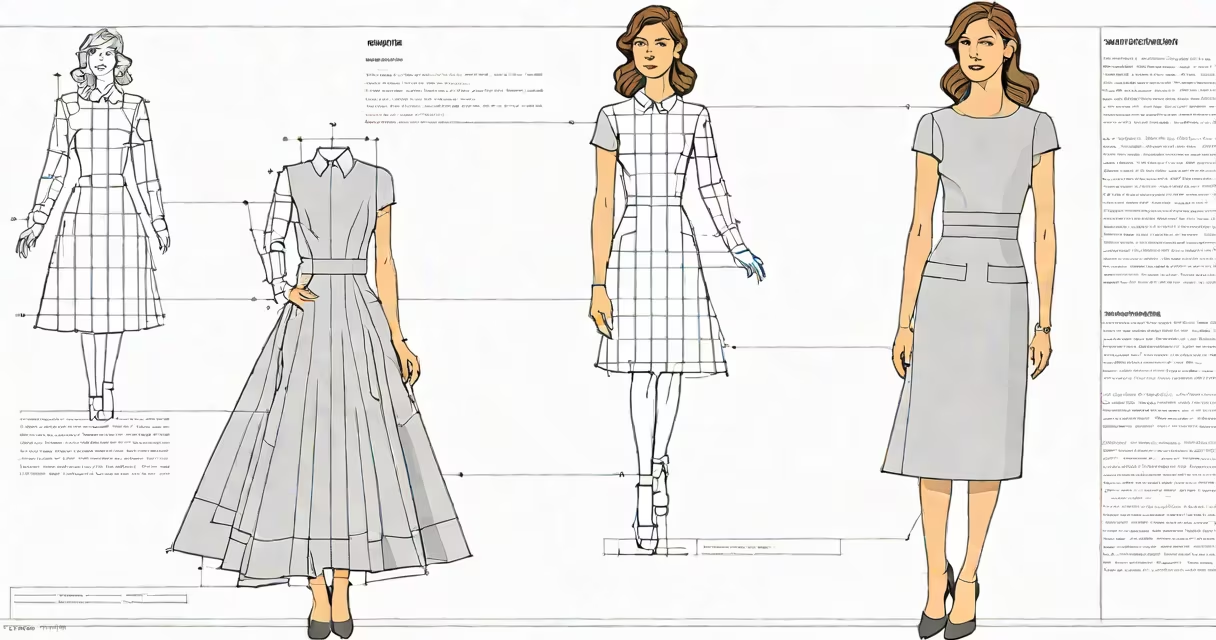
Petite size clothing is specifically cut for women under 5'4" with shorter torsos and limbs, ensuring proportions match body measurements rather than relying on standard sizing. These garments adjust length and fit to avoid excess fabric and maintain balance in silhouette.
Standard clothing patterns assume a baseline height of 5'5" to 5'7". For women below that range, regular sizes often result in long sleeves, oversized waistlines, and hemlines that fall too low. Petite size clothing corrects these issues through adjusted proportions.
The term "petite" refers to body proportion, not weight or body type. A woman who is 5'2" with a 34-inch waist may wear a petite size even if she's not thin. Conversely, someone taller than 5'4" may still wear petite if their torso is shorter than average.
Designers alter garment dimensions to reflect shorter body segments. This includes reducing sleeve length by 1-1.5 inches, shortening the torso by 1-2 inches, and adjusting inseam and hemline placement. These changes prevent clothes from dragging or bunching at the waist.
For example, a standard women's medium blouse may have a 26-inch sleeve and a 24-inch body length. A petite medium version typically features a 24.5-inch sleeve and a 22.5-inch body length. The difference appears minor but makes a significant impact on fit and appearance.
Some brands offer "petite" versions of existing styles, while others design entire lines from the ground up. Brands like Lane Bryant, ASOS, and Banana Republic offer dedicated petite collections with consistent sizing across tops, pants, and dresses.
Not all petite clothing is created equal. Some brands label specific items as petite; others offer full ranges. The following table outlines common categories and typical adjustments:
| Garment Type | Typical Length Adjustment | Common Features |
|---|---|---|
| Dresses | 1.5-2 inches shorter | Waistline at natural waist, hem at mid-calf |
| Blouses & Shirts | 1-1.5 inches shorter | Sleeves shortened, collar positioned correctly |
| Pants & Jeans | 1-1.5 inches shorter inseam | High-waisted options available, belt loops adjusted |
| Jackets & Coats | 1 inch shorter | Shoulder seams aligned with shoulder points |
These adjustments ensure that clothing doesn't hang awkwardly or pull at the shoulders. Without them, a woman who is 5'1" wearing a standard size 8 may have a jacket that drags past her hips and sleeves that extend beyond her wrists.
Some retailers use "short" or "short-length" instead of "petite." This can lead to confusion. For example, a brand may label a dress as "short" but leave the bust and hip measurements unchanged. That's not petite sizing-it's just shorter length. True petite sizing adjusts multiple dimensions proportionally.
Proper fit enhances comfort, confidence, and perceived professionalism. A 2021 study by the Fashion Institute of Technology found that 68% of women under 5'4" reported feeling "invisible" in standard retail clothing due to poor fit.
When garments are too long, they create visual imbalance. A long coat on a short frame can make the wearer appear smaller or less authoritative. A short hemline on a dress can expose too much leg, leading to discomfort or self-consciousness.
One example: a woman who is 5'2" and wears a standard size 10 dress may find the hem falls at mid-calf, which is too long. A petite size 10 dress from the same brand will have a hem at just above the ankle, maintaining proportion and avoiding drag.
Even in casual wear, fit matters. A man's shirt labeled "regular" may have a 34-inch sleeve. A petite version of the same shirt reduces sleeve length to 32.5 inches-enough to eliminate excess fabric and improve drape.
Many people assume petite size clothing is only for very short women. But the category applies to anyone whose torso and limb lengths don't align with standard sizing. A woman who is 5'3" with a 26-inch torso may need petite sizing even if her legs are average length.
Another myth: petite clothing is only for older women. This is false. According to the National Retail Federation, 42% of petite shoppers are under 30. Age is not a factor-fit is.
A lesser-known fact: some brands offer "tall petite" or "extended petite" lines. These cater to women between 5'4" and 5'6" who still have short torsos. For example, Gap offers a "Petite Plus" line with extended torso lengths and wider waistbands to accommodate larger frames without sacrificing proportion.
One personal observation: during a visit to a department store, I tried a standard size 6 dress that fell just below the knee. Switching to the petite version of the same dress brought the hem to just above the ankle. The change wasn't dramatic-but it transformed the look from "off-the-rack" to "tailored."
Major retailers such as Macy's, Nordstrom, and Target carry dedicated petite sections. Online, ASOS and Amazon offer filters for "petite" or "short length." Always check the size chart, not just the size label.
For example, a woman who is 5'1" and has a 32-inch waist should not assume a size 8 fits. She must compare her measurements to the brand's chart. Some brands list petite sizes in a separate scale (e.g., petite size 6 = standard size 8).
When shopping online, look for size guides that include "petite" or "short" length options. Avoid relying solely on the size label. A size 10 petite may differ from a size 10 regular.
For those unsure of their fit, consider measuring from shoulder to waist and wrist to elbow. If either measurement is below average, petite sizing likely suits better.
Understanding what is petite size clothing prevents wasted money and frustration. It's not a niche market-it's a necessary adjustment for accurate fit. Whether shopping for workwear, formal events, or everyday outfits, choosing the right size ensures clothes look intentional and feel comfortable.