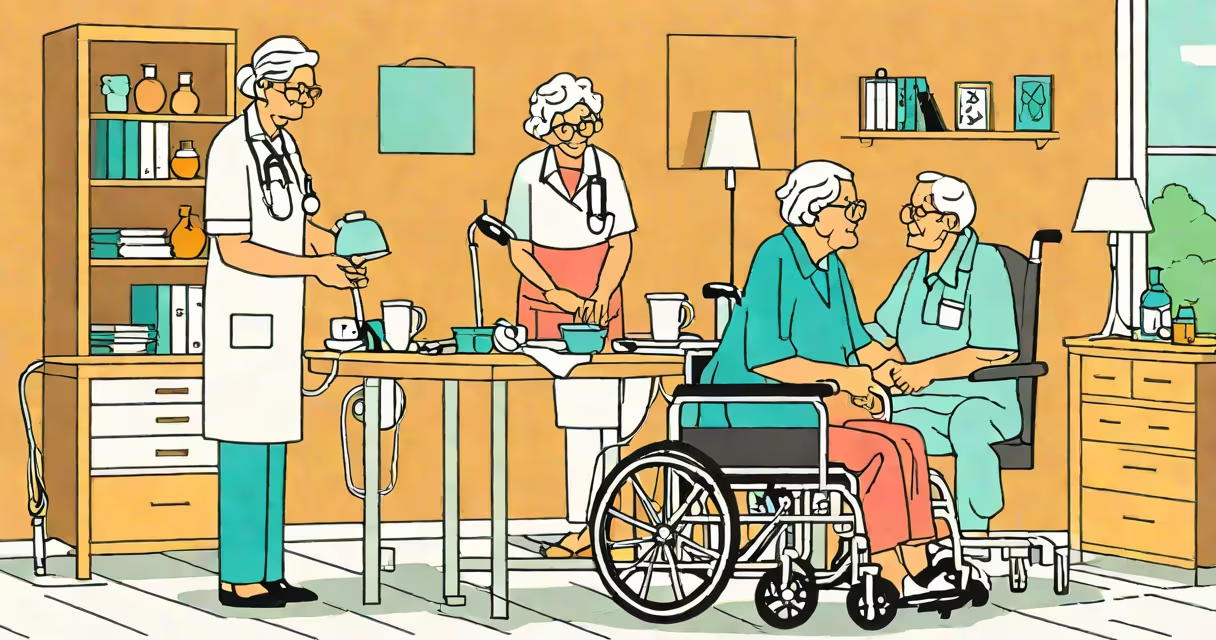
Health and social care is a coordinated system of medical services and personal support designed to maintain wellbeing and independence for people who need help due to age, illness, disability, or mental health conditions. It includes clinical interventions, long-term support, and community-based services delivered by trained professionals.
This system operates across multiple settings-hospitals, GP clinics, care homes, and private residences-and integrates physical health treatment with practical assistance such as bathing, dressing, meal preparation, and mobility support. In the UK, it is primarily funded through taxation and managed by local councils and the National Health Service (NHS).
The term encompasses both reactive care-such as emergency treatment-and proactive, preventative support aimed at reducing hospital admissions and promoting quality of life. For example, a stroke survivor may receive physiotherapy from the NHS while also getting help with shopping and medication management from a local council-funded social worker.
Effective health and social care relies on smooth coordination between different providers. A breakdown in communication can lead to delayed treatments, duplicated assessments, or unmet needs. The Care Act 2014 established legal duties for local authorities to assess eligibility for support and ensure continuity of care.
When someone qualifies for care, a personalized plan is created based on their assessed needs. This plan may include home visits from a care assistant, access to respite care, or referrals to specialist services. The goal is to enable individuals to live safely and independently for as long as possible.
For instance, a 78-year-old woman with early-stage dementia might have her care needs evaluated by a multidisciplinary team including a geriatrician, occupational therapist, and social worker. Her care plan could involve weekly home visits from a care worker to assist with meals and medication, along with monthly check-ins from a district nurse to monitor blood pressure and mobility.
Health and social care services fall into distinct categories based on the level of intervention required:
| Type | Scope | Example |
|---|---|---|
| Primary care | Preventive and ongoing medical attention | GP consultations, vaccinations, chronic disease monitoring |
| Secondary care | Specialist medical treatment | Hospital appointments, surgery, chemotherapy |
| Adult social care | Non-medical support for daily living | Personal care, housekeeping, transport to appointments |
| Community care | Outreach and rehabilitation services | Day centers, mental health outreach teams, home adaptations |
These components often overlap. A person recovering from hip replacement surgery may receive physiotherapy (secondary care), pain management (primary care), and help with household tasks (adult social care) during recovery.
One non-obvious distinction: not all care workers are qualified nurses. Many roles in social care require only a Level 2 or Level 3 qualification in health and social care, which takes six to twelve months to complete. These workers perform essential daily tasks but do not prescribe medication or conduct clinical assessments.
Health and social care is frequently misunderstood as synonymous with the NHS. While the NHS delivers most medical services, social care is funded separately by local councils and is means-tested. Individuals may qualify for free support based on financial assessment, but many pay for services out of pocket.
Another misconception is that care work is low-skilled. In reality, care workers face high emotional labor demands and complex decision-making. According to the Health Foundation, 60% of care staff report experiencing stress-related symptoms, and turnover rates exceed 30% annually in some regions.
I once observed a care worker in a residential home manage a resident's sudden confusion during mealtimes. The worker didn't call for a doctor-she calmly redirected the conversation, adjusted the lighting, and offered smaller portions. That moment revealed how much skilled judgment goes into routine care.
The Health and Social Care Act 2022 introduced reforms to improve integration between health and social care systems. It mandates joint planning between NHS bodies and local authorities, aiming to reduce fragmentation and improve outcomes for vulnerable populations.
Under the Act, local authorities must publish annual reports on care provision and workforce capacity. It also expands funding for mental health services and community-based care, particularly for older adults and those with learning disabilities.
For context, the UK government allocated £11.4 billion in 2023-2024 for adult social care, up from £9.6 billion in 2020-2021. Despite this increase, demand continues to outpace supply, especially in rural areas where staffing shortages are acute.
Compare this to the American health care model, where private insurance dominates and social services are less integrated. In the US, a senior with Alzheimer's might rely on Medicare for medical care and Medicaid for long-term support-but gaps remain, especially for those not eligible for either program.
When health and social care functions well, people avoid unnecessary hospitalizations, maintain dignity, and stay connected to their communities. Research from the King's Fund shows that integrated care models reduce emergency admissions by 18% and cut average care costs by 12% over five years.
Conversely, poor coordination leads to avoidable crises. A 2022 study by the Royal College of Nursing found that 40% of patients discharged from hospitals lacked a follow-up care plan, contributing to readmission within 30 days.
Understanding what is health and social care means recognizing it as a lifeline-not just for individuals, but for families and public resources. It is not a luxury; it is a necessity shaped by policy, funding, and workforce decisions.