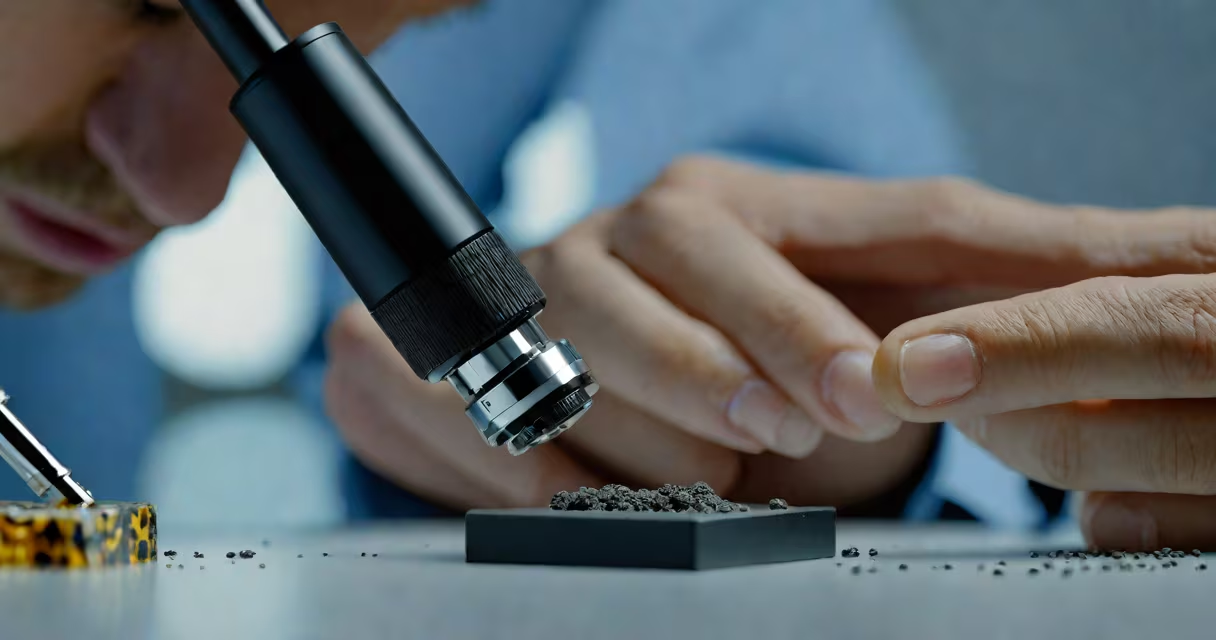
Forensic means relating to the application of scientific methods and principles in legal contexts, especially in analyzing physical evidence to support or refute claims in criminal or civil cases. It derives from the Latin word *forensis*, meaning "of the forum," referring to public debate or legal proceedings.
The term appears in courtrooms, crime labs, and academic research. It describes processes like DNA testing, fingerprint analysis, ballistics comparisons, and digital forensics. These techniques help determine facts in disputes involving harm, fraud, or misconduct.
Modern forensic work relies on standardized protocols. The American Academy of Forensic Sciences (AAFS) sets guidelines for disciplines including toxicology, pathology, and trace evidence. The National Institute of Standards and Technology (NIST) validates tools and procedures used in forensic laboratories.
Forensic analysis begins with evidence collection. A crime scene investigator documents location, condition, and chain of custody. Items such as bloodstains, fibers, or electronic devices are bagged, labeled, and sent to a lab.
At the lab, specialists perform tests. For example, a forensic biologist extracts DNA from a swab taken from a suspect's shirt. They compare it to a sample from a victim using polymerase chain reaction (PCR) amplification. If the profiles match, the result supports a connection between the individual and the scene.
Results are reported in written affidavits or presented during trial testimony. Experts must explain their methods so judges and juries understand the reliability of findings. The Daubert standard, established by the U.S. Supreme Court, requires courts to assess whether scientific methods are testable, peer-reviewed, and generally accepted in the field.
Forensic science spans multiple fields. Each uses distinct tools and training. The table below outlines major categories and their applications.
| Discipline | Focus Area | Common Tools/Methods | Example Use Case |
|---|---|---|---|
| DNA Analysis | Genetic identification | PCR, electrophoresis, STR profiling | Identifying a suspect from a hair found at a burglary site |
| Fingerprint Analysis | Latent print comparison | Chemical enhancement, AFIS databases | Matching prints lifted from a broken window to a known offender |
| Ballistics | Firearm and bullet trajectory | Microscopic examination, GSR testing | Determining if a bullet came from a specific gun used in a shooting |
| Digital Forensics | Data recovery and analysis | Drive imaging, metadata extraction | Recovering deleted messages from a phone involved in a fraud case |
Some disciplines have higher error rates than others. A 2016 NIST study found that fingerprint examiners made false positive errors in 0.8% of cases. This led to reforms in training and certification. Accuracy matters because forensic conclusions can influence life-altering outcomes like imprisonment or exoneration.
Forensic analysis appears in criminal investigations, civil litigation, insurance claims, and regulatory enforcement. In murder cases, forensic pathologists conduct autopsies to determine time and cause of death. In financial fraud, forensic accountants trace illicit transactions through bank records and digital trails.
One high-profile example is the 2001 anthrax attacks. FBI investigators used forensic microbiology to identify the strain of *Bacillus anthracis* in letters sent to media outlets and politicians. By analyzing spore morphology and genetic markers, they traced the source to a laboratory in Fort Detrick, Maryland. This led to the arrest of Bruce Ivins, a scientist working at the facility.
Another use is in wrongful conviction reviews. The Innocence Project has used DNA testing to exonerate over 375 individuals since 1992. In one case, a man imprisoned for 18 years was cleared after forensic analysis matched semen samples from a crime scene to a different man's DNA profile.
People often assume forensic results are infallible. That's incorrect. Forensic science involves interpretation, not just measurement. A fingerprint match may be strong, but it still depends on the examiner's skill and the quality of the print.
Another misconception is that forensic equals "crime scene detective." While detectives use forensic findings, the actual science is done by trained technicians and scientists. A forensic anthropologist may analyze skeletal remains, but they don't interrogate suspects.
A key distinction: forensic is not synonymous with "scientific." All forensic work uses science, but not all science is forensic. For example, a university study on soil composition in a forest is scientific but not forensic unless it's applied to a legal dispute.
I once observed a courtroom where a forensic psychologist testified about a defendant's mental state. The defense argued the report relied too heavily on self-reported symptoms. The judge ruled the evidence admissible but instructed the jury to weigh the limitations. That moment showed how forensic findings aren't absolute-they're part of a larger evidentiary process.
"Forensic" is sometimes confused with "factual" or "evidentiary." While both relate to proof, forensic specifically implies a structured, scientific method applied within a legal structure. Saying "the evidence is forensic" is redundant-evidence isn't forensic; the analysis of it is.
"By no means" is a common phrase used to emphasize negation. Its opposite is "in no way," "not at all," or "absolutely not." A forensic expert might say, "This DNA match is by no means conclusive without corroborating evidence." Understanding such phrases helps avoid misreading statements in reports or testimony.
Understanding what forensic means enables clearer judgment of evidence in legal, medical, and investigative settings. It's not magic-it's method.