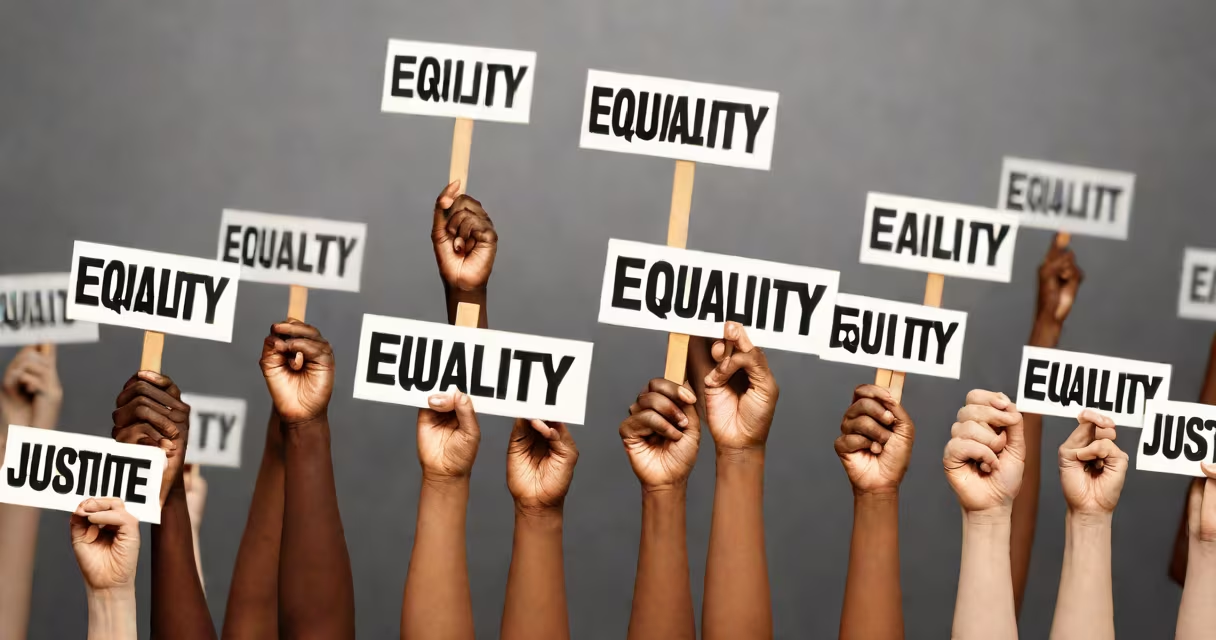
A feminist is someone who advocates for gender equality and works to dismantle systems of power that privilege men over women and non-binary people. This includes challenging norms, laws, and cultural practices rooted in patriarchal structures.
Feminism emerged in the late 18th century as a response to legal and political exclusion of women. Today, it encompasses many perspectives united by the goal of ending gender-based discrimination. It is not a single ideology but a movement with multiple waves and approaches, including liberal, radical, socialist, and intersectional feminism.
The term "feminist" describes both individuals and organized efforts to achieve fairness in education, employment, healthcare, and representation. It applies to anyone who believes that gender should not determine access to opportunity, safety, or dignity.
Feminism operates through advocacy, policy reform, public education, and grassroots organizing. It identifies structural barriers-such as unequal pay, underrepresentation in leadership, and violence against women-and proposes solutions grounded in evidence and human rights principles.
For example, the gender pay gap persists globally. In the United States, women earn 82 cents for every dollar earned by men, according to the U.S. Census Bureau (2022). Feminist activists have pushed for legislation like the Paycheck Fairness Act, which aims to close this gap by banning wage secrecy and strengthening enforcement of equal pay laws.
Another example is reproductive rights. In 2022, the U.S. Supreme Court overturned Roe v. Wade, ending federal protection for abortion access. Feminist groups such as Planned Parenthood and the National Organization for Women (NOW) mobilized to defend bodily autonomy, leading to state-level ballot initiatives and court challenges that expanded access in several regions.
Feminism is not monolithic. Different schools of thought address various aspects of inequality. The following table outlines major branches:
| Type | Focus | Key Example |
|---|---|---|
| Liberal Feminism | Legal and political equality | Advocating for anti-discrimination laws and women's suffrage |
| Radical Feminism | Root causes of male dominance | Challenging institutions like marriage and compulsory heterosexuality |
| Socialist Feminism | Intersection of class and gender oppression | Highlighting how low-wage female labor is exploited in global supply chains |
| Intersectional Feminism | Overlapping identities (race, class, sexuality) | Kimberlé Crenshaw's work on how Black women face unique forms of bias |
Intersectional feminism, developed by scholar Kimberlé Crenshaw in the 1980s, remains one of the most influential frameworks today. It argues that experiences of sexism cannot be separated from racism, ableism, or economic status. For instance, Black women in the U.S. are 3.5 times more likely to die from pregnancy-related causes than white women, according to CDC data (2021).
This insight led to campaigns like #SayHerName, which highlights the stories of Black women killed by police violence-a group often excluded from mainstream narratives about racial justice.
Many people misunderstand what it means to be a feminist. A common error is equating feminism with hatred of men. This mischaracterization ignores the core principle: feminism seeks to liberate everyone from rigid gender roles.
According to a 2023 Pew Research Center survey, 61% of Americans believe feminism is about achieving equal rights for women. Only 19% associate it with anti-male sentiment. The majority of feminists do not oppose men-they oppose systems that harm both women and men by enforcing harmful stereotypes.
Another misconception is that feminism is only relevant to women. In reality, men can be feminists. The HeForShe campaign, launched by UN Women in 2014, encourages men to participate in gender equality efforts. Over 1.5 million men have signed the pledge online, including celebrities and politicians.
Being a feminist does not require agreement on every issue. Disagreements exist within the movement-on topics ranging from pornography to transgender rights-but these debates are part of democratic discourse, not proof of failure.
In 2017, the Women's March drew over 5 million participants across 67 countries. Protesters carried signs demanding reproductive freedom, fair wages, and an end to sexual harassment. The event was organized largely through feminist networks and social media, demonstrating how grassroots feminist action can scale rapidly.
I attended the 2018 Women's March in Washington, D.C., and observed how attendees from different backgrounds-disabled women, Indigenous activists, LGBTQ+ allies-used the platform to demand inclusive policies. One woman held a sign that read: "Feminism is not a threat-it's a promise." That moment underscored how feminist values are lived, not just theorized.
Today, feminist principles inform policy decisions worldwide. Countries like Iceland and Sweden have implemented gender quotas in corporate boards and elected offices. As of 2023, Iceland ranks first in the World Economic Forum's Global Gender Gap Index, with near-equal participation in politics and the workforce.
What is feminist? It is a commitment to justice, equity, and dignity for all genders. It is not a label applied to a single person or movement but a living structure that evolves with new challenges. From voting rights to climate justice, feminist action continues to reshape society.
Understanding this term correctly helps dismantle myths and opens space for meaningful dialogue. Whether through legislation, art, or daily choices, being feminist means actively working toward a world where no one is limited by their gender.