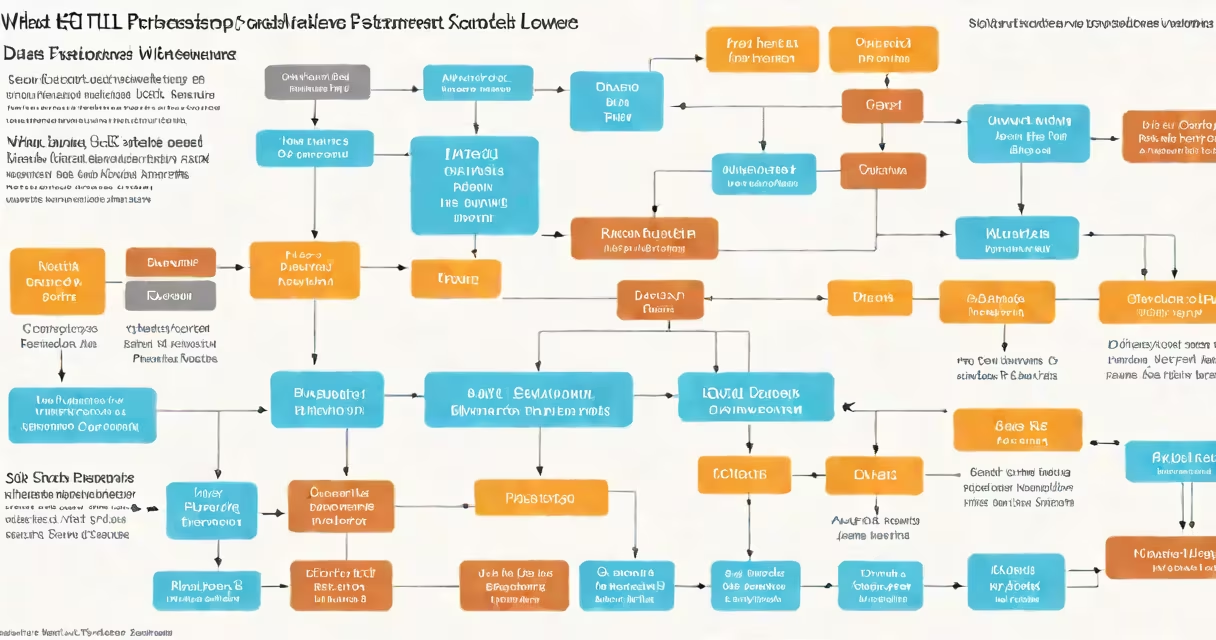
ETL in SQL refers to the process of extracting data from source systems, transforming it into a consistent format, and loading it into a target database or data warehouse. This workflow enables structured data management, supports reporting, and powers business intelligence tools.
ETL stands for Extract, Change, Load-a sequence used to prepare raw data for analysis. In SQL environments, ETL often runs as scripts or workflows using SQL commands, stored procedures, or integrated tools like Apache Airflow, Talend, or SQL Server Integration Services (SSIS).
For example, a retail company pulls daily sales records from multiple stores (extract), standardizes product codes and converts currency values (change), then inserts the cleaned data into a central analytics database (load). This allows accurate monthly performance reports.
The extract phase gathers data from sources such as CSV files, relational databases, APIs, or flat files. In SQL, this often uses SELECT queries, BULK INSERT statements, or external tools that interface with SQL engines.
During transformation, data is cleaned, validated, and reshaped. Common operations include removing duplicates, filling missing values, aggregating rows, joining tables, and applying business rules. SQL provides functions like CASE, COALESCE, and window functions to perform these tasks efficiently.
Finally, the load phase writes transformed data into a destination system-typically a data warehouse or a staging table. This step may involve inserting new records, updating existing ones, or merging changes using SQL's INSERT, UPDATE, or MERGE INTO statements.
ETL processes vary based on frequency, complexity, and data volume. The most common types are:
| Type | Frequency | Use Case | SQL Tools Involved |
|---|---|---|---|
| Batch ETL | Daily or hourly | Monthly financial reporting | Stored procedures, scheduled jobs |
| Real-time ETL | Continuous | Live dashboards for customer behavior | Stream processing, change data capture (CDC) |
| Incremental ETL | On-demand or scheduled | Updating a customer database with new sign-ups | WHERE clauses, MERGE INTO, triggers |
Batch ETL is the most widely used in SQL environments. It processes large volumes of data at set intervals-such as nightly-using SQL scripts run via cron jobs or database schedulers.
Real-time ETL requires continuous monitoring of data streams. While pure SQL doesn't handle streaming natively, tools like Kafka paired with SQL-based stream processors (e.g., Apache Flink with SQL API) enable real-time ETL pipelines.
Incremental ETL improves efficiency by processing only new or changed data. For instance, a CRM system might track last_updated timestamps and use WHERE last_updated > '2024-04-01' to fetch only recent entries. This reduces load time and resource usage.
ETL is not synonymous with data integration. While both move data between systems, ETL specifically follows the extract-change-load sequence. Data integration includes broader patterns like replication, synchronization, and event-driven architectures.
Another misconception is that ETL only applies to data warehouses. In reality, ETL processes exist in operational databases too. A hospital system might use ETL to consolidate patient records from regional clinics into a central EMR system-ensuring uniform formats across locations.
A key distinction: ETL transforms data before loading. This differs from ELT (Extract, Load, Change), where data is loaded first and transformed later-common in cloud data warehouses like Snowflake or BigQuery. These platforms offer massive compute power, making post-load transformations feasible and faster.
According to the Data Management Association (DAMA), ETL remains the dominant pattern for structured data pipelines, especially in regulated industries like finance and healthcare where audit trails and data lineage are required.
Consider a company with sales data stored in three regional databases (North, South, East). Each uses different naming conventions: "prod_name" vs "product_name", and dates in MM/DD/YYYY vs DD/MM/YYYY format.
Step 1: Extract
A SQL script connects to each database and retrieves data using:
SELECT region, sale_date, product_name, revenue FROM north_sales WHERE sale_date > '2024-03-31';
Step 2: Change
The data is standardized using a temporary table and SQL logic:
UPDATE temp_sales SET product_name = TRIM(product_name);
UPDATE temp_sales SET sale_date = STR_TO_DATE(sale_date, '%m/%d/%Y') WHERE region = 'East';
Null values in revenue are replaced with 0 using COALESCE:
SELECT region, sale_date, product_name, COALESCE(revenue, 0) AS revenue FROM temp_sales;
Step 3: Load
Final data is inserted into a centralized analytics table:
INSERT INTO analytics.sales_summary (region, sale_date, product_name, revenue)
SELECT region, sale_date, product_name, revenue FROM temp_sales;
This entire pipeline can be wrapped in a stored procedure and scheduled to run every night. The result is a unified dataset ready for reporting and forecasting.
In my work maintaining a nonprofit's donor tracking system, I built an ETL pipeline using PostgreSQL and Python. The source was a mix of CSV exports and a legacy Access database. I extracted data using psycopg2 and pandas, transformed fields like donation amounts and donor IDs using SQL queries, and loaded results into a Redshift data warehouse.
After implementing incremental loads based on last_sync timestamp, processing time dropped from 45 minutes to under 8 minutes. The report generation speed improved, enabling weekly updates instead of bi-weekly.
When updating data in bulk, developers use the MERGE INTO statement in SQL to conditionally insert or update rows. This command is essential in ETL workflows where target tables must reflect changes without duplicating records. For example:
MERGE INTO sales_target AS target
USING sales_staging AS source
ON target.product_id = source.product_id
WHEN MATCHED THEN UPDATE SET revenue = source.revenue
WHEN NOT MATCHED THEN INSERT VALUES (source.product_id, source.revenue);
ETL in SQL is foundational for data-driven decision-making. It turns fragmented, inconsistent data into reliable insights-enabling accurate forecasting, compliance reporting, and strategic planning.