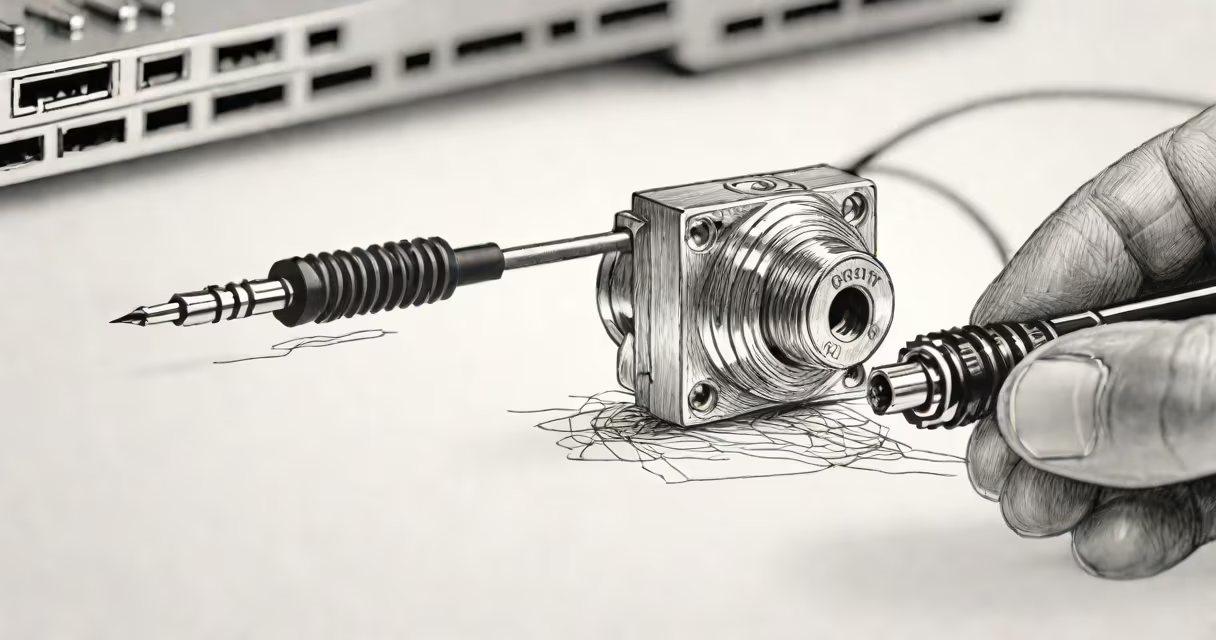
An optical audio output is a digital interface that sends audio signals using light pulses through a fiber optic cable, typically using a TOSLINK connector. It transmits uncompressed PCM audio or compressed formats like Dolby Digital and DTS, supporting stereo and multi-channel surround sound.
Unlike analog audio cables, which carry electrical signals, optical audio outputs send data as pulses of infrared light. This eliminates electromagnetic interference and ground loops, making it ideal for high-fidelity audio transmission between devices such as TVs, AV receivers, soundbars, and gaming consoles.
For example, connecting a Blu-ray player to a home theater receiver via optical audio ensures clean, artifact-free audio without signal degradation over short distances. The standard cable length is up to 10 meters, though performance degrades beyond 5 meters due to light loss in the fiber.
Optical audio outputs use a transmitter diode that converts digital audio data into pulses of infrared light. These pulses travel through a plastic or glass fiber core inside the cable. At the receiving end, a photodiode detects the light and converts it back into digital audio data.
The process is entirely immune to electromagnetic noise, which makes it superior to RCA or 3.5mm analog cables in electrically noisy environments. For instance, in a home with multiple power-hungry devices, optical audio avoids hum or buzz caused by ground loops.
Each pulse corresponds to a binary digit-light on = 1, light off = 0. A typical optical audio stream runs at 44.1kHz sample rate (CD quality) or higher, supporting up to 5.1-channel audio with bitrates up to 6.144 Mbps.
Optical audio cables consist of a central fiber core surrounded by cladding and protective sheathing. The most common connectors are TOSLINK (Toshiba Link), a square-shaped plastic plug with a small window for light emission. TOSLINK uses a 3.5mm-sized connector, though it's not interchangeable with 3.5mm audio jacks.
There are two main physical types:
| Type | Connector Size | Common Use | Signal Quality |
|---|---|---|---|
| TOSLINK (standard) | 3.5mm square | TVs, DVD players, soundbars | Up to 10m, limited by light attenuation |
| Mini-TOSLINK | 2.5mm square | Laptops, portable audio devices | Shorter reach, lower durability |
Despite being called "fiber optic," most consumer optical cables use plastic optical fiber (POF), not glass. POF is cheaper and easier to handle but has higher signal loss than glass fiber. Industrial-grade systems may use glass, but they're rare in home audio setups.
Optical audio outputs are standard on TVs, streaming boxes, game consoles, and AV receivers. They're especially useful when connecting audio equipment to a display that lacks a dedicated analog audio output.
For example, many modern flat-screen TVs lack 3.5mm headphone jacks or RCA outputs. An optical audio output allows users to route audio to a soundbar or receiver without relying on HDMI ARC, which may not support all audio formats.
According to the Consumer Technology Association (CTA), over 85% of HDTVs sold in North America since 2015 include at least one optical audio output. This reflects demand for flexible audio routing options in home entertainment systems.
Many assume optical audio supports higher resolution than HDMI. That's incorrect. While optical can carry 5.1 surround sound, HDMI supports higher bitrates and newer formats like Dolby TrueHD and DTS-HD Master Audio-formats optical cannot transmit.
Another misconception: optical audio is not the same as HDMI audio. HDMI carries both video and audio in a single cable, while optical only carries audio. You can't use an optical cable to send video signals.
A lesser-known fact: optical audio cables can degrade over time due to physical bending or dust buildup in the connector. A bent cable can misalign the light path, causing intermittent audio dropouts. Cleaning the connector with a dry, lint-free swab often restores function.
I once encountered a customer whose soundbar cut out during movie playback. After checking all connections, I discovered dust had accumulated in the TOSLINK port. A quick cleaning restored full audio. This happens more often than people realize.
Use optical audio when you need a simple, interference-free digital audio connection without upgrading your entire setup. It's ideal for older AV receivers that don't support HDMI ARC or when you want to avoid audio sync issues in complex setups.
However, if you need high-resolution audio, multi-room audio, or video passthrough, HDMI is better. For example, Apple TV 4K outputs 4K HDR video and Dolby Atmos audio via HDMI. Using optical would force you to split audio and video, reducing convenience.
When choosing between optical and Bluetooth audio, consider latency. Optical offers near-zero delay, critical for gaming or watching live sports. Bluetooth introduces 100-200ms lag, which can cause lip-sync errors.
To set up an optical audio output:
If audio doesn't play, verify the source device is sending a digital signal. Some TVs default to analog audio output even when connected via optical. Check the audio settings menu-ensure "Digital Audio Out" is enabled and set to "PCM" or "Bitstream" depending on your receiver's capabilities.
For troubleshooting, try a different cable. Faulty cables are a common cause of static or no sound. Also, ensure the receiving device is set to the correct sampling rate. Mismatched rates (e.g., 48kHz source vs. 44.1kHz receiver) can cause audio glitches.
An optical audio output is a digital audio interface that transmits sound using light pulses through a fiber optic cable. It provides high-quality, interference-free audio transmission between devices like TVs, receivers, and soundbars. While it doesn't support the highest audio resolutions or video, it remains a reliable choice for stereo and surround sound in home entertainment systems.
Understanding what is an optical audio output helps you make informed decisions about audio setup. upgrading a home theater, knowing the strengths and limits of optical audio prevents frustration and ensures better sound quality.