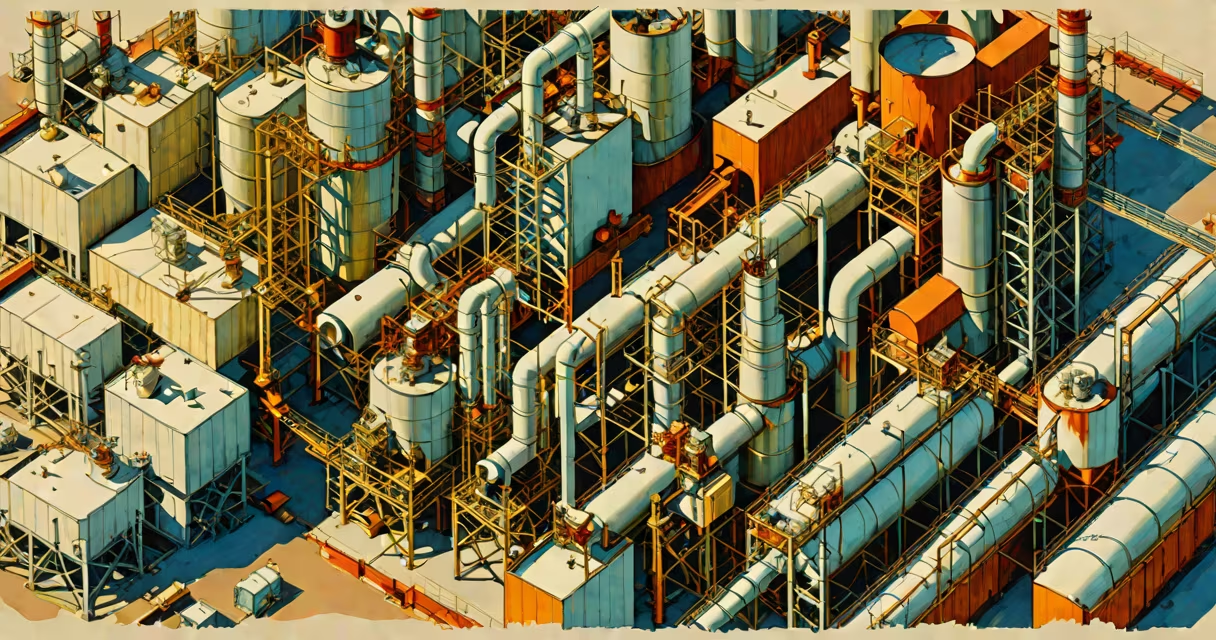
A pulp mill is an industrial facility that processes raw wood into wood pulp, the primary raw material for making paper, cardboard, and certain textiles. It uses chemical or mechanical methods to separate cellulose fibers from lignin and other plant components. This process enables mass production of paper-based materials used globally.
Pulp mills operate at scale, often processing thousands of tons of wood annually. They are central to the global paper supply chain, supplying raw material to paper mills, packaging plants, and textile producers. The output is typically shipped in wet or dry form for further processing.
The term "pulp mill" refers specifically to facilities focused on fiber extraction, not downstream papermaking. A paper mill produces finished sheets; a pulp mill produces the base material. Confusing the two leads to misunderstandings about pollution sources and production stages.
Wood enters a pulp mill as logs or chips. These are first cleaned and sorted by size and species. Chips then move through a pulping system designed to break down woody tissue into individual cellulose fibers.
In chemical pulping, wood chips are cooked in a solution of sodium hydroxide and sodium sulfide (the kraft process). This dissolves lignin-the glue holding fibers together-while preserving fiber integrity. The resulting pulp is bleached using chlorine dioxide or hydrogen peroxide to achieve whiteness suitable for printing paper.
Mechanical pulping uses high-pressure grinding or refining to physically separate fibers. This method preserves more fiber mass but yields lower-quality pulp with shorter fibers. It's common for newsprint and low-cost paper products.
After pulping, the product is washed to remove residual chemicals and impurities. Water is recovered through thickening and filtration systems. About 80% of water used in the process is recycled within the mill, reducing freshwater demand.
Pulp mills differ primarily by pulping method and feedstock. The two dominant technologies are chemical and mechanical pulping, each suited to different end products.
| Type | Process | Output Quality | Common Uses | Energy Use |
|---|---|---|---|---|
| Chemical (Kraft) | Wood chips cooked in alkaline solution | High strength, long fibers | Printed paper, packaging, tissues | High (but steam recovery reduces net use) |
| Mechanical | Grinding or refining under pressure | Lower strength, shorter fibers | Newsprint, lightweight paper | Very high (electricity-intensive) |
| Thermomechanical (TMP) | Steam pre-treatment followed by grinding | Medium quality, moderate fiber length | Coated paper, magazine stock | Medium-high |
Some mills combine methods. For example, a hybrid mill may use mechanical pulping for 60% of output and chemical pulping for the rest. This balances cost, quality, and resource efficiency.
Feedstock also matters. Softwood trees like spruce and pine yield longer fibers ideal for high-strength paper. Hardwoods such as eucalyptus and birch produce shorter fibers better suited for tissue and printing papers.
Pulp mills historically contributed to water pollution due to effluent discharge. Untreated wastewater contained dissolved organics, chlorinated compounds, and suspended solids. In the 1970s and 80s, rivers near mills in Canada and Scandinavia showed elevated toxicity levels.
Modern regulations have reduced this. The U.S. Environmental Protection Agency (EPA) requires mills to meet National Pollutant Discharge Elimination System (NPDES) standards. In Sweden, the Environmental Code mandates closed-loop water systems and emissions monitoring.
Despite improvements, challenges remain. Chemical pulping generates black liquor-a byproduct rich in organic waste. This is burned in recovery boilers to generate steam and recover chemicals. While efficient, it emits sulfur compounds and particulates. Air quality controls are required under the Clean Air Act.
A lesser-known issue is land use. Large-scale pulp operations rely on plantation forests. In Southeast Asia, eucalyptus plantations for pulp have displaced tropical forests and indigenous communities. The Rainforest Alliance certifies sustainable sourcing, but enforcement varies.
Many assume all pulp mills are environmentally harmful. That's incorrect. Modern mills in Finland, Norway, and Canada meet strict emission standards and use renewable energy. Some run entirely on biomass heat and power.
Another myth is that pulp mills are synonymous with deforestation. In reality, most mills source wood from sustainably managed forests. The Forest Stewardship Council (FSC) certifies over 200 million hectares of forestland used for pulp and paper. FSC-certified mills report 90% less biodiversity loss than non-certified ones.
Finally, people often confuse pulp mills with paper mills. A pulp mill makes raw fiber. A paper mill forms that fiber into sheets. The two are adjacent but distinct stages. A single company may own both, but they serve different functions.
I visited a kraft pulp mill in northern Sweden in 2022. The facility processes 1.2 million tons of spruce annually. Wood chips enter a digester at 170°C and 10 bar pressure. After cooking, the pulp is screened and washed. Black liquor is burned in a recovery boiler, generating enough steam to power the entire site.
Effluent is treated through biological filters and UV disinfection. Discharge meets EU Water Structure Directive limits. The mill reports 98% water reuse and 95% chemical recovery. Emissions are monitored hourly via continuous emission monitoring systems (CEMS).
When I asked about sustainability, the operations manager pointed to the annual carbon audit. The mill offsets residual emissions through reforestation projects in Lapland. Over five years, it planted 1.4 million seedlings on degraded land.
What is a pulp mill? It's a specialized industrial plant that transforms wood into usable fiber for paper and related products. Its function is essential to modern manufacturing, but its environmental footprint depends heavily on technology choice, regulation, and management practices. Understanding the differences between chemical and mechanical methods, and recognizing that not all mills are equal, prevents oversimplification of a complex industry.