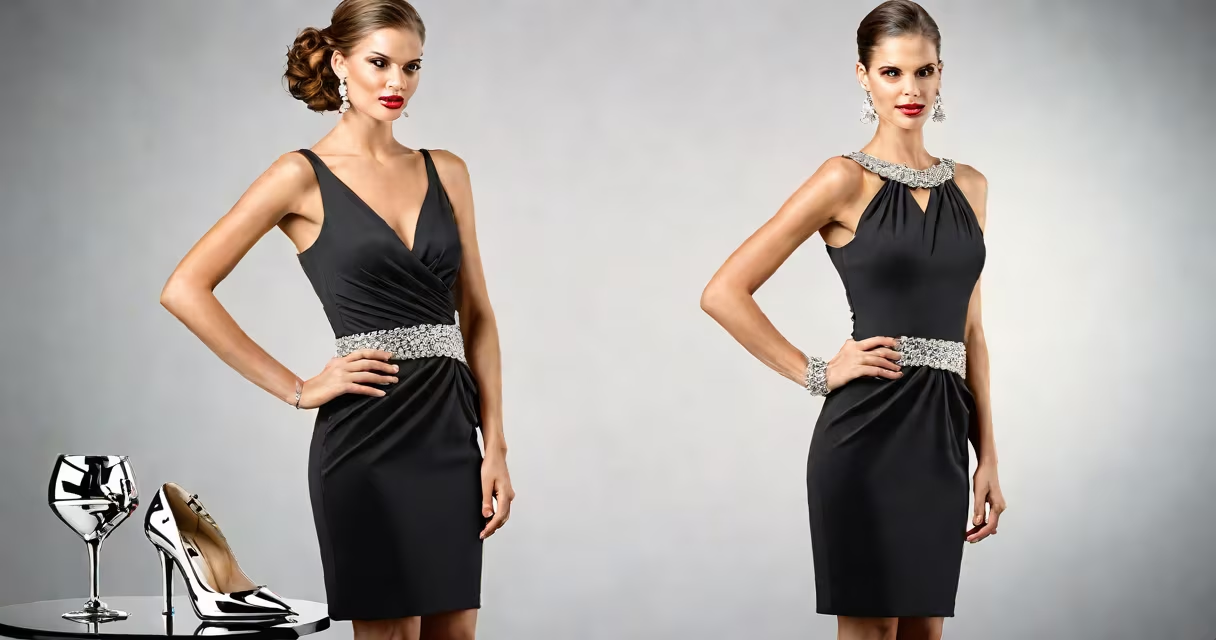
A cocktail dress is a semi-formal women's garment worn to events such as weddings, cocktail parties, galas, or upscale dinners. It typically falls between the knee and mid-calf, features a fitted silhouette, and includes refined details like lace, sequins, or structured bodices. The term originated in the 1920s and evolved from early 20th-century evening wear, designed for social gatherings involving drinks and conversation.
Cocktail dresses are distinct from full formal gowns and casual wear. They are not as elaborate as ballgowns or floor-length evening dresses but carry more polish than a simple dress or sundress. The style balances elegance with practicality, making it ideal for events where guests are expected to look put-together but not overly dressed.
According to the Metropolitan Museum of Art's Costume Institute, the cocktail dress emerged during Prohibition-era America as a response to changing social norms. Women began attending evening events in shorter, more mobile garments that allowed movement while still appearing sophisticated. This shift marked a move toward personal expression in fashion, especially for women who were increasingly visible in public life.
The design of a cocktail dress centers on proportion and structure. Most feature a defined waistline, often accentuated with a belt or seam. The neckline varies widely-V-neck, square neck, off-the-shoulder, or modest round styles-but remains tailored enough to avoid looking casual. Sleeves may be short, long, or absent entirely.
Fabric choice plays a major role in defining the dress's formality. Common materials include satin, silk, stretch crepe, velvet, and structured cotton blends. Satin and silk add sheen and weight, signaling a higher level of occasion formality. Stretch crepe allows for a sleek fit without restricting movement, making it popular for dancing or standing during events.
Color and pattern also signal intent. Solid black, navy, deep red, or emerald green convey sophistication. Prints like florals or geometric patterns are acceptable but tend to lean toward festive or themed events rather than high-end formal functions. A 2022 study by the Fashion Institute of Technology found that 68% of women selected a cocktail dress based on color coordination with their accessories, particularly shoes and handbags.
Cocktail dresses come in several recognizable forms, each suited to different body shapes and event types.
| Type | Length | Best For | Example |
|---|---|---|---|
| Fit-and-flare | Knee to mid-calf | Weddings, charity galas | Wrap dress with a flared skirt, often in silk |
| Sheath | Mid-knee to calf | Business dinners, award ceremonies | Single-breasted dress with a slim cut, usually in wool blend |
| One-shoulder | Mid-thigh to knee | Art openings, cocktail parties | Asymmetrical neckline with a draped sleeve, often in satin |
| Bodycon | Mid-calf or below | Evening events, date nights | Stretchy fabric that hugs the torso, often with a high slit |
One lesser-known distinction is that cocktail dresses are not meant to be worn with sneakers or sandals unless the event is explicitly casual. High heels or elegant flats are standard. The American Psychological Association notes that footwear choice influences perceived confidence and authority in professional settings, reinforcing the idea that a cocktail dress is not just clothing-it's a signal of intent.
Many people mistake a cocktail dress for a "party dress" or "evening gown." A party dress is often shorter, brighter, and more playful-think sparkly mini-dresses for birthdays or New Year's Eve. An evening gown is longer, heavier, and intended for formal events like opera premieres or state dinners. Cocktail dresses fall between these two extremes.
Another frequent error is assuming that a cocktail dress must be black. While black is classic and widely accepted, it's not required. A 2021 survey by Vogue magazine showed that 42% of women wore colored cocktail dresses to events, with blue, burgundy, and plum being the most popular alternatives. Black remains dominant due to its slimming effect and versatility, but color choices are increasingly accepted in modern contexts.
There's also confusion around whether a cocktail dress requires a jacket or shawl. Unlike formal wear, which may include a bolero or wrap, a cocktail dress stands alone. Adding extra layers can make the outfit appear overdressed, especially in warm climates or indoor venues with air conditioning.
In 2023, a woman named Maria attended her cousin's wedding in Miami. She chose a navy-blue silk cocktail dress with a subtle gold embroidery along the hem. The dress was knee-length, had a fitted bodice, and featured a deep V-neckline. She paired it with silver strappy heels and a small clutch.
Her choice met all criteria for a cocktail dress: length, formality, and appropriate fabric. The venue was outdoors at sunset, and the dress held up well under humidity. Her cousin later told her it was one of the most polished outfits among the guests. Maria reported feeling confident and appropriately dressed-not too flashy, not too plain.
This example illustrates that a cocktail dress is not just about appearance-it's about context. The same dress worn to a casual barbecue would stand out as inappropriate. But at a wedding with a cocktail hour, it fits perfectly.
A cocktail dress is not suitable for funerals, job interviews, or religious ceremonies where modesty is emphasized. At a funeral, black is acceptable, but the dress must be conservative in cut and free of embellishments. A cocktail dress with a plunging neckline or sequins would be seen as disrespectful.
For job interviews, especially in corporate or legal fields, a cocktail dress may suggest informality. A tailored suit or a conservative dress with a jacket is preferred. According to the Society for Human Resource Management, 73% of HR managers consider attire a factor in hiring decisions, with formal wear being associated with professionalism.
Women should also avoid wearing a cocktail dress to outdoor festivals or beachside events unless the event specifies a dress code. In those cases, a sundress or swimwear is more fitting.
Understanding what a cocktail dress means for a woman involves recognizing it as a deliberate choice-one that signals awareness of social context, personal presentation, and cultural expectations. It's not just a piece of clothing. It's a statement of readiness to participate in a specific kind of gathering.
While the term "cocktail dress" has roots in mid-20th-century social customs, its relevance persists today. It remains a staple in wardrobes for women attending events that demand elegance without extravagance. Whether worn for a birthday celebration or a business dinner, the cocktail dress continues to define a middle ground between casual and formal-where style meets purpose.