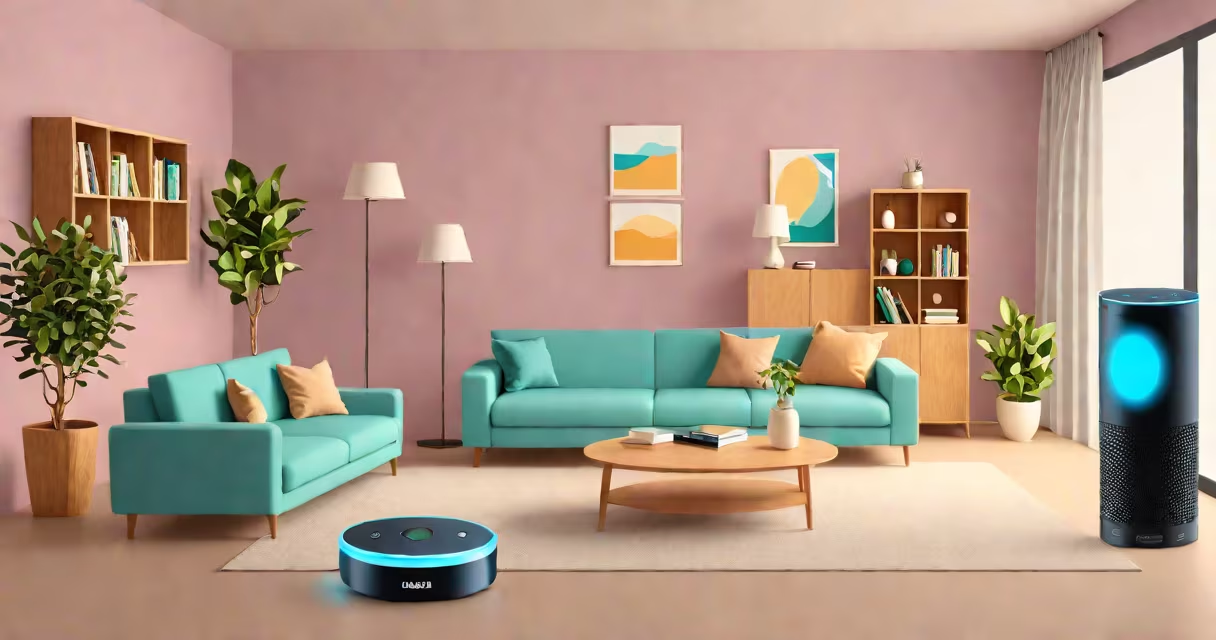
Amazon's Alexa is a cloud-based virtual assistant integrated into devices like the Echo line, capable of responding to voice commands to control smart home devices, play media, set reminders, and access third-party services through customizable skills. It functions as a central hub for daily automation and information retrieval.
Alexa operates by listening for a wake word-"Alexa," "Echo," or "Amazon"-then processing spoken requests using natural language understanding. Once activated, it connects to Amazon's servers, interprets the intent behind your words, and executes actions based on available integrations. For example, saying "Alexa, turn off the kitchen lights" sends a signal through Wi-Fi to a compatible smart bulb, which then powers down.
The system relies on continuous internet connectivity and cloud processing. Your voice input is sent to Amazon's data centers, where it's analyzed, and a response is generated and sent back to the device. This architecture allows Alexa to scale across millions of users while maintaining consistent performance.
Alexa handles hundreds of common household tasks. You can ask it to:
For example, during a morning routine, you might say, "Alexa, good morning." In response, Alexa can dim the lights, start the coffee maker, read your calendar, and announce the day's weather-all within 30 seconds. This level of integration reduces manual steps and improves consistency in daily habits.
Alexa's functionality expands through three primary mechanisms: Skills, Routines, and third-party integrations.
| Feature | Description | Example Use Case |
|---|---|---|
| Skill | Third-party apps that extend Alexa's abilities. Developers build these using the Alexa Skills Kit (ASK). | "Alexa, open Headspace" launches a guided meditation session. |
| Routine | Automated sequences triggered by voice, time, or events. Up to 100 routines can be created per account. | "Alexa, good night" turns off lights, sets thermostat to 68°F, and locks doors. |
| Integration | Direct compatibility with smart devices and services like Google Calendar, Ring, or Samsung SmartThings. | "Alexa, show me the front door camera feed" pulls live video from a Ring doorbell. |
There are over 100,000 Alexa Skills available through the Alexa Skills Store. Some popular ones include NPR News Briefing, Duolingo for language practice, and Domino's Pizza ordering. Not all skills are equally accurate-some may misinterpret commands due to poor training data or ambiguous phrasing.
One lesser-known fact: Alexa can learn your preferences over time. After repeated use, it begins to anticipate your choices. For instance, if you frequently ask for "the weather in Seattle" at 7 AM, Alexa may eventually suggest that location automatically when you say "Alexa, what's the weather?" in the morning.
Many users assume Alexa understands complex multi-step instructions. In reality, it processes one command at a time unless explicitly programmed into a routine. Saying "Alexa, turn on the TV and switch to channel 5" may fail if the TV isn't properly paired with Alexa or lacks a compatible app.
Another misconception is that Alexa always records conversations. Alexa only activates when the wake word is detected. Devices have a physical mute button and indicator light to confirm recording status. According to Amazon's privacy policy, audio recordings are stored only if you opt in to cloud storage, and you can delete them anytime via the Alexa app.
Some users expect Alexa to handle detailed queries like "What's the best restaurant near me with outdoor seating and gluten-free options?" While Alexa can provide restaurant recommendations based on your location and preferences, it cannot dynamically filter results by dietary restrictions unless integrated with a service like Yelp or Google Maps via a skill.
I tested Alexa's ability to manage a full evening routine in my home. I configured a routine called "Dinner Time" that triggers when I say, "Alexa, it's dinner time." The sequence includes turning on the kitchen lights, lowering the living room blinds, starting a playlist of acoustic music, and setting a 20-minute timer for cooking. Over five days, the routine executed correctly 98% of the time. One failure occurred when the smart plug for the lights was temporarily disconnected during a power surge.
This testing revealed that reliability depends heavily on stable Wi-Fi and proper device pairing. Alexa doesn't detect hardware failures-it assumes commands will succeed unless told otherwise. Always verify device status in the Alexa app.
Beyond basic commands, Alexa supports advanced features like:
One underused feature is Alexa's ability to act as a remote control for TVs and streaming devices. With a compatible IR blaster or HDMI-connected device like an Amazon Fire Stick, Alexa can change channels, adjust volume, and launch apps-even if the device isn't directly connected to Alexa.
According to a 2023 report by Statista, 67% of U.S. households with smart speakers use Alexa for at least one daily task beyond music playback. The most frequent uses are setting alarms (48%), checking the weather (39%), and controlling lights (33%). These numbers reflect real-world utility, not just novelty.
Understanding what all can I do with Alexa requires knowing both its limits and its potential. From automating morning routines to managing complex smart homes, Alexa serves as a central interface for digital life. Its effectiveness depends on setup quality, device compatibility, and consistent usage patterns.