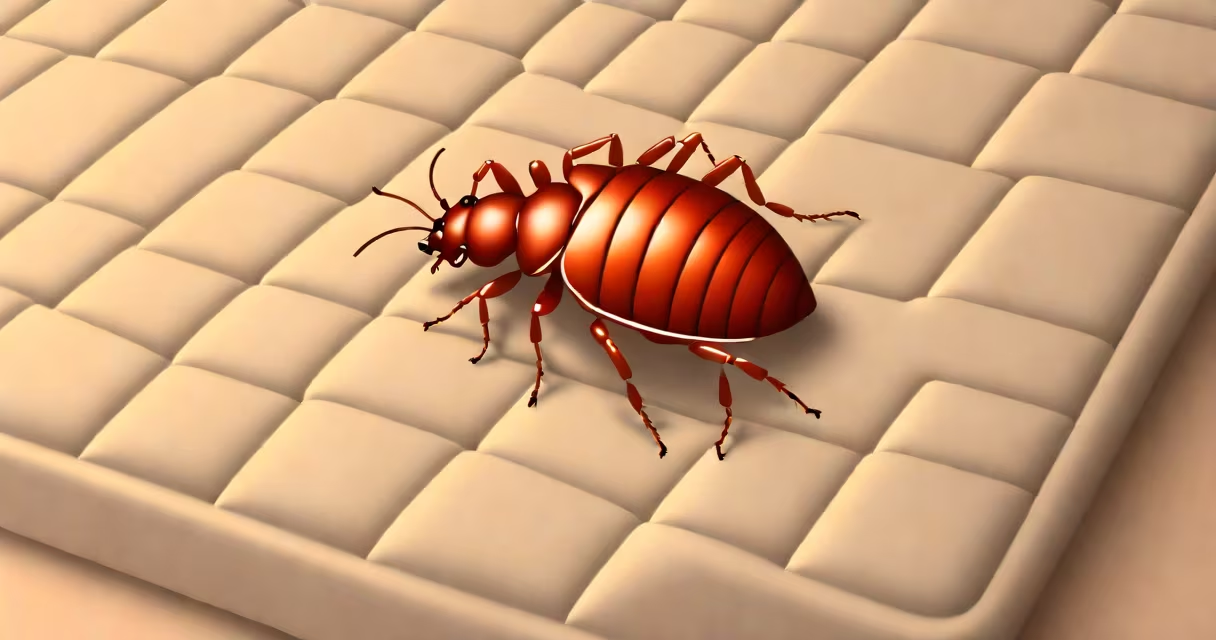
Bed bugs are small, oval-shaped insects that appear reddish-brown and roughly the size of an apple seed. They flatten easily to hide in cracks and crevices. After feeding, their bodies swell and turn darker red. Unfed adults are about 4-5 mm long, roughly the size of a sesame seed.
Bed bugs belong to the family Cimicidae. They feed exclusively on blood, typically from humans while they sleep. Their mouthparts are designed to pierce skin and draw blood. Adults have six legs, no wings, and a distinct segmented body. Nymphs-immature bed bugs-are smaller and translucent, turning darker after each blood meal.
These pests do not fly or jump. They move slowly but can travel up to 100 feet in a night to reach a host. They avoid light and hide during the day in mattresses, box springs, bed frames, baseboards, and behind wall outlets. Their presence often goes unnoticed until bites appear or dark spots of fecal matter are seen.
Adult bed bugs are 4-5 mm long, about the size of a sesame seed. They have a flattened, oval body with a broad head and long antennae. Their color ranges from pale yellowish-brown when unfed to dark red or maroon after feeding. The abdomen expands visibly after a blood meal.
Nymphs are much smaller-about 1-2 mm-and nearly transparent. As they grow through five nymph stages, they molt and darken. Each stage requires a blood meal. Nymphs are harder to spot than adults due to their size and color.
Bed bug eggs are tiny-about 1 mm long-and pearl-white. They resemble grains of rice and are often laid in hidden crevices. Eggs hatch in 6-10 days under normal room temperature. A single female can lay 200-500 eggs in her lifetime, making infestations difficult to control.
| Stage | Size | Color | Visibility |
|---|---|---|---|
| Egg | ~1 mm | Pearl white | Hard to see without magnification |
| Nymph (1st instar) | 1-2 mm | Translucent, pale yellow | Very hard to detect |
| Adult | 4-5 mm | Reddish-brown, darkens after feeding | Visible to naked eye, especially after feeding |
People often mistake bed bugs for other household pests. Fleas are smaller-about 1-3 mm-and more agile. They jump and have longer hind legs. Flea eggs are white and round, but they're usually found in pet bedding, not in mattress seams.
Book lice are tiny, wingless insects that live in damp books and paper. They're less than 1 mm and appear grayish or brown. Unlike bed bugs, they don't bite humans and aren't attracted to sleeping hosts.
Another common error is mistaking bed bug feces for dirt or mold. Fecal spots are dark, rust-colored, and often appear in clusters. They look like small inkblots and can be found along mattress edges, behind headboards, or in baseboard cracks. These stains are a reliable sign of infestation, even if no live bugs are visible.
In 2022, a hotel in Chicago reported multiple guest complaints of unexplained bites. Inspectors found dark, smudge-like stains on the edge of a mattress seam. Using a flashlight and magnifying glass, they located several live bed bugs-two adults and three nymphs-hidden in the stitching.
The bugs were identified by their flat, oval shape, reddish-brown color, and lack of wings. The guests had not brought luggage from known infested areas. The infestation was traced to a single mattress that had been moved between rooms without inspection. After treatment with heat and insecticide, the issue resolved within seven days.
This case shows that bed bugs can go undetected for weeks. Visual confirmation requires close examination. The CDC notes that early detection reduces treatment costs and prevents spread. A single female can produce hundreds of offspring in months, so catching infestations early is critical.
Live bed bugs are not always visible. Instead, look for these indicators:
These signs often appear in patterns. Bites may form in a row or cluster, unlike mosquito bites, which are random. Bed bugs prefer exposed skin and tend to bite around the ankles, wrists, and neck.
One non-obvious fact: bed bugs do not carry diseases. According to the Centers for Disease Control and Prevention (CDC), they are not known to transmit pathogens to humans. However, their bites cause itching, sleep disruption, and secondary infections from scratching. This makes identification important-not for health risks, but for quality of life and prevention of spread.
For travelers, checking hotel rooms for signs is essential. The U.S. Department of Agriculture (USDA) recommends inspecting the mattress, headboard, and furniture corners before unpacking. If you suspect an infestation, avoid moving luggage to other rooms and contact pest control immediately.
Recognizing what bed bugs look like-especially in their various life stages and associated signs-is the first step in effective management. Early detection reduces treatment time and cost. If you see a small, flat, reddish-brown insect that resembles a sesame seed, it's likely a bed bug. Confirm with visual inspection or professional testing.