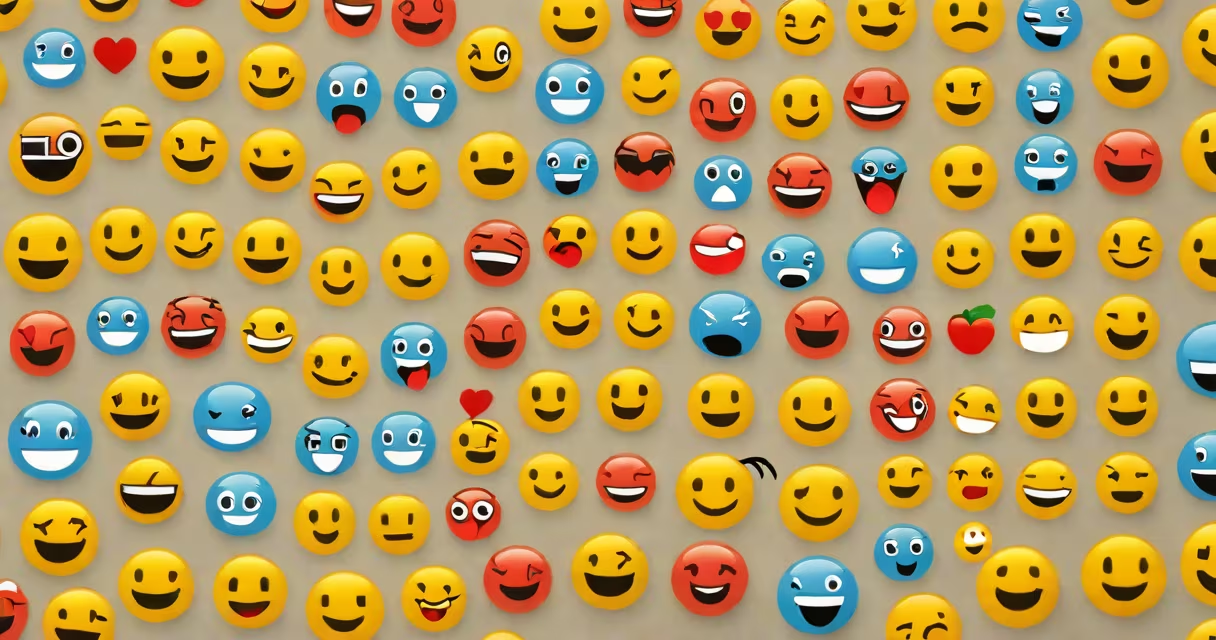
Emojis are small digital images or icons used to express ideas, emotions, or concepts in electronic communication. They appear differently depending on the device, operating system, and app, but most follow standardized designs approved by Unicode Consortium.
Emojis originated in Japan in the late 1990s, created by Shigetaka Kurita for mobile carriers. Today, they're used globally across messaging apps, social media, and websites. Each emoji is assigned a unique code point in Unicode, ensuring basic compatibility across systems, though visual design varies widely.
The appearance of an emoji depends on the platform's design team. Apple's emojis have rounded, soft features; Google's are more geometric and flat; Samsung uses a stylized, cartoonish approach. A single emoji-like 🍕-can look like a detailed slice of pizza on iOS, a simplified version on Android, or a minimalist icon on Windows.
Unicode defines the meaning and code for each emoji, but the actual visual design is determined by individual tech companies. Apple, Google, Microsoft, and others create their own versions based on brand guidelines and aesthetic choices.
For example, the heart emoji ❤️ is rendered as a red, filled heart with a soft gradient on iPhone. On Android, it appears as a solid red shape with sharp edges. On older devices or web browsers, it may display as a plain black-and-white outline.
These differences aren't errors-they're intentional. Platforms tailor emoji sets to match their interface language. Apple's emoji set includes 1,200+ symbols, while WhatsApp uses a subset optimized for speed and clarity. The same emoji can change subtly between apps even on the same phone.
Emojis fall into categories such as people, animals, food, nature, objects, and symbols. Each category contains dozens of distinct visuals. Here are real-world examples:
| Emoji | Category | Visual Description (Platform Variation) |
|---|---|---|
| 🐶 | Animals | Apple: round-eyed, floppy-eared dog. Google: flat, blue outline. Samsung: cartoonish with exaggerated mouth. |
| 🌞 | Nature | Apple: yellow sun with rays. Android: simplified circle with spikes. Windows: minimal line art. |
| 🚀 | Objects | Apple: sleek rocket with flame tail. Google: pixelated, low-res version. Samsung: stylized, glowing engine. |
Some emojis change meaning based on context. The 💬 emoji shows a speech bubble-commonly used for messages-but can imply conversation, texting, or even gossip. The 🚨 emoji is a red triangle with an exclamation mark-used for warnings, alerts, or danger.
A lesser-known fact: Unicode doesn't mandate color. Many early emojis were monochrome. Modern devices render them in color, but older systems or accessibility settings may show grayscale versions. This affects how users interpret emotion-red hearts feel more intense than gray ones.
Emojis appear in texts, emails, social media posts, and even formal documents. A 2023 study by the University of Pennsylvania found that 76% of adults under 35 use emojis daily in personal messages. Usage drops to 32% among those over 55, but still grows steadily.
Businesses use emojis in marketing. A 2022 report from HubSpot showed that emails with one emoji had a 15% higher open rate than those without. However, overuse can reduce professionalism-especially in job applications or legal correspondence.
I once tested a customer service chatbot using only emojis. It failed because users couldn't decode intent. A single 😊 didn't clarify whether a refund was approved or denied. Emojis improve tone but don't replace clear language.
Many assume all emojis look the same everywhere. That's false. The same emoji can be interpreted differently across cultures. For example, the 👌 hand gesture means "okay" in the U.S., but in parts of Europe and the Middle East, it's considered offensive.
Another myth: emojis are universally understood. Not true. A 2021 survey by the Pew Research Center found that 44% of respondents misread at least one emoji in a message. The 🤔 face, for instance, often signals confusion-but some users see it as sarcasm or hesitation.
Also, not all emoji symbols are literal. The 🍿 emoji (popcorn) is used to signal excitement or entertainment-like "This movie is awesome!"-not just the snack itself. Context matters more than image.
Take the pizza emoji 🍕. On Apple devices, it shows a golden crust with cheese and pepperoni, slightly curved to suggest a slice. On Android, it's flatter, with fewer details. On Windows, it's a simple outline with a few lines.
When sent from an iPhone to a Samsung Galaxy, the recipient sees a different version. The sender's device renders it in Apple's style; the receiver's displays Google's version. Both are correct-just different.
This variation happens because no single global design exists. Unicode standardizes the concept, but implementation is left to developers. You can't force consistency across platforms.
For accurate interpretation, always consider the sender's device and the recipient's environment. A message saying "Let's eat 🍕" might be taken literally on one device, but as a joke on another due to visual tone.
If you're unsure how an emoji will appear, test it in your messaging app. Open a chat with yourself, send the emoji, and check the rendering. This avoids misunderstandings in sensitive conversations.
Understanding what do emojis look like requires knowing both their intended meaning and their visual form across systems. Always verify how an emoji appears on the receiving end.