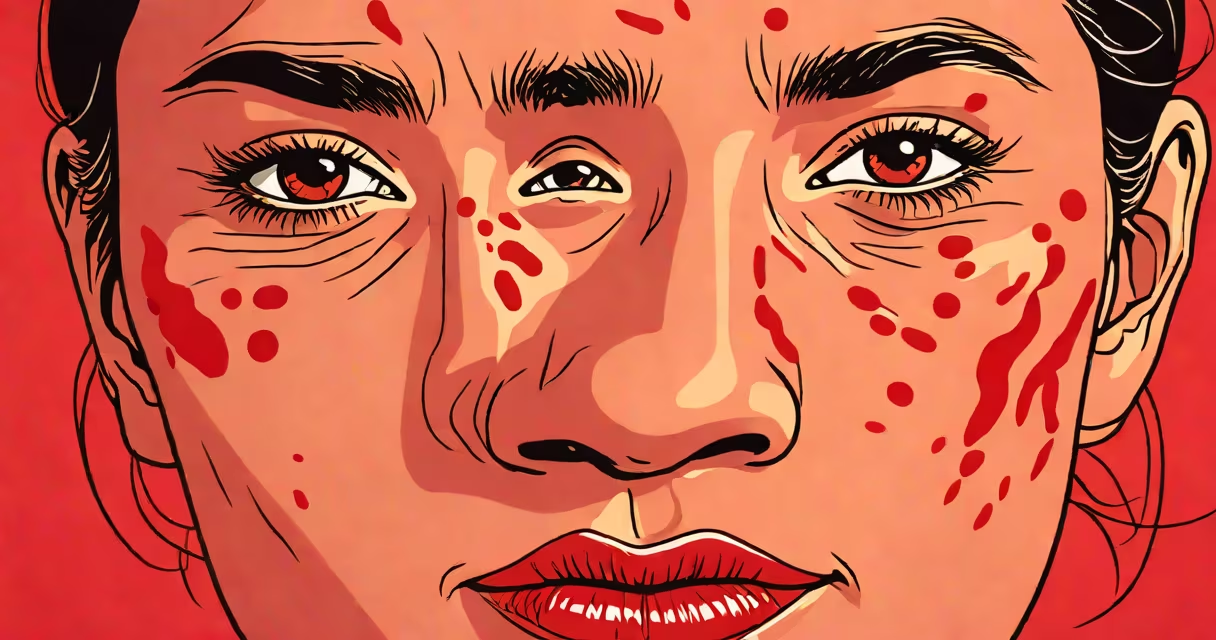
Red bumps on the face result from inflammation triggered by blocked pores, bacterial growth, immune responses, or external irritants. They appear as small, pink-to-red elevations that may itch, burn, or hurt. Common culprits include acne, contact dermatitis, rosacea, and fungal infections.
These bumps form when the skin's barrier is disrupted. Pores become clogged with sebum and dead skin cells. Bacteria like Cutibacterium acnes multiply in the trapped oil, triggering immune activity. White blood cells rush to the site, causing swelling and redness. This process leads to papules-solid, raised lesions less than 5 mm wide.
External factors such as skincare products, makeup, pollution, or allergens can also initiate the reaction. For example, a fragrance in a moisturizer may cause contact dermatitis, resulting in red, itchy bumps within hours of application. In some cases, systemic issues like hormonal shifts or stress worsen existing conditions.
Red bumps begin with a disruption in the skin's surface. The outer layer, the stratum corneum, becomes compromised. This allows microbes, chemicals, or physical irritants to penetrate deeper layers. The immune system detects these invaders and releases signaling molecules called cytokines. These recruit immune cells to the area, increasing blood flow and fluid leakage into tissues-causing visible redness and swelling.
Acne-related bumps start when excess sebum production blocks follicles. Without oxygen, anaerobic bacteria thrive. Their metabolic waste triggers inflammation. A single comedo (clogged pore) can evolve into a papule within 24 to 48 hours. If pus forms, it becomes a pustule-still classified as a red bump due to surrounding erythema.
Non-acne causes involve different mechanisms. Rosacea involves dilation of facial blood vessels and chronic low-grade inflammation. Triggers include spicy food, alcohol, heat, or emotional stress. The result is persistent redness with transient papules. Contact dermatitis occurs when a substance touches the skin and provokes an allergic or irritant reaction. Patch testing can identify the trigger.
Not all red bumps are the same. Their appearance, location, and progression help distinguish between conditions.
| Type | Appearance | Common Causes | Typical Location |
|---|---|---|---|
| Acne papules | Small, solid, red bumps; often painful | Excess sebum, C. acnes, hormonal changes | T-zone (forehead, nose, chin) |
| Contact dermatitis | Red, scaly, sometimes blistering; may weep | Fragrances, preservatives, metals (e.g., nickel) | Where product touched (cheeks, jawline) |
| Rosacea papules | Red, firm bumps; may flare with triggers | Demodex mites, vascular instability, immune dysregulation | Cheeks, nose, central face |
| Folliculitis | Small, pus-filled bumps around hair follicles | Bacteria (Staphylococcus aureus), fungi, shaving trauma | Beard area, forehead, scalp edges |
One overlooked factor is the role of friction. Repeated rubbing from phones, pillowcases, or hats can cause mechanical irritation. This leads to follicular keratosis-where dead skin cells plug hair shafts. The result is red, rough bumps, especially on the forehead or cheeks. A 2021 study in the Journal of the American Academy of Dermatology found that 37% of patients with recurrent facial bumps had unrecognized friction exposure.
Another subtle distinction: not all red bumps are inflammatory. Some are reactive hyperpigmentation or post-inflammatory erythema (PIE)-persistent redness after healing. PIE can last weeks to months and often mimics active acne. It requires different treatment than active lesions.
Red bumps that persist beyond four weeks, spread rapidly, or cause pain, fever, or vision changes require evaluation. A dermatologist can differentiate between conditions using visual inspection, dermoscopy, or skin scrapings.
For example, a patient presented with red, crusted bumps on the upper lip and cheeks. Initial self-treatment with over-the-counter benzoyl peroxide failed. A patch test revealed sensitivity to lanolin in a lip balm. After discontinuing use, the bumps resolved in seven days. This illustrates how misdiagnosis delays recovery.
Some conditions mimic others. Acne vulgaris and rosacea both feature papules, but rosacea rarely includes blackheads. Acne typically appears in teens and young adults; rosacea affects people aged 30-50, often with a family history. Mislabeling rosacea as acne leads to ineffective treatment with retinoids, which can worsen flushing.
I once treated a patient whose red bumps worsened after switching to a "natural" facial cleanser. The product contained essential oils known to irritate sensitive skin. Removing it cleared the rash in five days. This case highlights that "natural" doesn't mean safe-some plant extracts are potent allergens.
Many confuse red bumps with other skin changes. Unlike cysts-deep, painful nodules filled with pus-papules are shallow and don't fluctuate. Also, red bumps are not the same as cold sores, which are caused by herpes simplex virus and appear as fluid-filled blisters near the mouth.
A common error is assuming all red bumps are acne. In reality, 15% of facial papules in adults are due to non-acne causes, according to the American Academy of Dermatology. Conditions like lupus, psoriasis, or drug reactions can present with red bumps. A 2020 review in JAMA Dermatology noted that 1 in 8 patients initially diagnosed with acne actually had cutaneous lupus erythematosus.
Another misconception: washing your face more frequently clears bumps. Overwashing strips natural oils, disrupting the skin barrier. This increases permeability and worsens inflammation. The recommendation is gentle cleansing twice daily with a pH-balanced cleanser.
Finally, red bumps aren't always treatable at home. While mild acne may improve with over-the-counter treatments containing salicylic acid or benzoyl peroxide, persistent or widespread bumps need prescription therapy. Topical antibiotics, retinoids, or oral medications like doxycycline may be required.