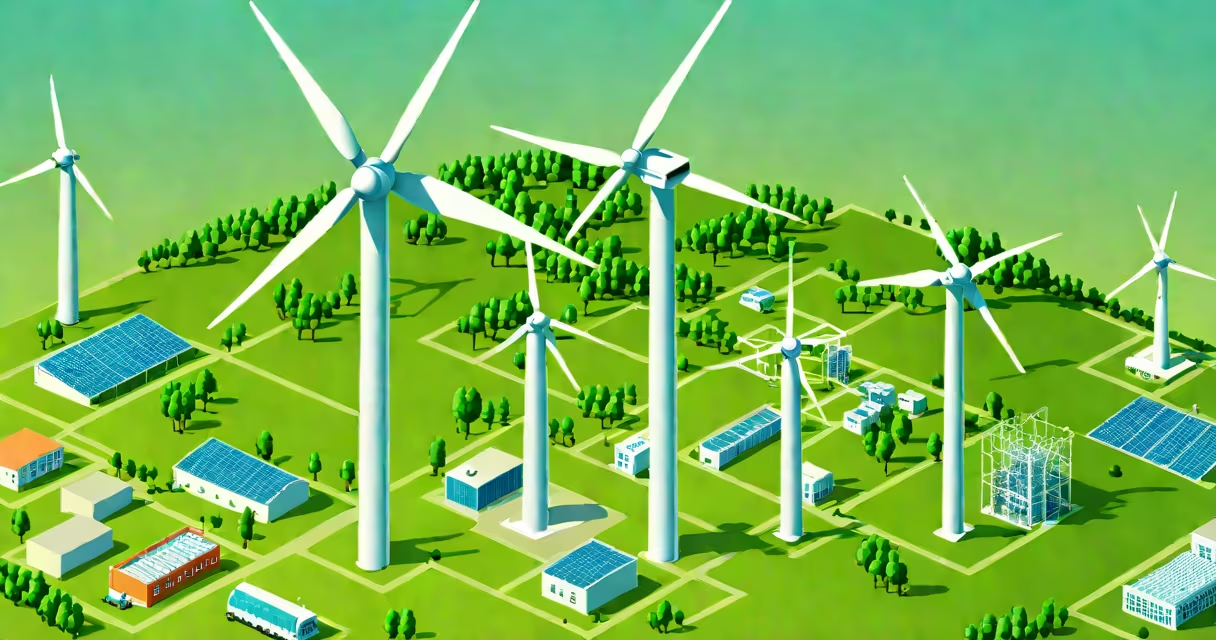
A wind turbine converts kinetic energy from wind into electrical power through a series of mechanical and electrical components. The primary parts include the rotor blades, hub, nacelle, generator, gearbox, yaw system, and tower. These elements work together to capture wind, rotate a shaft, and produce electricity.
The rotor blades are the most visible part of a wind turbine. Typically made of fiberglass-reinforced polymer, they capture wind energy and spin the central hub. Modern turbines have three blades, designed for optimal aerodynamic efficiency. A single blade can span over 80 meters in large offshore models, such as those used in the Hornsea Project in the UK.
The hub connects the blades to the main shaft. It transfers rotational force from the blades to the drivetrain inside the nacelle. The hub's design includes pitch control mechanisms that adjust blade angles to maintain optimal performance during varying wind speeds. For example, during high winds, blades pitch to reduce surface area and prevent damage.
The nacelle houses the critical internal machinery: the gearbox, generator, and control systems. It sits atop the tower and rotates to face the wind via the yaw system. This alignment ensures maximum exposure to wind flow. The nacelle is sealed against weather and contains cooling systems to manage heat generated during operation.
Inside the nacelle, the gearbox increases the rotational speed from the low-speed rotor shaft to the high-speed input required by the generator. Most turbines use a gear ratio of around 100:1. For example, a rotor turning at 15 RPM can be increased to 1,500 RPM at the generator input.
The generator converts mechanical rotation into electrical current. Most modern turbines use direct-drive or geared permanent magnet generators. Direct-drive systems eliminate the gearbox entirely, reducing maintenance needs. The Siemens Gamesa SG 14-222 DD offshore turbine uses a direct-drive design, producing 14 megawatts of power at 12 rpm.
Electrical output from the generator passes through a transformer in the nacelle. This boosts voltage to 33 kV for efficient transmission through cables down the tower and into the grid. The entire process-from wind hitting blades to electricity entering the grid-takes less than 10 seconds under stable conditions.
The tower supports the nacelle and rotor assembly. Made of steel or concrete, it stands between 60 and 150 meters tall. Height matters: higher towers access stronger, more consistent winds. A 2023 study by the National Renewable Energy Laboratory (NREL) found that increasing tower height by 10 meters can boost annual energy production by 5-7%.
Foundations anchor the tower to the ground or seabed. Onshore turbines use reinforced concrete bases. Offshore units rely on monopiles, jackets, or tripods. The Block Island Wind Farm off Rhode Island uses monopile foundations driven 20 meters into the seafloor to withstand ocean currents and storms.
Each component is engineered for longevity. Turbines are designed to operate for 20-25 years. Maintenance intervals average every 6 months for inspections and lubrication. Some offshore turbines use drones and AI-powered sensors to detect wear in blades and gears before failure occurs.
Wind turbines do not require constant wind to generate power. They start spinning at wind speeds above 3 m/s (about 6.7 mph) and reach full output at 12-15 m/s. They automatically shut down at speeds exceeding 25 m/s to avoid structural stress.
Contrary to popular belief, wind turbines are not major contributors to bird mortality. According to the U.S. Fish and Wildlife Service, collisions account for less than 0.01% of annual bird deaths. Modern turbines use radar-based curtailment systems that pause operations when birds are detected near flight paths.
Another misconception is that turbines consume more energy during manufacturing than they produce. NREL analysis shows that utility-scale wind turbines generate 20-30 times more energy over their lifetime than was used in construction and installation. A typical 2 MW turbine produces enough electricity to power 1,400 homes annually.
| Component | Function | Typical Size/Spec |
|---|---|---|
| Blades | Capture wind and initiate rotation | Up to 88 m long (offshore) |
| Hub | Attaches blades to main shaft | ~3 m diameter |
| Nacelle | Houses generator, gearbox, controls | ~40 m³ volume |
| Generator | Converts rotation to electricity | Up to 14 MW capacity |
| Tower | Supports nacelle and rotor | 60-150 m height |
I once observed a maintenance team inspecting a 3 MW turbine in Texas. They used thermal imaging to detect hot spots in the gearbox-early signs of bearing wear. Replacing a single bearing costs $15,000 and takes 12 hours, underscoring why preventive monitoring is essential.
Understanding the parts of a wind turbine reveals how engineering precision enables clean energy generation. From blade aerodynamics to grid integration, each element plays a role in transforming wind into usable electricity. The system's reliability and scalability make it a core technology in global decarbonization efforts.