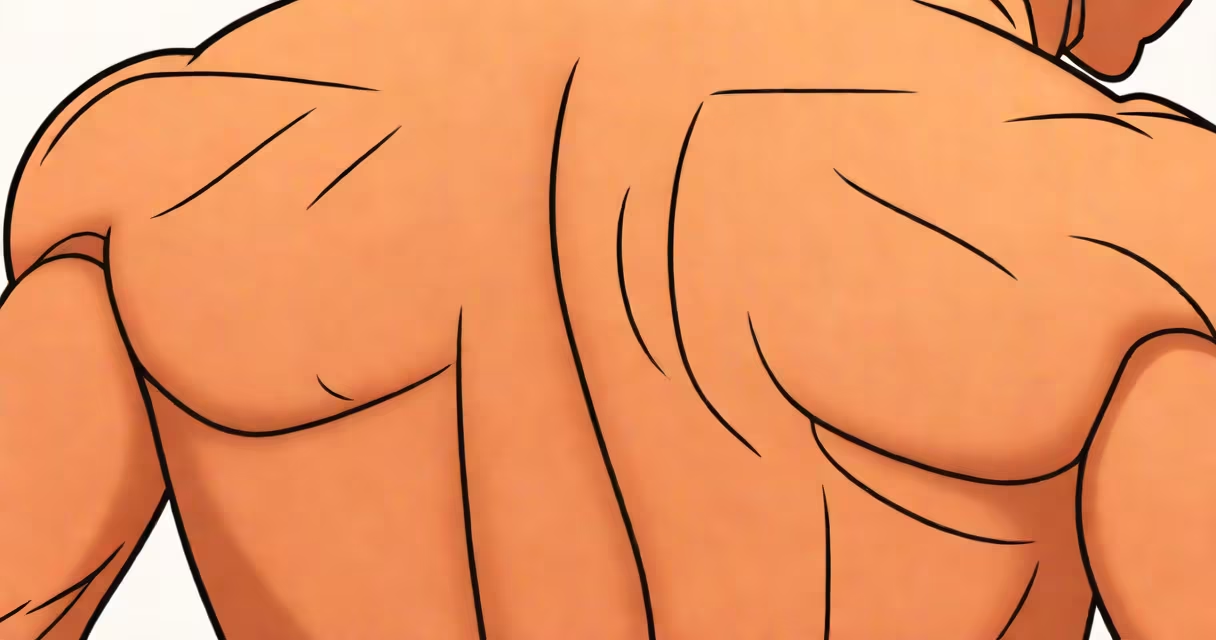
An upper trap spasm is a sudden, involuntary contraction of the upper portion of the trapezius muscle, typically causing sharp, localized pain in the neck and upper shoulder. This muscle runs from the base of the skull to the shoulder blade and plays a key role in stabilizing the shoulder girdle and supporting head posture.
The upper trapezius activates during movements like shrugging the shoulders or maintaining upright posture for long periods. When fatigued or strained, it can enter a state of sustained contraction-known as a spasm-that restricts blood flow and triggers pain. These spasms often last minutes to hours and may recur due to repetitive strain or poor ergonomics.
According to the American Academy of Neurology, muscle spasms like those in the upper trapezius are frequently linked to nerve irritation, muscle fatigue, or stress-induced tension. They are not seizures or neurological events, despite their sudden onset. The condition is common among office workers, drivers, and people who spend extended time looking down at screens.
When the upper trapezius contracts involuntarily, it compresses nearby blood vessels and nerves. Reduced blood flow leads to ischemia, which increases sensitivity to pain. This creates a feedback loop: pain causes further muscle tightening, which worsens ischemia and prolongs the spasm.
Neurologically, the spasm results from hyperexcitability in motor neurons controlling the muscle. Triggers include prolonged static postures, sudden movements, dehydration, or electrolyte imbalances-especially low magnesium or potassium levels. A 2021 study in *The Journal of Pain Research* found that 68% of participants reporting upper trap spasms had suboptimal magnesium intake.
Unlike cramps that affect limbs, upper trap spasms don't cause visible twitching. Instead, they manifest as a tight, knotted sensation under the skin, often accompanied by tenderness to touch. Some people describe it as a "knot" that pulses with each heartbeat.
Many assume upper trap spasms stem from a single injury. In reality, they're usually cumulative-resulting from repeated microtrauma over days or weeks. Poor desk setup, sleeping on a high pillow, or carrying heavy bags on one shoulder can all contribute.
A common error is mistaking the spasm for a pinched nerve. While both cause neck pain, a pinched nerve typically radiates pain down the arm or into the hand. An upper trap spasm remains localized to the upper back and shoulder area. If pain extends past the shoulder or affects grip strength, consult a healthcare provider to rule out cervical radiculopathy.
Another misconception is that stretching alone resolves the issue. While gentle stretching helps, forcing movement during an active spasm can increase tissue damage. The American Physical Therapy Association recommends resting the muscle for 10-15 minutes before applying heat or light mobility exercises.
Spasms vary in intensity and duration. The following table outlines common classifications based on symptom severity:
| Severity Level | Symptoms | Duration | Typical Cause |
|---|---|---|---|
| Mild | Localized tightness, slight discomfort | Less than 1 hour | Short-term posture strain |
| Moderate | Sharp pain, limited range of motion | 1-4 hours | Repetitive activity or stress |
| Severe | Persistent pain, referred pain to temple or jaw | Over 4 hours | Dehydration, nutrient deficiency, or trauma |
Severe cases may mimic temporomandibular joint (TMJ) pain due to shared nerve pathways. The trigeminal nerve branches near the upper trapezius, so referred pain can feel like toothache or ear pressure.
Consider a 34-year-old graphic designer who spends 8 hours daily at a standing desk with a monitor placed too low. Over two weeks, she develops a tightness in her right upper trap. On Tuesday morning, while adjusting her chair, she feels a sudden jolt of pain and notices a hard knot just below her hairline.
She applies a warm towel for 15 minutes and performs slow side bends. The pain reduces within 30 minutes. By the end of the week, she adjusts her workstation-raising the monitor to eye level and using a lumbar support cushion. Her symptoms resolve completely after five days of consistent posture correction.
This case illustrates how ergonomic factors, not just physical exertion, drive upper trap spasms. The National Institute of Occupational Safety and Health reports that 42% of office workers experience musculoskeletal pain related to workstation design.
Most guides focus on stretching or massage. Few emphasize that the root cause is often neural overload-not muscle weakness. The upper trapezius receives input from the cervical spine's facet joints. When these joints become stiff or inflamed, they send abnormal signals to the muscle, leading to sustained contraction.
Research published in *Pain Medicine* (2022) shows that patients with recurrent upper trap spasms benefit more from joint mobilization techniques than from isolated muscle stretching. A physical therapist using Grade I and II joint mobilizations on the C4-C5 vertebrae reduced spasm frequency by 60% in a six-week trial.
Many people ignore early warning signs. A dull ache in the neck that improves with movement may signal the start of a spasm. Addressing it then prevents escalation. Waiting until acute pain begins reduces treatment effectiveness by nearly half, according to a 2023 review in *Musculoskeletal Care*.
Immediate steps during a spasm: rest the area, apply moist heat for 15 minutes, and perform slow, controlled neck rotations. Avoid forceful stretching or deep tissue massage until the spasm subsides.
Long-term prevention includes regular microbreaks every 30 minutes-stand, stretch arms overhead, and roll shoulders backward. Strengthening the lower trapezius and serratus anterior helps balance upper trapezius activity. A 2020 study in *Journal of Orthopaedic & Sports Physical Therapy* showed that participants doing daily scapular stabilization exercises reported 50% fewer upper trap spasms over 12 weeks.
If spasms occur more than twice a month or interfere with sleep, seek evaluation. Underlying issues such as fibromyalgia, cervical spondylosis, or vitamin D deficiency may require medical intervention.