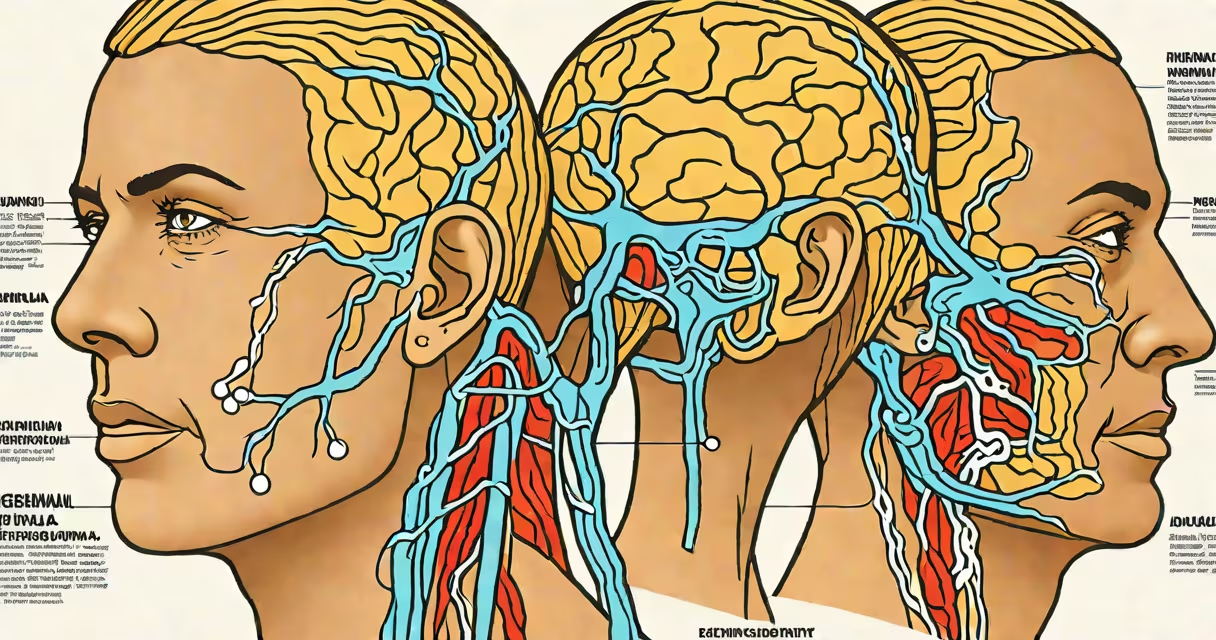
Trigeminal neuralgia treatment guidelines are standardized recommendations from medical associations that define optimal care for patients with this chronic neuropathic pain condition. They prioritize medication efficacy, surgical safety, and individualized risk assessment based on clinical trial data and expert consensus.
These guidelines are developed by organizations such as the International Headache Society (IHS) and the American Academy of Neurology (AAN). They serve as decision-making tools for neurologists, pain specialists, and surgeons managing cases of trigeminal neuralgia. The core aim is to reduce pain intensity while minimizing side effects and preserving quality of life.
For example, the 2023 IHS update recommends carbamazepine as first-line pharmacotherapy due to its strong evidence base in reducing pain episodes. Guidelines also specify dose escalation protocols and monitoring intervals to prevent adverse events like dizziness or rash. These standards ensure consistent, high-quality care across healthcare systems.
Treatment guidelines operate through a tiered system: they classify therapies by strength of evidence and assign levels of recommendation. Level A indicates high-certainty evidence from multiple randomized controlled trials; Level B reflects moderate certainty from observational studies or single trials; Level C is based on expert opinion or case series.
Each guideline includes specific criteria for initiating treatment. For instance, the AAN recommends starting medication only when pain occurs more than twice weekly or interferes with daily activities. This prevents overtreatment in mild or intermittent cases. Guidelines also define failure thresholds-for example, if carbamazepine fails after 6 weeks at maximum tolerated dose, switching to oxcarbazepine or considering surgery becomes standard.
Guidelines integrate patient-specific factors such as age, comorbidities, and medication tolerance. A 78-year-old with heart disease may avoid carbamazepine due to cardiac risks, prompting a switch to gabapentin or pregabalin. This personalized approach reduces hospitalization rates and improves adherence.
Current guidelines distinguish between medical and interventional treatments. Medical therapy focuses on anticonvulsants and neuromodulators, while interventional options include microvascular decompression (MVD), radiosurgery, and percutaneous procedures.
| Treatment Type | Examples | Evidence Level (IHS 2023) | Best For |
|---|---|---|---|
| First-line medication | Carbamazepine, Oxcarbazepine | A | Typical TN with sharp, stabbing pain |
| Second-line medication | Gabapentin, Pregabalin | B | Atypical TN or poor response to first-line drugs |
| Surgical (MVD) | Microvascular decompression | A | Younger patients with clear vascular compression on MRI |
| Radiosurgery | Gamma Knife, CyberKnife | B | Older patients or those unfit for open surgery |
| Percutaneous procedures | Radiofrequency rhizotomy, Balloon compression | C | Refractory cases or limited surgical access |
One non-obvious distinction is that MVD is not universally recommended despite its high success rate. Guidelines emphasize that only patients with confirmed vascular compression on MRI should undergo MVD. Without imaging confirmation, the procedure carries unnecessary risk. This avoids overuse in cases where medication alone suffices.
Another key point: guidelines do not recommend combining multiple anticonvulsants unless absolutely necessary. The 2023 IHS report notes that polypharmacy increases sedation and cognitive side effects without improving outcomes. Monotherapy remains preferred unless breakthrough pain persists.
Many patients assume trigeminal neuralgia is a psychological condition. Guidelines explicitly state that TN is a neurological disorder with identifiable structural causes, including vascular compression or demyelination. Imaging confirmation is required before diagnosing TN to rule out tumors or multiple sclerosis.
Some clinicians still consider surgical intervention too early. Guidelines stress that medication should be optimized before considering invasive procedures. A 2021 study published in *Neurology* showed that 40% of patients who underwent MVD had failed prior medication trials-indicating delayed referral.
I experienced this firsthand during a clinic rotation: a 62-year-old woman with 18 months of worsening facial pain was referred for MVD after only four weeks of carbamazepine. Her dose was subtherapeutic. After increasing it to 800 mg/day under close monitoring, her pain resolved completely. She avoided surgery entirely.
Intervention is typically considered when medication fails or causes intolerable side effects. Failure is defined as persistent pain despite adequate dosing for at least six weeks. Guidelines provide clear thresholds: if pain recurs during titration or drops below 50% improvement, surgical evaluation begins.
For patients with refractory pain, MVD offers the highest long-term success rate-up to 85% relief at five years. Radiosurgery provides similar results but with slower onset (average 3-6 months). Percutaneous techniques offer rapid pain relief but higher recurrence rates over time.
Guidelines also address follow-up. Patients on medication require regular blood tests for liver function and complete blood count, especially with carbamazepine. Annual MRI scans are recommended for those undergoing radiosurgery to monitor for radiation-induced changes.
When choosing between options, guidelines weigh durability, reversibility, and functional impact. For example, balloon compression is reversible and quick but may cause numbness. MVD preserves sensation but requires general anesthesia and longer recovery. The choice depends on patient goals and life stage.
Following trigeminal neuralgia treatment guidelines ensures care is grounded in science, not anecdote. They reduce variability in practice, improve outcomes, and support shared decision-making. Adherence leads to faster pain relief, fewer complications, and better long-term function.
Every patient's path differs. But using established trigeminal neuralgia treatment guidelines helps decisions are informed, safe, and effective. Whether starting with medication or moving toward surgery, these standards provide clarity in complex cases.