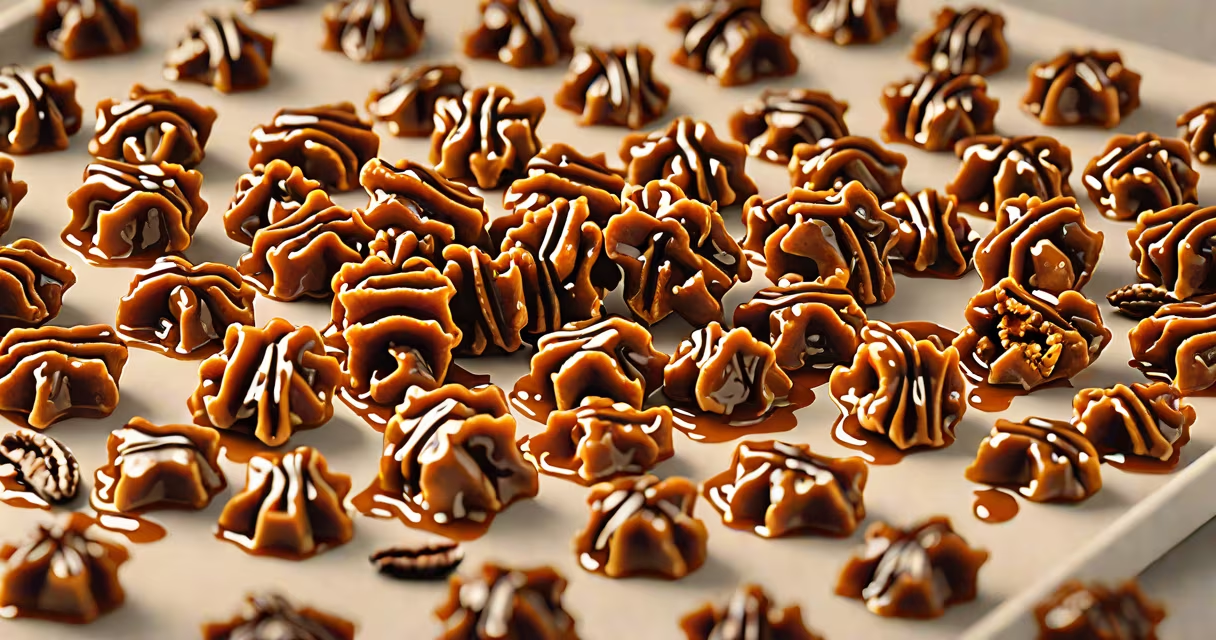
Pecan caramel clusters are small, bite-sized confections made by combining melted caramel with chopped toasted pecans, then cooling them into firm, chewy treats. They deliver a balanced mix of sweet, salty, and nutty flavors in every bite.
These treats form when a mixture of sugar, butter, and heavy cream simmers into a thick, amber-colored caramel. Once cooled slightly, it's folded with finely chopped pecans and dropped onto a parchment-lined tray. As the mixture sets, it firms into dense, glossy clusters that hold their shape and texture for days.
They're commonly served at holiday parties, gift baskets, and bake sales due to their long shelf life and ease of preparation. A single batch yields 16 to 20 clusters, each about 1.5 inches in diameter, depending on how much caramel is used per drop.
The structure of pecan caramel clusters relies on the physical transformation of sugar during heating. When sucrose is heated past its melting point (around 320°F), it breaks down into glucose and fructose, forming a viscous liquid that hardens upon cooling. This process creates the chewy base of the cluster.
Adding pecans introduces both texture and flavor contrast. The nuts absorb some of the caramel's moisture, creating a slight crunch at the center while the outer layer remains soft and sticky. Toasting the pecans first enhances their oil content and deepens their roasted aroma, which becomes more pronounced after mixing with warm caramel.
For stability, the clusters must cool completely at room temperature. Rushing the process by refrigerating them causes surface condensation, leading to a sticky exterior and uneven texture. Cooling takes 30 to 45 minutes, depending on ambient temperature and humidity.
Standard pecan caramel clusters use four core ingredients:
Optional additions include a pinch of sea salt, a splash of vanilla extract, or a teaspoon of corn syrup to prevent crystallization. Corn syrup reduces the risk of sugar recrystallizing during cooling, which can make the caramel grainy.
Common variations include:
| Type | Key Change | Result |
|---|---|---|
| Chocolate-dipped | Coat finished clusters in melted dark chocolate | Rich, layered flavor; longer shelf life |
| Spiced | Add ¼ tsp cinnamon or ⅛ tsp cayenne pepper | Warm, complex profile; popular in fall-themed batches |
| Miniature | Use smaller drops (½ inch) and more precise tools | Higher yield; ideal for party favors or gift boxes |
A non-obvious fact: the ideal caramel temperature for clustering is 240°F (soft-ball stage), measured with a candy thermometer. Going above 250°F risks burning the sugar or causing premature crystallization. Below 235°F results in overly soft clusters that stick to fingers.
Pecan caramel clusters are frequently made during autumn and winter holidays. Their seasonal appeal stems from the combination of warm spices, toasted nuts, and rich sweetness-flavors associated with comfort and celebration.
They're often included in holiday gift boxes, especially when paired with other regional treats like pralines or maple brittle. According to the National Confectioners Association, 68% of American households report making at least one type of homemade candy during the November-to-January period, with caramel-based items ranking among the top five choices.
These clusters are also used in commercial settings. For example, the Southern Candy Company sells a version called "Pecan Poppers" in bulk packaging, marketed to retailers and event planners. Their product uses a stabilized caramel formula that resists weeping or separating over time.
Many people mistake pecan caramel clusters for peanut butter cups or fudge. While all three are sweet, chewy confections, they differ in composition and texture. Fudge contains more milk and less sugar, resulting in a denser, smoother mouthfeel. Peanut butter cups have a chocolate shell and a creamy filling, whereas pecan caramel clusters rely solely on caramel and nuts.
A frequent error is using raw pecans instead of toasted ones. Raw pecans lack the deep, nutty flavor developed through toasting. Without roasting, the clusters taste flat and underdeveloped. To avoid this, toast pecans at 350°F for 8-10 minutes until golden and fragrant.
Another misconception is that these clusters must be stored in the refrigerator. Cold temperatures cause caramel to sweat and attract moisture, leading to a sticky, gummy surface. Instead, store them in an airtight container at room temperature, away from direct sunlight. They last up to two weeks without degradation.
I made a batch during Thanksgiving week using 1 cup sugar, ½ cup butter, ¼ cup heavy cream, and ¾ cup toasted pecans. After bringing the mixture to 240°F on medium heat, I stirred in the pecans and dropped spoonfuls onto parchment paper. After 35 minutes at room temperature, the clusters were firm, glossy, and held their shape when lifted.
When served at a family gathering, they received immediate praise. One relative noted, "The crunch from the pecans cuts through the sweetness perfectly." Another asked for the recipe, saying, "This beats store-bought candy every time."
Understanding pecan caramel clusters means recognizing their balance of simplicity and craftsmanship. With just a few ingredients and careful timing, they deliver consistent, crowd-pleasing results. Whether homemade or store-bought, they remain a staple of festive confectionery.