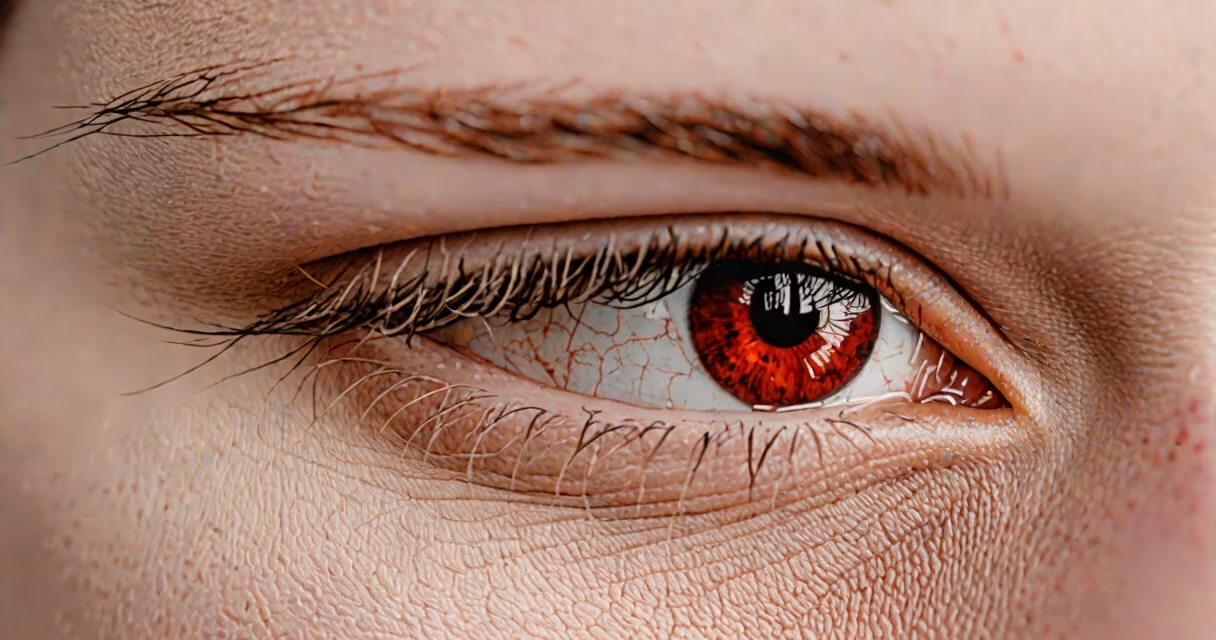
Redness and itching around the eyes occur when the delicate skin in the orbital area becomes inflamed due to allergens, irritants, infections, or underlying skin conditions. This reaction affects the eyelids and surrounding tissue, often causing discomfort, swelling, and visible redness.
The skin around the eyes is thinner than anywhere else on the face-about 0.5 mm thick-and contains fewer oil glands. This makes it highly sensitive to environmental triggers and chemical exposure. A single exposure to a new skincare product, makeup, or cleaning agent can initiate a localized immune response, leading to inflammation and nerve activation that results in itchiness.
Common culprits include pollen, dust mites, pet dander, fragrances in cosmetics, preservatives in eye drops, and nickel in eyeglass frames. These substances trigger mast cell degranulation, releasing histamine and other mediators that increase blood flow and nerve sensitivity. The result is the characteristic redness and urge to scratch.
When an allergen or irritant contacts the skin near the eyes, immune cells called Langerhans cells in the epidermis capture the antigen and migrate to nearby lymph nodes. There, they activate T-helper cells, primarily Th2, which release interleukins like IL-4 and IL-13. These cytokines stimulate B cells to produce IgE antibodies specific to the trigger.
Upon re-exposure, IgE binds to Fcε receptors on mast cells. Cross-linking of these receptors causes degranulation-release of preformed histamine, tryptase, and prostaglandins. Histamine increases vascular permeability, causing fluid leakage into tissues (edema), and activates sensory nerves (itching). Prostaglandins amplify pain and swelling.
A study published in *The Journal of Allergy and Clinical Immunology* found that 68% of patients with periorbital dermatitis had positive patch test reactions to common cosmetic ingredients like fragrance mix and methylisothiazolinone-substances frequently found in facial moisturizers and cleansers.
Differentiating between allergic, irritant, and infectious causes is essential for treatment. The following table outlines primary categories, their typical onset, and key triggers.
| Type | Onset | Key Triggers | Distinctive Features |
|---|---|---|---|
| Allergic contact dermatitis | Hours to days after exposure | Fragrances, preservatives, metals (nickel), topical antibiotics | Well-demarcated red patches, scaling, oozing in severe cases |
| Irritant contact dermatitis | Minutes to hours | Alcohol-based toners, harsh soaps, excessive rubbing | Burn-like appearance, diffuse redness, less likely to blister |
| Allergic conjunctivitis | Immediate (within minutes) | Pollen, mold spores, pet dander, dust mites | Itching, tearing, swelling of both eyelids and conjunctiva |
| Atopic dermatitis (eczema) | Chronic, flares triggered by stress or dry air | Environmental allergens, low humidity, certain fabrics | Chronic dryness, fissures, lichenification in long-term cases |
One non-obvious distinction: allergic conjunctivitis often presents with bilateral symptoms and associated nasal congestion, while irritant dermatitis tends to affect only the side of the face where the substance was applied. For example, applying a new eye cream only to the left eye may cause redness and itching exclusively on that side.
Red and itchy skin around the eyes can mimic or coexist with other conditions. Blepharitis-a chronic inflammation of the eyelid margins-often presents with crusting, burning, and a gritty sensation. However, it typically involves the lash follicles and is linked to bacterial overgrowth (Staphylococcus aureus) or seborrheic dermatitis.
Seborrheic dermatitis, which affects oily areas like the scalp and eyebrows, can extend to the periocular region. It appears as greasy, yellowish scales with mild redness. Unlike allergic reactions, it doesn't usually cause intense itching but may lead to a persistent, flaky rash.
During a clinical visit, a dermatologist may perform a patch test using standard allergen series to identify specific sensitivities. According to the American Academy of Dermatology, patch testing identifies a responsible allergen in 70% of chronic periorbital dermatitis cases.
A 34-year-old woman reported redness and intense itching along her right upper eyelid after switching to a new "anti-aging" serum. She applied it nightly for five days. By day six, the area was swollen, flaky, and painful to touch. She avoided makeup and stopped using the serum.
She visited a dermatologist who performed a patch test. Results showed a strong reaction to formaldehyde-releasing preservatives-common in anti-aging products. After discontinuing the product and applying a low-potency topical corticosteroid (1% hydrocortisone) twice daily for seven days, symptoms resolved completely within ten days.
This case illustrates how even products marketed as "gentle" or "natural" can contain potent allergens. The patient had no prior history of allergies, highlighting that sensitization can develop at any age.
Red and itchy skin around the eyes should prompt medical evaluation if it persists beyond 7 days, spreads rapidly, or is accompanied by vision changes, pus, or fever. These signs suggest infection or autoimmune involvement.
For mild cases, over-the-counter antihistamine eye drops (like ketotifen) can reduce itching. Non-drowsy oral antihistamines such as loratadine may help if systemic allergy is suspected. Topical steroids should be used sparingly and only under guidance-long-term use risks thinning the skin and increasing infection risk.
One personal observation: during a winter clinic rotation, I saw a patient whose redness worsened after using a humidifier. The device harbored mold colonies. Removing it and using a HEPA filter resolved the issue-proof that indoor air quality matters as much as topical products.
Understanding the root cause of skin around eyes red and itchy enables targeted relief. Avoiding known triggers, using hypoallergenic products, and seeking timely care prevent chronic inflammation and scarring.