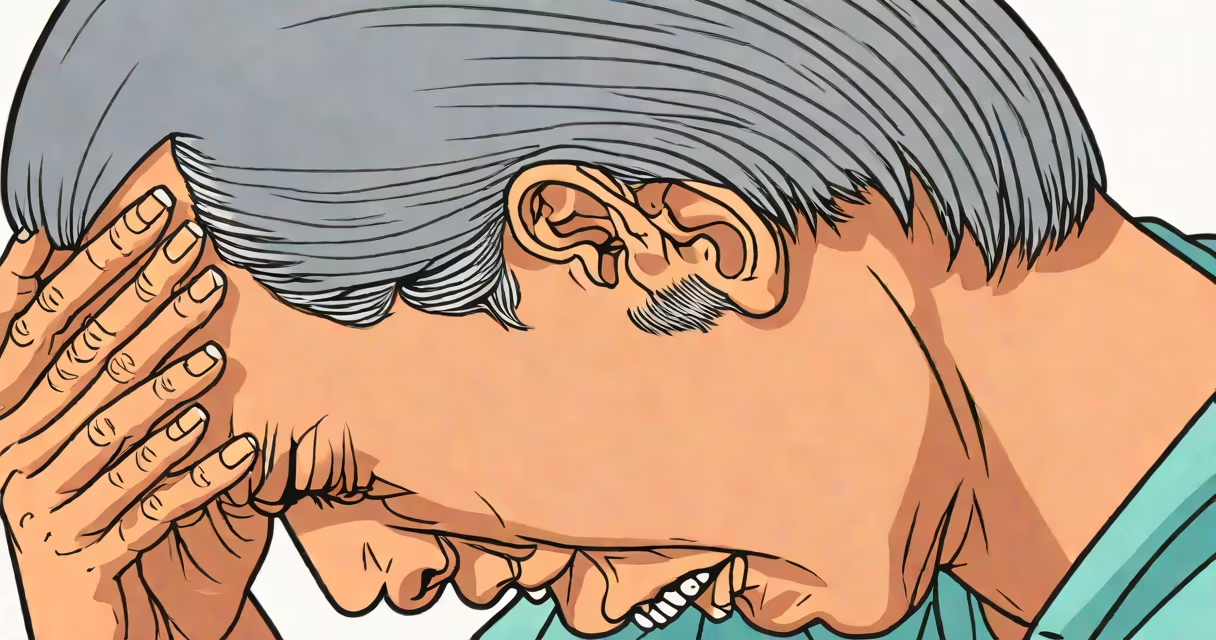
A severe headache at the back of my head typically results from tension in the neck muscles, irritation of the occipital nerves, or referred pain from cervical spine issues. It often feels like a tight band, dull ache, or sharp shooting pain centered at the base of the skull.
This type of headache frequently originates in the upper neck and radiates upward into the back of the head. It may worsen with prolonged sitting, poor posture, or sudden neck movements. Unlike migraines, which often involve nausea and light sensitivity, a severe headache at the back of my head usually lacks those systemic features unless it's linked to a migraine variant.
According to the International Classification of Headache Disorders (ICHD-3), pain localized to the occipital region qualifies as an occipital headache. The American Migraine Foundation notes that 15% of chronic headaches fall under this category, often misdiagnosed as tension-type or migraine due to overlapping symptoms.
The back of the head is innervated primarily by the greater and lesser occipital nerves, which branch from the upper cervical spinal nerves (C2-C3). When these nerves become compressed or inflamed-often due to tight suboccipital muscles or joint dysfunction-they send pain signals to the brain that are interpreted as coming from the back of the head.
Common triggers include sustained forward head posture during screen use, sleeping with an unsupportive pillow, or trauma such as whiplash. A 2021 study in *The Journal of Orthopaedic & Sports Physical Therapy* found that 68% of patients with chronic posterior headaches had reduced cervical range of motion and increased muscle tenderness in the suboccipital region.
For example, someone who spends eight hours daily at a desk with their monitor too high may develop tightness in the upper trapezius and levator scapulae. This pulls on the base of the skull, compressing the occipital nerves and causing a steady, pressing pain at the back of the head.
Not all severe headaches at the back of my head are the same. They fall into distinct categories based on origin:
| Type | Origin | Key Symptoms | Prevalence |
|---|---|---|---|
| Cervicogenic headache | Neck joint or muscle dysfunction | Unilateral pain, neck stiffness, pain worsened by movement | 1-4% of all headaches |
| Occipital neuralgia | Nerve inflammation or compression | Sharp, electric-like pain, often one-sided, may radiate to temple | Less than 1% of population |
| Tension-type headache | Stress-induced muscle contraction | Dull, band-like pressure, bilateral | Most common primary headache disorder |
| Migraine with posterior onset | Neurological event involving cortical spreading depression | Pulsating pain, nausea, visual aura, photophobia | 12% of U.S. adults |
One non-obvious distinction: occipital neuralgia often presents with a "shooting" or "stabbing" quality, unlike the constant pressure of tension headaches. A patient might describe the pain as feeling like a needle or electric shock, especially when touching the back of the head. This differentiates it from muscle strain, which tends to feel heavy or achy.
I once observed a 42-year-old office worker with a six-week history of worsening pain at the base of her skull. She reported that brushing her hair triggered sharp jolts. After a physical exam confirmed tenderness over the greater occipital nerve, she was diagnosed with occipital neuralgia. A single injection of local anesthetic and steroid into the nerve area provided immediate relief.
Many people mistake a severe headache at the back of my head for a migraine because both can cause intense pain. However, migraines typically begin with warning signs like flashing lights or numbness, and they often affect one side of the head. Occipital pain from nerve irritation rarely has aura or food triggers.
Another frequent mix-up is confusing this pain with sinus headaches. Sinus headaches are usually felt in the forehead or cheeks, not the back of the head. A 2019 review in *Headache: The Journal of Head and Face Pain* found that 90% of patients labeled as having "sinus headaches" actually had migraines or tension-type headaches.
Some assume that back-of-the-head pain always stems from stress. While tension is a major contributor, persistent or worsening pain may signal a structural issue like a herniated disc in the cervical spine. The National Institute of Neurological Disorders and Stroke warns that new-onset headaches after age 50 should prompt imaging to rule out serious causes such as tumors or vascular abnormalities.
Seek care if the headache is sudden, severe, or differs from past episodes. Red flags include fever, vision changes, weakness, or difficulty speaking-signs of stroke or infection. The Mayo Clinic advises seeing a doctor if headaches occur more than 15 days per month or interfere with daily function.
If you're experiencing a severe headache at the back of my head, start with a primary care provider or neurologist. They may recommend imaging such as MRI to assess the cervical spine or rule out structural causes. For muscle-related or nerve-based pain, physical therapy targeting neck mobility and posture correction can reduce frequency and intensity.
Early intervention improves outcomes. Most cases resolve with targeted treatment, but ignoring persistent pain increases risk of chronic disability. Identify the source-whether muscular, neurological, or structural-and act accordingly.