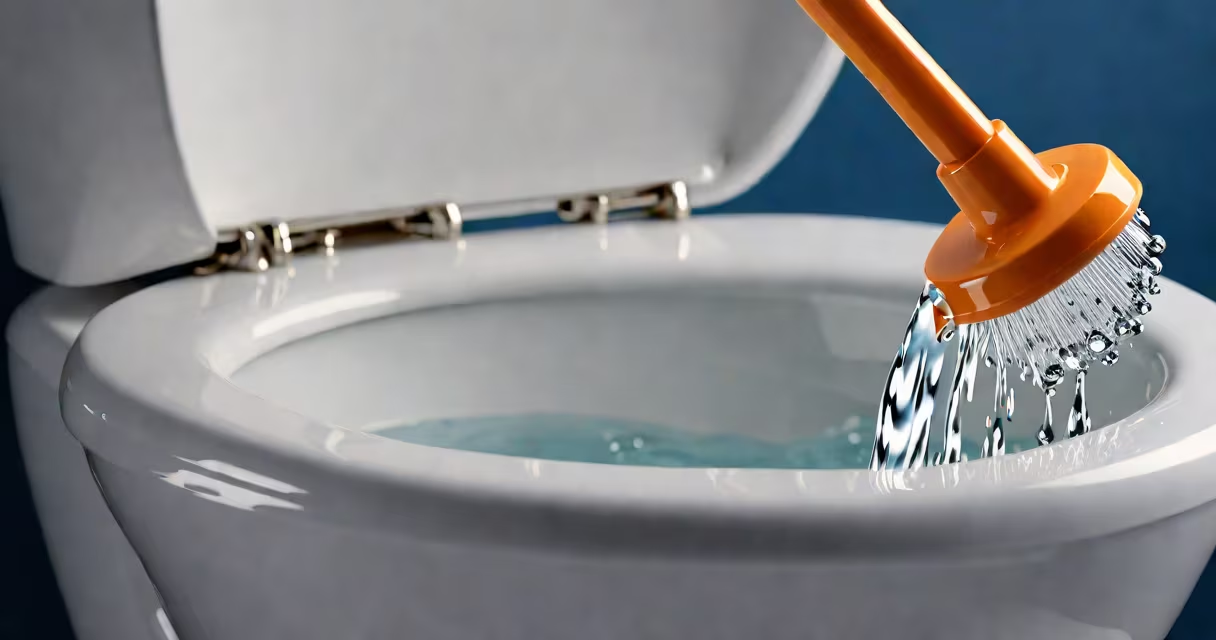
A quickly unclog toilet refers to resolving a blocked toilet within minutes using common tools like a plunger, drain snake, or boiling water-without calling a plumber. This process restores flush function by breaking up or dislodging obstructions in the drain trap.
Toilets clog when waste, toilet paper, or foreign objects accumulate in the S-trap or drainpipe. Blockages prevent water from draining properly, causing backups and overflow risks. A quick unclog uses pressure, mechanical force, or chemical action to clear the obstruction. Success depends on timing, correct technique, and the type of blockage.
According to the American Society of Plumbing Engineers (ASPE), 80% of household toilet clogs stem from excessive toilet paper or non-flushable items like wipes. These materials don't break down easily and can form dense plugs in pipes. Immediate intervention reduces damage risk and avoids costly repairs.
Plunging creates rapid pressure changes. Pushing the plunger down forces air into the bowl, building pressure. Lifting it releases the pressure, creating suction. Repeating this cycle disrupts the blockage by pushing and pulling debris through the trap. The motion mimics the natural flow of water during a flush.
Drain snakes (also called toilet augers) extend into the pipe beyond the trap. The spiral wire head hooks onto solid debris or compacted material. Rotating the handle pulls the obstruction out or breaks it apart. This method reaches deeper than plunging and handles tough clogs.
Boiling water acts on organic material. Pouring 2 quarts (1.9 liters) of near-boiling water (just below 212°F/100°C) slowly into the bowl dissolves paper and softens waste. The heat weakens bonds between particles, allowing gravity to pull the mass through the drain. This method fails with hard objects or plastic.
Common tools for quickly unclogging a toilet include:
Using a plunger incorrectly causes leaks or ineffective results. Place the cup over the drain hole, ensuring a tight seal. Use short, forceful strokes-about 15 times. Stop if water begins to drain. Repeat if needed. The ASPE notes that improper sealing accounts for 40% of failed attempts.
For stubborn clogs, a drain snake is more effective. Insert the end into the drain hole until resistance is felt. Rotate clockwise while pushing forward. Pull back slowly. If you feel a catch, continue turning until the obstruction gives way. After removing the snake, flush the toilet to verify clearance.
Act within 10 minutes of noticing a slow drain or backup. Delay increases the chance of overflow. Always wear gloves and eye protection when handling waste or chemicals. Never mix bleach with acid-based cleaners-they produce toxic chlorine gas.
Do not use chemical drain cleaners in toilets. They corrode pipes and can cause explosions if mixed with solids. The Environmental Protection Agency (EPA) warns that these products contribute to sewer system pollution and pose health risks when inhaled or ingested.
Never flush anything besides human waste and toilet paper. Items like baby wipes, cotton balls, dental floss, or sanitary products do not break down and cause persistent blockages. A single wipe can take months to degrade in a sewer line.
| Mistake | Why it fails | Correct approach |
|---|---|---|
| Using a sink plunger on a toilet | Sink plungers have smaller cups and lack the seal needed for toilets. | Use a flange plunger with a bell-shaped cup and a flange that fits into the drain. |
| Pouring boiling water too fast | Can crack porcelain due to thermal shock. | Slowly pour in 2-quart increments over 30 seconds. |
| Overusing plunging force | May dislodge the toilet from the floor or damage the wax seal. | Apply steady, moderate pressure. Stop if you hear gurgling or see water leaking around the base. |
One time, I used a plunger on a toilet that had backed up after a family dinner. The bowl was half-full with brown water. I used a flange plunger, sealed the hole, and pushed 12 times. On the 13th stroke, the water dropped instantly. The flush worked perfectly. I didn't need a snake or chemicals.
If the toilet remains clogged after five minutes of plunging or two passes with a drain snake, stop. The blockage may be in the main sewer line or caused by tree roots. Attempting further DIY fixes risks damaging pipes or spreading sewage.
Call a licensed plumber if:
Prevention matters. Use only toilet paper labeled "flushable." Limit usage to 1-2 sheets per flush. Avoid flushing grease, hair, or foreign objects. Regular maintenance prevents recurring problems.
Understanding how to quickly unclog a toilet saves time, money, and stress. The right tool, applied correctly, resolves most blockages in under five minutes. Practice the technique on a clean bowl to build confidence before a real emergency.