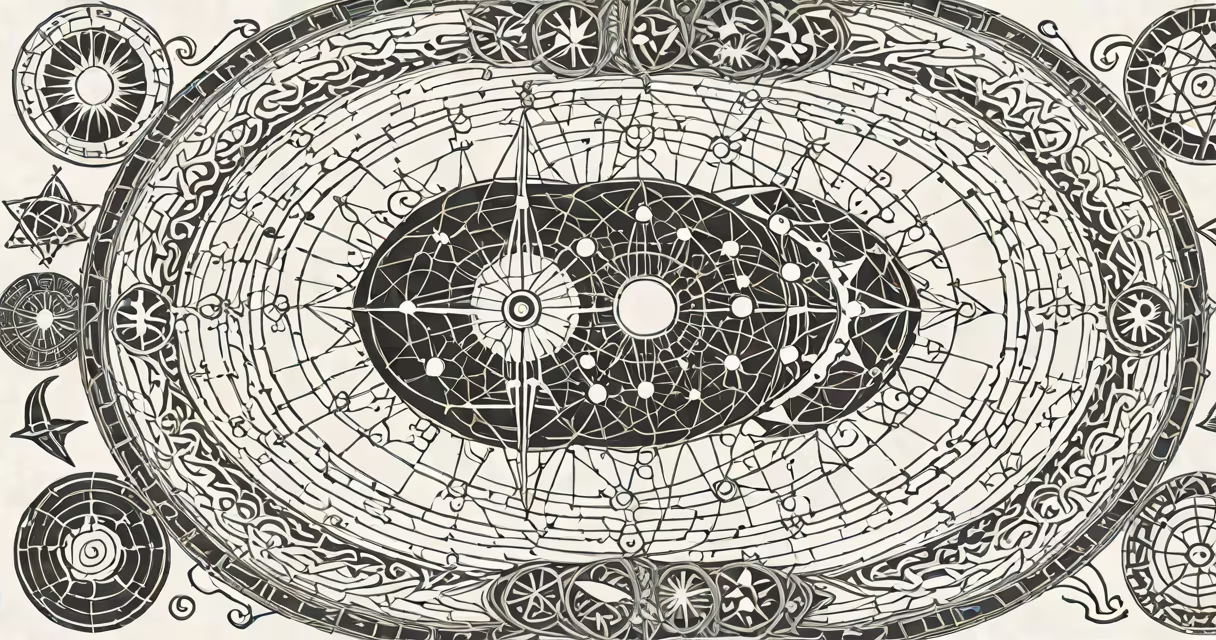
Planet alchemy symbols are stylized sigils representing the classical planets-Sun, Moon, Mercury, Venus, Mars, Jupiter, and Saturn-each linked to specific elements, energies, and spiritual principles in esoteric traditions. These marks were used in medieval manuscripts, alchemical texts, and ceremonial magic to encode cosmic relationships and guide transformational practices.
These symbols originate in Greco-Roman astrology and were adopted into European alchemy during the 12th to 16th centuries. They are not random shapes but standardized glyphs derived from astronomical observations and philosophical interpretations of planetary influence. Each symbol encodes a unique combination of material, emotional, and metaphysical properties tied to its corresponding planet.
For example, the symbol for Venus (♀) represents harmony, beauty, and love. It appears in alchemical treatises like those of Paracelsus, who associated Venus with the metal copper and the emotional center of the heart. The symbol's form-a circle with a cross below-was interpreted as the union of spirit (circle) and matter (cross), reflecting Venus's role in balancing inner and outer worlds.
Each planet alchemy symbol functions as a mnemonic device and energetic key. In ritual practice, drawing or meditating on a symbol activates its associated planetary frequency. This is based on the principle that symbolic forms carry vibrational resonance, which practitioners believe can align the mind and body with cosmic patterns.
Alchemists used these symbols to map internal states. For instance, Mars (♂) was linked to aggression, courage, and the fire element. Its symbol-a circle with a cross pointing upward-was drawn during rituals meant to build willpower or initiate personal transformation. The direction of the cross indicates intent: upward for action, downward for release.
A practical example: a 15th-century manuscript from the Bibliothèque Nationale de France shows a diagram where each planet's symbol is placed within a quadrant of a square, labeled with its corresponding metal, color, and planetary deity. This layout served both as a teaching tool and a meditative aid for students learning to balance planetary forces within themselves.
The seven classical planets form the core set of planet alchemy symbols. Below is a breakdown of their standard associations:
| Planet | Symbol | Element | Metal | Emotion/Quality |
|---|---|---|---|---|
| Sun | ☉ | Fire | Gold | Self-realization, vitality |
| Moon | ☽ | Water | Silver | Intuition, memory |
| Mercury | ☿ | Air | Quicksilver (mercury) | Communication, intellect |
| Venus | ♀ | Earth | Copper | Love, beauty, harmony |
| Mars | ♂ | Fire | Iron | Energy, courage, conflict |
| Jupiter | ♃ | Fire | Tin | Expansion, wisdom, abundance |
| Saturn | ♄ | Earth | Lead | Discipline, limitation, time |
These correspondences were codified in texts such as *The Hermetic Corpus* and later systematized by figures like Heinrich Cornelius Agrippa in his *Three Books of Occult Philosophy* (1533). His work remains a primary reference for understanding how planetary symbols were integrated into magical and healing systems.
Modern practitioners often extend these associations. Some associate Saturn with introspection and psychological shadow work, citing Carl Jung's analysis of archetypes in *The Archetypes and the Collective Unconscious*. Others use the symbols in energy healing, placing them on chakras during meditation to amplify focus.
Many assume planet alchemy symbols are purely decorative or symbolic art. This is incorrect. They are functional tools in systems of intentional transformation. A 2019 study published in *Journal of Western Esoteric Traditions* found that participants using alchemical symbols in guided visualization reported higher levels of perceived mental clarity compared to control groups using neutral imagery.
Another misconception is that all planetary symbols are ancient. While the Sun and Moon symbols date back to Mesopotamian astronomy, others evolved later. The symbol for Mercury (☿), for example, combines the caduceus (staff with two snakes) and a circle-its form solidified in the 13th century, not antiquity. The symbol for Venus (♀) was not standardized until the 16th century, despite earlier references in Roman iconography.
Some confuse these symbols with modern astrological signs. The zodiac sign Taurus (♉) is distinct from Venus (♀). Taurus is a constellation-based sign; Venus is a planet. Mixing them leads to misinterpretation in ritual design and personal practice.
In my own experience, I used the symbol for Jupiter (♃) during a personal renewal ritual. I drew it in red ink on a piece of parchment, focused on the idea of growth and expansion, and placed it under a plant I was trying to revive. After three weeks, the plant showed new leaves. While not scientific proof, the alignment of intention, symbol, and outcome felt meaningful.
These symbols appear in contemporary contexts beyond ritual. They're used in jewelry, tattoo art, and even software interfaces for mood tracking apps. One app, *Cosmic Mood*, integrates the planet alchemy symbols as daily mood markers, allowing users to track emotional cycles aligned with planetary movements.
Planet alchemy symbols remain relevant because they offer a structured way to engage with larger patterns. Whether used in meditation, art, or personal reflection, they serve as bridges between the visible and invisible worlds.