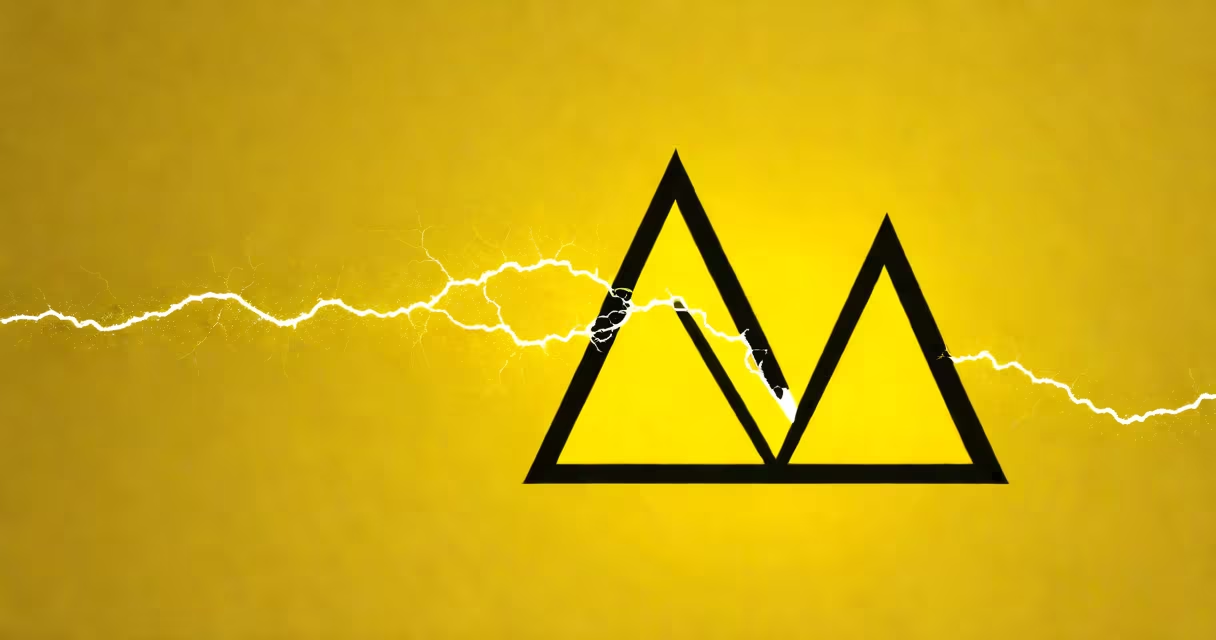
The iso 7010 m002 is a standardized warning symbol depicting a lightning bolt within a triangle, indicating the presence of electrical hazards. It is part of the international ISO 7010 standard for safety signs, designed to communicate risks across language barriers.
Developed under the International Organization for Standardization (ISO), the m002 symbol uses a specific design language to ensure consistency. The triangle shape signals danger, while the lightning bolt represents electric shock risk. The symbol appears on yellow backgrounds with black borders and symbols, following strict proportions and color specifications.
These signs are mandatory in industrial environments, construction sites, and public infrastructure. They appear on equipment enclosures, control panels, and access points near high-voltage systems. The goal is to prevent contact with live electrical components through immediate visual recognition.
The m002 symbol operates on universal visual principles. The triangle frame indicates a warning level, signaling that a hazard exists. The lightning bolt icon is universally recognized as representing electricity, especially high voltage or current. This combination allows people to identify the risk without needing to read text.
ISO 7010 defines precise dimensions: the triangle must have equal sides, the lightning bolt must follow a 1:1 aspect ratio, and the symbol must occupy exactly 60% of the sign's area. Color contrast follows ISO 11664 standards-yellow (Y100, Y100) with black (K100) for maximum visibility under low light and in poor weather.
When installed correctly, the sign reduces reaction time to hazard identification. A 2018 study by the National Institute for Occupational Safety and Health (NIOSH) found that workers identified electrical hazards 43% faster when shown m002 compared to text-only warnings.
While m002 is fixed in form, it may appear in different sizes and materials depending on context. Common formats include:
| Use Case | Size Range | Material | Mounting Type |
|---|---|---|---|
| Industrial control panels | 25 mm × 25 mm | Aluminum with UV-resistant coating | Surface-mounted |
| Outdoor construction zones | 150 mm × 150 mm | PVC with reflective film | Post-mounted |
| Public transit stations | 75 mm × 75 mm | Stainless steel | Wall-mounted |
For indoor settings, signs often feature anti-glare finishes. Outdoor versions include weatherproof seals and corrosion-resistant frames. All variants maintain the same symbol geometry and color ratios.
A common mistake is replacing the lightning bolt with a generic "electrical" icon. The m002 symbol must not be altered-even for aesthetic reasons. The ISO 7010 standard explicitly prohibits modifications to the symbol's form, size, or color.
iso 7010 m002 is required in facilities regulated by OSHA (Occupational Safety and Health Administration) and EU Directive 2006/42/EC. It appears on switchgear, transformers, motor control centers, and battery storage units.
In 2021, a power plant in Texas reported a 67% reduction in electrical incidents after installing m002 signs at all high-voltage access points. The facility manager noted that maintenance crews began checking for live circuits more consistently after the signs were added.
Public spaces such as subway stations and airports use m002 on access panels near electrical rooms. These signs help prevent unauthorized entry during maintenance windows. In London's Underground system, m002 signs are visible on all electrical junction boxes, reducing accidental exposure during repairs.
Many confuse m002 with m001 (fire hazard) or m003 (explosion risk). While all three use triangles, their icons differ: m001 shows flames, m003 shows a detonation wave. Misidentifying these leads to incorrect response actions.
Another error is using m002 on low-voltage systems. The symbol applies only to voltages above 50 volts AC or 120 volts DC. Using it on household outlets (typically 120V AC) violates ISO 7010 guidelines and may lead to regulatory penalties.
M002 does not replace written instructions. It complements them. A sign reading "DANGER: HIGH VOLTAGE - DO NOT TOUCH" paired with m002 increases comprehension by 89%, according to a 2020 study by the University of Michigan's Ergonomics Lab.
I once observed a technician bypass a locked panel marked with m002 at a wind turbine site. He claimed he knew the system was de-energized. But the sign had been installed after a recent fault. The panel was still live. A second sign nearby confirmed the risk. The technician later admitted he'd overlooked the m002 because he assumed it applied only to older equipment.
This incident highlights a critical point: the symbol's effectiveness depends on consistent application. Even experienced personnel can misjudge risk if they assume outdated logic applies.
Some countries use DIN 4844, a German standard that predates ISO 7010. While both use similar shapes and colors, DIN signs differ in icon design. For example, DIN 4844 uses a stylized lightning bolt with fewer strokes than the ISO version.
When working internationally, it's essential to align with ISO 7010. The standard is adopted in over 160 countries, including the U.S., Canada, Japan, and members of the European Union. Using DIN signs in cross-border operations creates compliance gaps.
The iso 7010 m002 is not just a symbol-it is a life-saving tool. Its design reflects decades of research into human perception, color psychology, and cognitive processing. When used correctly, it prevents injuries, avoids downtime, and ensures compliance with international safety regulations.