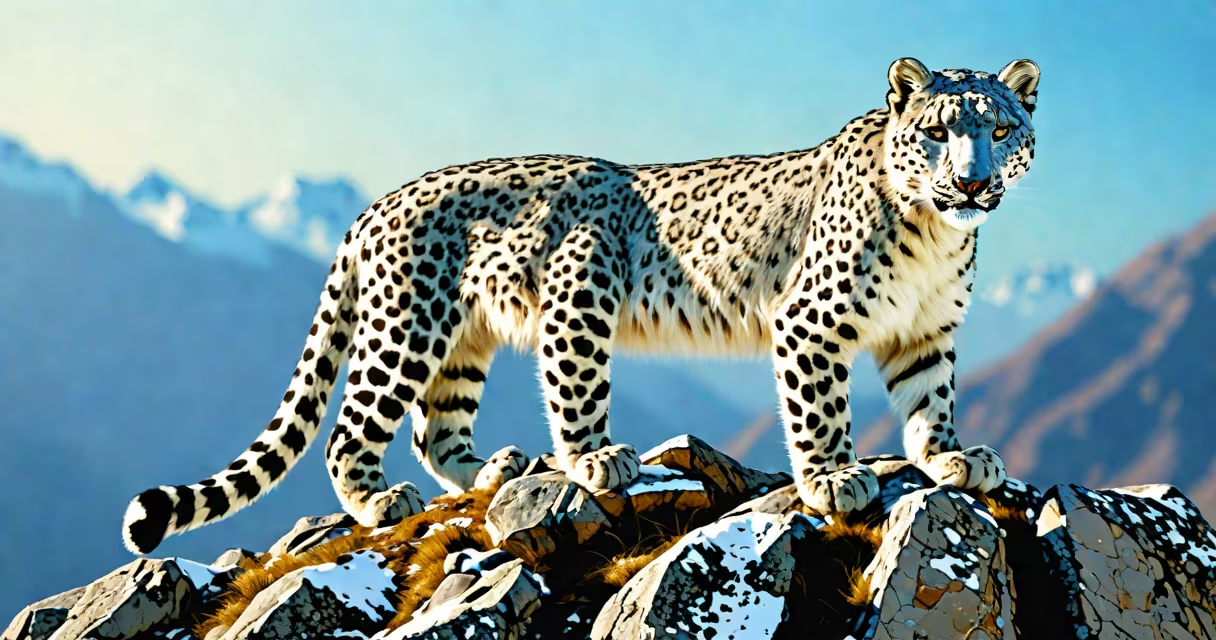
The International Day of the Snow Leopard is observed on October 23 each year to show the plight of the snow leopard (Panthera uncia), an endangered big cat native to the mountainous regions of Central and South Asia. This day was established by the United Nations in 2013 to strengthen global cooperation in protecting snow leopard habitats and addressing threats like poaching, climate change, and human-wildlife conflict.
Snow leopards inhabit remote alpine zones above 3,000 meters, spanning 12 countries including Bhutan, India, Nepal, China, Mongolia, and Kyrgyzstan. Their elusive nature and harsh terrain make population monitoring difficult. According to the International Union for Conservation of Nature (IUCN), fewer than 7,000 individuals remain in the wild, with populations declining due to habitat fragmentation and illegal trade in pelts and bones.
The UN-designated date serves as a focal point for coordinated action among governments, NGOs, researchers, and local communities. Events include educational campaigns, community-led patrols, scientific surveys, and policy forums. These activities aim to build regional networks that support cross-border conservation strategies and sustainable livelihoods for people living near snow leopard ranges.
Each year, the Global Snow Leopard Forum coordinates national and regional events under the theme "Living Together with Snow Leopards." Countries within the snow leopard's range host exhibitions, school programs, and media outreach. For example, in 2022, Kyrgyzstan launched a nationwide campaign featuring traditional nomadic storytelling to teach youth about coexistence with predators.
Conservation groups use the day to release new research findings. In 2021, the Snow Leopard Trust published satellite tracking data showing that snow leopards travel up to 100 kilometers between seasonal habitats-evidence that protected areas must be connected across political borders. Without such connectivity, genetic isolation threatens long-term survival.
Local communities play a central role. In Ladakh, India, herders have adopted predator-proof corrals and received compensation for livestock losses through insurance schemes backed by the government and conservation partners. These models reduce retaliatory killings and improve tolerance toward snow leopards.
The observance rests on four pillars: science-based monitoring, legal protection, community engagement, and international funding. Scientific data from camera traps and DNA analysis from scat samples inform population estimates and movement patterns. In 2023, researchers in Tajikistan identified 28 unique snow leopards using non-invasive sampling methods.
Nationally, laws prohibit hunting and trade. China's Wildlife Protection Law bans commercial exploitation of snow leopards, while Nepal enforces strict penalties for poaching. However, enforcement varies widely. A 2022 report by the Environmental Investigation Agency documented ongoing trafficking of snow leopard parts through online marketplaces despite legal prohibitions.
Community-based initiatives form the foundation of lasting success. In Mongolia, the Snow Leopard Foundation trains local rangers who conduct regular patrols and collect data on snow leopard signs like scrapes and scent markings. These rangers often come from herding families, ensuring cultural relevance and trust.
The day is observed globally but focuses on the 12 range countries. Major events occur in Tashkent (Uzbekistan), Almaty (Kazakhstan), and Bishkek (Kyrgyzstan), where ministers and scientists meet to review progress on the Global Snow Leopard Initiative's 2030 goals. These include doubling snow leopard numbers and securing 30% of their habitat in protected areas.
Why this matters: Snow leopards are apex predators whose presence indicates healthy mountain ecosystems. They regulate herbivore populations, which prevents overgrazing and soil erosion. A 2020 study in the Hindu Kush showed that areas with stable snow leopard populations had higher plant diversity and better water retention.
Using the day as a catalyst, organizations scale up interventions. In 2021, the World Bank approved $15 million for a regional conservation program covering five Central Asian nations. Funding supports anti-poaching units, eco-tourism development, and early-warning systems for livestock predation.
Some assume the day celebrates snow leopards as symbols of strength or wilderness. While they are culturally revered in many traditions-such as the Mongolian "shan" spirit-the focus is strictly ecological and policy-driven. The day is not a celebration but a call to action.
A frequent error is equating snow leopard conservation with tiger or elephant efforts. Unlike those species, snow leopards do not face large-scale habitat conversion from agriculture or urbanization. Instead, their decline stems from indirect pressures: climate change shifting treeline upward, reduced prey availability due to overhunting, and infrastructure expansion into remote areas.
Another misconception: that snow leopards are rare because they're shy. They are elusive, but their low density is a result of limited prey and vast territories. A single male may require 500 square kilometers of territory. This makes them vulnerable to even small disturbances.
In October 2023, Kyrgyzstan hosted a multi-day event in the Tian Shan mountains. Over 100 participants included rangers, schoolchildren, scientists, and policymakers. The centerpiece was a live-streamed panel discussing the impact of mining on snow leopard corridors.
Field teams deployed 24 camera traps across three districts. Within two weeks, images confirmed the presence of at least six individuals, including a female with two cubs. This marked the first time cubs were documented in the region since 2018.
Following the event, the Ministry of Environment signed a bilateral agreement with Kazakhstan to establish a transboundary conservation zone. The area covers 1,200 square kilometers and includes critical migration routes. This collaboration exemplifies how the day translates into tangible outcomes.
| Component | Description | Example |
|---|---|---|
| Scientific Monitoring | Camera traps, GPS collars, fecal DNA analysis | 28 unique snow leopards identified in Tajikistan (2023) |
| Legal Structure | National laws banning hunting and trade | China's Wildlife Protection Law, amended 2021 |
| Community Programs | Livestock insurance, predator-proof pens | Ladakh's Herder Compensation Scheme (2020-present) |
| Transboundary Cooperation | Joint patrols, shared databases, corridor agreements | Kyrgyzstan-Kazakhstan conservation zone (2023) |
I first witnessed the power of this day during a field visit to northern Pakistan in 2022. Local guides led me through a narrow valley where snow leopard tracks were fresh. We found a scrape-a shallow depression scratched into rock by a marking male. That moment underscored how fragile and urgent the work is. The tracks weren't just animal signs; they were evidence of survival in a field increasingly shaped by human decisions.
Despite challenges, progress is measurable. Since 2013, the number of snow leopard range countries with national conservation strategies has risen from 6 to 12. Population estimates from 2023 suggest a modest increase in some areas, though declines persist in others. The International Day of the Snow Leopard remains a important tool for aligning global attention with on-the-ground action.