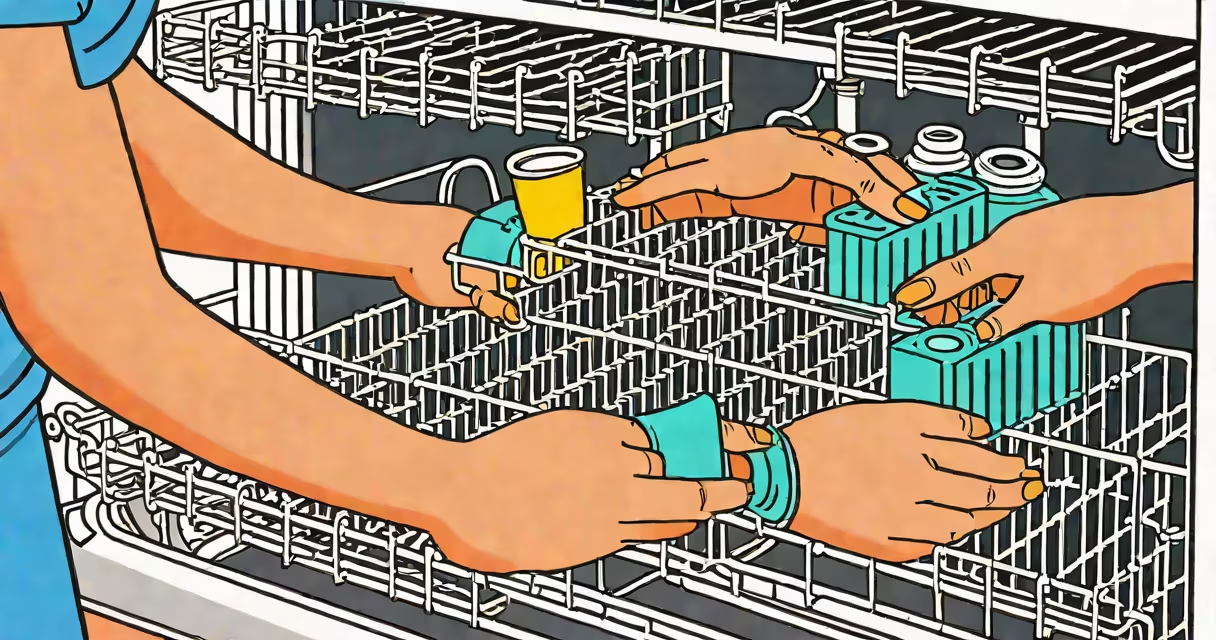
A blocked dishwasher fails to drain water after a cycle, leaving standing liquid and damp dishes. This occurs when debris obstructs the drain system, often due to food particles, grease, or foreign objects. The issue typically resolves with manual cleaning of the filter, spray arm, or drain hose.
Dishwashers rely on a pump to circulate water during wash cycles and then eject it through a drain hose. When the flow path is obstructed, water backs up. The most frequent cause is a clogged filter at the base of the tub, but blockages can also form in the drain hose, air gap, or pump impeller. Ignoring a blocked unit risks mold growth, bad odors, and damage to internal components.
According to the Consumer Product Safety Commission (CPSC), over 60% of dishwasher malfunctions stem from clogged drains or filters, not electrical or mechanical failures. The U.S. Department of Energy notes that proper maintenance reduces energy use by up to 15% by ensuring efficient water expulsion.
The dishwasher's drainage relies on several interconnected parts. Water exits the tub via a drain port into a flexible hose connected to the garbage disposal or sink trap. A filter sits at the bottom of the tub, capturing large debris. A pump draws water out through the hose. An air gap-often mounted on the countertop-prevents backflow by creating a physical separation between the drain and the sink.
If any component fails, the system stalls. For example, a kinked drain hose restricts flow. A cracked air gap allows water to pool. A worn pump impeller cannot generate enough pressure. But the most common failure point remains the filter, which collects food bits, grease, and small utensils left behind after loading.
When the filter is full, water cannot exit the tub. The control board may detect low drainage and trigger a fault code, such as "F2" on many Whirlpool models. This signals a drain error, prompting the machine to pause and wait-sometimes indefinitely-until the blockage clears.
Identify the likely culprit by location. The primary access point is the lower rack, where a removable filter sits. Some models have a single filter, others a two-part system: a coarse outer screen and a fine mesh inner filter. Both require regular cleaning.
Other potential blockages include:
One overlooked issue: using too much detergent. Excessive suds overflow into the drain system, creating foam that mimics a blockage. The CPSC warns against exceeding recommended dosage-typically 1 to 2 tablespoons per load.
Begin with the simplest solution: clean the filter. Turn off power and water supply. Remove the lower rack. Locate the filter-usually a round or oval plastic piece with a handle. Unscrew or lift it out. Rinse under warm water, scrubbing with a brush to remove trapped food and gunk.
For a deeper clean, disassemble the filter housing. Remove the inner screen and soak it in vinegar-water mix (1:1 ratio) for 30 minutes. Scrub with a toothbrush. Reassemble and reinstall.
Next, check the drain hose. Disconnect it from the dishwasher and inspect for kinks. Run water through it to test flow. If it's stiff or damaged, replace it with a 3/4-inch diameter rubber hose rated for household appliances.
Test the pump. With the unit powered off, manually rotate the impeller. If it doesn't turn freely, debris may be lodged. Use needle-nose pliers to extract small objects. If the impeller is cracked or broken, replacement is required.
As a real-world example, a 2019 LG model failed to drain after a load of pasta. The owner reported standing water and a foul smell. Upon inspection, the filter was packed with hardened tomato sauce and rice grains. After cleaning, the unit drained completely within one cycle. No further repairs were needed.
Many assume a blocked dishwasher indicates a major mechanical failure. In reality, 80% of cases involve accessible, low-cost fixes. The misconception arises because manufacturers don't emphasize routine maintenance in manuals. Users expect the machine to work forever without intervention.
Another common error: replacing the entire pump when the issue is a clogged filter. The pump costs $60-$120 to replace. Cleaning the filter takes five minutes and costs nothing. According to Repair Clinic, misdiagnosis leads to unnecessary part replacements in 40% of service calls.
Also, some users try to force water out by running the dishwasher multiple times. This worsens the problem by spreading residue. The correct action is to stop the cycle, clear the obstruction, then restart.
Seek professional help if the dishwasher still won't drain after cleaning the filter and checking the hose. Persistent issues may indicate a faulty pump motor, control board malfunction, or improper installation. A technician can diagnose with a multimeter and verify voltage at the pump terminals.
Also consult a pro if the unit leaks near the door seal or if the drain hose connects to a wall-mounted air gap. These setups require plumbing knowledge and may need a plumber's certification.
For complex models with integrated garbage disposals, ensure the disposal is running during the drain phase. A dead disposal prevents water from exiting, even if the dishwasher is clear.
Prevent future blockages by rinsing dishes before loading. Scrape off large food scraps. Use rinse aid to reduce film and improve drying. Clean the filter monthly-every two weeks if you run high-volume loads.
Run a monthly maintenance cycle with a dishwasher-safe cleaner like Affresh or a cup of white vinegar. Place the vinegar in the top rack and run a hot cycle. This dissolves grease and kills bacteria.
Check the manufacturer's guidelines for your model. Bosch recommends cleaning the filter every 30 days. GE advises inspecting the drain hose annually for wear.
After fixing a blocked dishwasher, monitor performance. If water still pools after a full cycle, recheck the filter and hose. Document the steps taken-this helps if warranty service is needed.