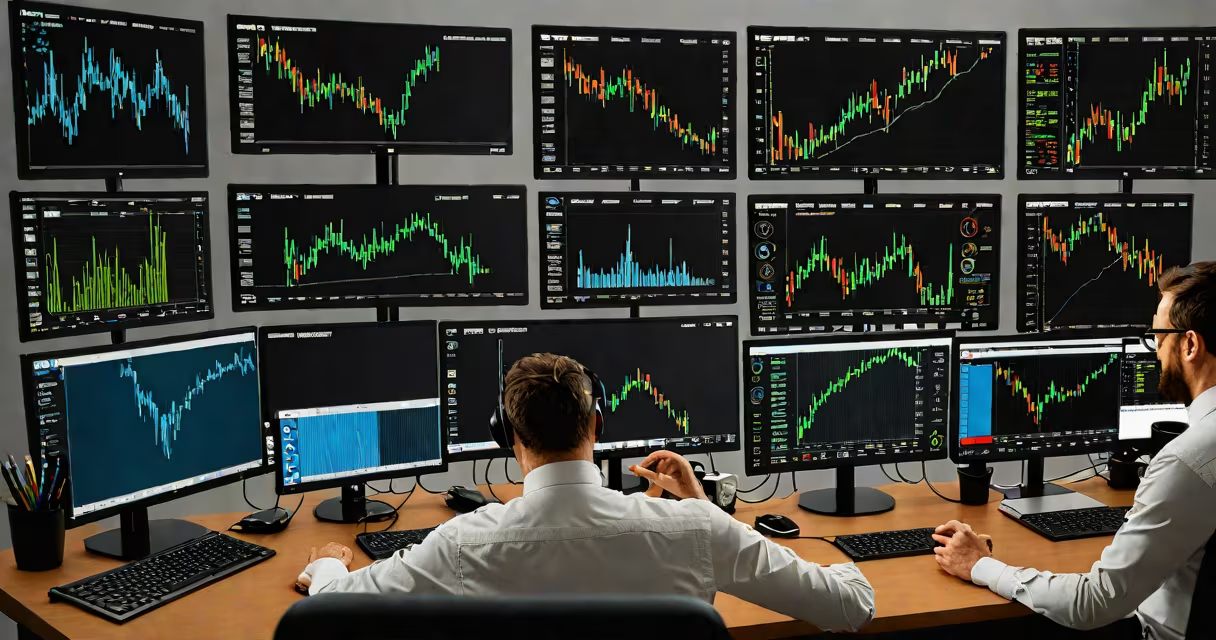
how to do forex business involves buying and selling currencies through online platforms to profit from exchange rate fluctuations. Traders analyze global economic conditions, technical patterns, and news events to time trades. This activity occurs 24 hours a day, five days a week, across major financial centers like London, New York, and Tokyo.
The foreign exchange market, or forex, is the largest financial market globally, with daily turnover exceeding $7.5 trillion according to the Bank for International Settlements (BIS) 2022 Triennial Survey. Unlike stocks or commodities, forex trades occur over-the-counter (OTC), meaning transactions happen directly between counterparties rather than on a centralized exchange. This decentralization increases liquidity but also introduces counterparty risk.
Most individuals enter forex through retail brokers who provide access to trading platforms, margin accounts, and real-time pricing. These brokers act as intermediaries between traders and the interbank market. A trader opens an account, deposits funds, and uses tools like price charts, moving averages, and relative strength index (RSI) to identify entry and exit points.
Forex trading operates on the principle of currency pairs. Each trade involves simultaneously buying one currency and selling another. For example, EUR/USD represents the euro versus the U.S. dollar. If the euro strengthens against the dollar, the trader profits by buying euros and selling dollars.
Trades are executed via a trading platform such as MetaTrader 4 or TradingView. These platforms display bid and ask prices, which reflect the current market value. The difference between them is the spread-the cost of entering a trade. A typical spread on EUR/USD is 0.1 to 0.3 pips (one pip = 0.0001 of a currency unit).
Use amplifies both gains and losses. A standard use ratio is 50:1, meaning a $1,000 account can control $50,000 in positions. With 100:1 use, the same account controls $100,000. While this allows small capital to generate large returns, it also increases exposure to rapid losses. A 1% move against the position can erase 10% of equity with 100:1 use.
Participants in the forex market fall into four categories: central banks, commercial banks, hedge funds, and retail traders. Central banks intervene to stabilize national currencies during crises. Commercial banks help large institutional trades and set interbank rates. Hedge funds use algorithmic strategies and high-frequency trading. Retail traders make up a growing segment, especially through online brokers.
| Type | Typical Volume | Trading Style | Example |
|---|---|---|---|
| Central Banks | Billions per transaction | Policy-driven | ECB buying euros to stabilize value |
| Commercial Banks | Multi-billion dollar daily | Arbitrage, hedging | Deutsche Bank executing cross-currency swaps |
| Hedge Funds | Millions to hundreds of millions | Algorithmic, macro strategies | Two Sigma's automated forex model |
| Retail Traders | Thousands to tens of thousands | Day trading, swing trading | Individual trading EUR/USD on MetaTrader |
One common misconception is that forex trading is similar to stock investing. While both involve financial instruments, forex differs in structure and behavior. Stocks represent ownership in companies. Forex reflects the relative value of national currencies, driven by interest rates, inflation, and geopolitical stability. A 1% change in a stock may take weeks. A 1% move in USD/JPY can happen in minutes.
Start by selecting a regulated broker. Look for licensing from bodies like the U.S. Commodity Futures Trading Commission (CFTC), UK Financial Conduct Authority (FCA), or Australian Securities and Investments Commission (ASIC). Unregulated brokers pose significant fraud risk. According to the FCA, over 60% of retail forex traders lose money within their first year.
Open a demo account to practice without risking capital. Most brokers offer free simulated environments with real-time data. Use this period to test strategies, understand platform mechanics, and build discipline. After six months of consistent demo trading, consider transitioning to a live account with a small deposit-$100 to $500.
Apply a risk management structure. Never risk more than 1-2% of capital per trade. Set stop-loss orders automatically to limit downside. For example, if you buy GBP/USD at 1.2500 with a stop-loss at 1.2450, you accept a maximum loss of 50 pips. This prevents emotional decisions during volatile periods.
I once tested a strategy based on the U.S. Non-Farm Payrolls report. On release day, I entered a long position on USD/CAD after the data beat expectations. The pair rose 120 pips in under 30 minutes. I exited early, locking in profit. Later, I reviewed the trade: the win came from timing, not prediction. That experience taught me that consistency beats intuition.
Many beginners assume forex is a quick path to wealth. The reality is that 70-80% of retail traders fail within two years, according to a 2021 study by the University of California, Berkeley. Losses stem from overtrading, ignoring spreads, and chasing losses. A single losing trade should not trigger a larger bet to "recover." This is known as the gambler's fallacy.
Another error is relying solely on technical indicators. While RSI and MACD help spot trends, they don't account for macroeconomic shifts. For example, in March 2022, the Swiss National Bank unexpectedly devalued the franc after the war in Ukraine escalated. Technical signals failed because fundamentals changed overnight.
Some confuse forex with cryptocurrency trading. Both involve digital assets and volatility, but they differ fundamentally. Forex trades fiat currencies backed by governments. Cryptocurrencies like Bitcoin have no central issuer and rely on decentralized networks. Price swings in crypto can exceed 20% in a day-far beyond typical forex moves.
Regulators require brokers to provide transparent pricing, fair execution, and segregated client funds. In the EU, MiFID II mandates that brokers disclose all costs, including spreads and commissions. In the U.S., CFTC rules prohibit misleading marketing and require brokers to offer conflict-of-interest disclosures.
Traders must also comply with tax reporting. In the U.S., forex profits are taxed as ordinary income, not capital gains. The IRS treats forex as a speculative activity under Section 1256 of the Internal Revenue Code. Traders must file Form 8949 and Schedule D annually.
Understanding business in dictionary definitions reveals that business is "an organized effort to provide goods or services to others." In forex, this applies to brokers offering trading infrastructure and analysis tools. The business model relies on volume and spread revenue, not direct investment in assets.
For those exploring long-term involvement, consider forming a partnership in business. Structured collaboration reduces individual risk and pools expertise. A joint venture in forex analytics, for example, could combine programming skills with economic research to develop a proprietary signal engine.
Begin with education. Study the basics of monetary policy, central bank decisions, and technical analysis. Use resources like Investopedia's forex course or the CFTC's educational materials. Practice consistently. Focus on process, not profit. Over time, discipline becomes the edge.
how to do forex business is not a shortcut. It requires structured learning, emotional control, and continuous adaptation. Success comes from mastering risk, understanding market drivers, and avoiding common behavioral traps. Start small. Stay consistent. Build a track record before increasing exposure.