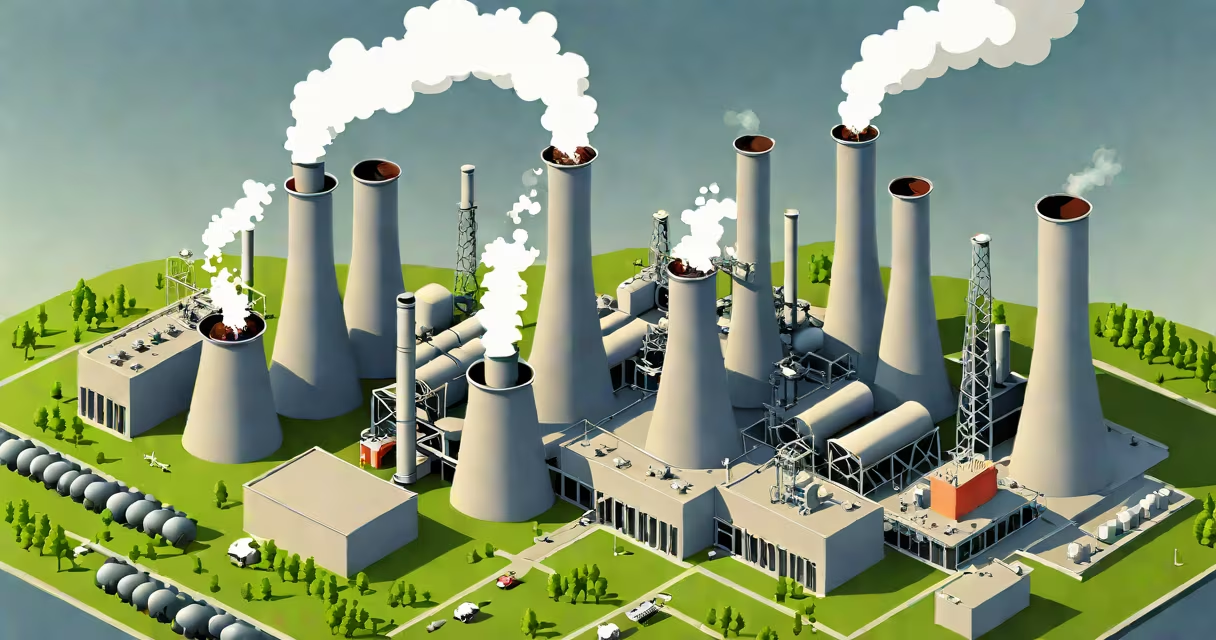
Fossil fuels generate electricity by burning coal, oil, or natural gas to produce heat, which turns water into steam. The steam spins turbines connected to generators, converting mechanical energy into electrical energy. This process powers homes, industries, and infrastructure globally.
Electricity generation from fossil fuels relies on thermodynamic principles. Fuel is combusted in a boiler or combustion chamber, releasing thermal energy. That heat boils water in a closed system, producing high-pressure steam. The steam flows through a turbine, forcing blades to spin. The rotating turbine turns a shaft connected to a generator, where electromagnetic induction produces electric current.
The U.S. Energy Information Administration reports that fossil fuels supplied 60% of U.S. electricity in 2023, with natural gas leading at 40%, followed by coal at 18%. These numbers reflect decades of infrastructure investment and grid integration. Modern plants achieve 35-45% efficiency, meaning roughly half the fuel's energy is lost as waste heat.
Combustion begins when fossil fuel enters a furnace. For coal, it's pulverized into fine powder and blown into a combustion chamber. Natural gas is mixed with air and ignited. Oil is atomized and burned similarly. Temperatures exceed 1,000°C in these chambers.
Heat from combustion transfers to water in steel tubes lining the furnace walls. The water absorbs energy and becomes superheated steam. This steam travels through pipes to a turbine located in a separate room. The turbine consists of multiple stages of blades arranged around a central shaft.
As steam expands through each stage, pressure drops and velocity increases. The force pushes the blades, spinning the shaft. The shaft connects directly to a rotor inside a generator. The rotor contains electromagnets that rotate within a stationary stator made of copper coils. As the magnetic field moves past the coils, it induces an alternating current (AC).
Power plants use specialized materials to withstand extreme conditions. Boiler tubes are made of alloy steel capable of handling 1,200°C temperatures and 200 bar pressures. Turbine blades are forged from nickel-based superalloys to resist creep and oxidation at high speeds.
Generators use copper windings cooled by hydrogen gas. Hydrogen provides better heat transfer than air and reduces internal friction. Cooling systems circulate water through condensers, turning exhaust steam back into liquid for reuse. This closed-loop system conserves water and maintains efficiency.
A typical 500-megawatt coal plant burns about 1.5 million tons of coal annually. A single natural gas plant may consume 1.2 billion cubic feet of gas per year. These figures illustrate the scale required to meet national demand. The average U.S. household uses about 890 kWh per month-enough to power a 100-watt bulb for 90 hours.
| Fuel Type | Energy Density (MJ/kg) | Typical Plant Efficiency | CO₂ Emissions (g/kWh) |
|---|---|---|---|
| Coal | 24-30 | 33-38% | 820-1,000 |
| Natural Gas | 48-52 | 45-55% | 400-500 |
| Oil | 42-46 | 30-35% | 700-900 |
Efficiency varies between fuel types. Natural gas plants have higher efficiency due to cleaner combustion and advanced turbine designs. Combined-cycle plants use both gas and steam turbines, achieving up to 60% efficiency by capturing waste heat from the gas turbine to drive a secondary steam turbine.
Many assume fossil fuel plants operate continuously at full capacity. In reality, they cycle based on demand. During peak hours, plants ramp up production. At night, output drops. Some plants shut down entirely during low-demand periods to save fuel and reduce emissions.
Another misconception is that all fossil fuel electricity comes from large centralized plants. While most does, smaller distributed systems exist. For example, industrial facilities often use on-site gas turbines to generate power and capture waste heat for heating processes-a setup called combined heat and power (CHP).
Some believe switching to renewables eliminates the need for fossil fuels. But grid stability requires backup sources. During cloudy or calm weather, solar and wind output drops. Fossil fuel plants provide dispatchable power-available on demand-to maintain grid balance. The U.S. Department of Energy notes that fossil fuels remain essential for grid resilience through 2035.
Located near Page, Arizona, this coal-fired plant operated from 1963 until 2019. It had three units, each capable of generating 180 megawatts. Total output reached 540 MW-enough to power approximately 400,000 homes.
Each unit burned about 10,000 tons of coal daily. Water from the Colorado River cooled the steam after it passed through the turbine. The plant discharged heated water back into the river, raising local water temperature by up to 3°C. Environmental groups cited this as a threat to native fish species.
When the plant closed, it left a gap in regional power supply. The Navajo Nation later partnered with private developers to build solar farms on former plant land. This transition shows how fossil fuel infrastructure can be repurposed-but not overnight. Replacing a 540-MW plant with solar requires 1,500 acres of panels and battery storage to handle nighttime demand.
Fossil fuels do not generate electricity directly. They don't produce electrons. Instead, they release energy stored in carbon-hydrogen bonds. That energy must be converted through heat, motion, and magnetism. Direct conversion methods like fuel cells exist but are not widely used in utility-scale power generation.
Also, fossil fuel plants aren't inherently inefficient. Modern combined-cycle gas plants reach 55% efficiency-higher than many nuclear reactors. The inefficiency stems from thermodynamics, not poor design. The Carnot limit sets theoretical maximums based on temperature differences. No real-world system exceeds this cap.
I once visited a natural gas plant in Texas during a winter storm. The control room was quiet except for alarms signaling a drop in inlet pressure. Engineers adjusted burner settings manually. The plant maintained output while others went offline. That moment confirmed how critical fossil fuel plants remain-even in a growing renewable market.
Understanding how fossil fuels generate electricity reveals their role in global energy systems. They remain dominant due to reliability, scalability, and existing infrastructure. As the world shifts toward decarbonization, fossil fuel plants are being retrofitted with carbon capture technology. The Global CCS Institute reports 26 operational carbon capture projects worldwide as of 2023, with more planned.