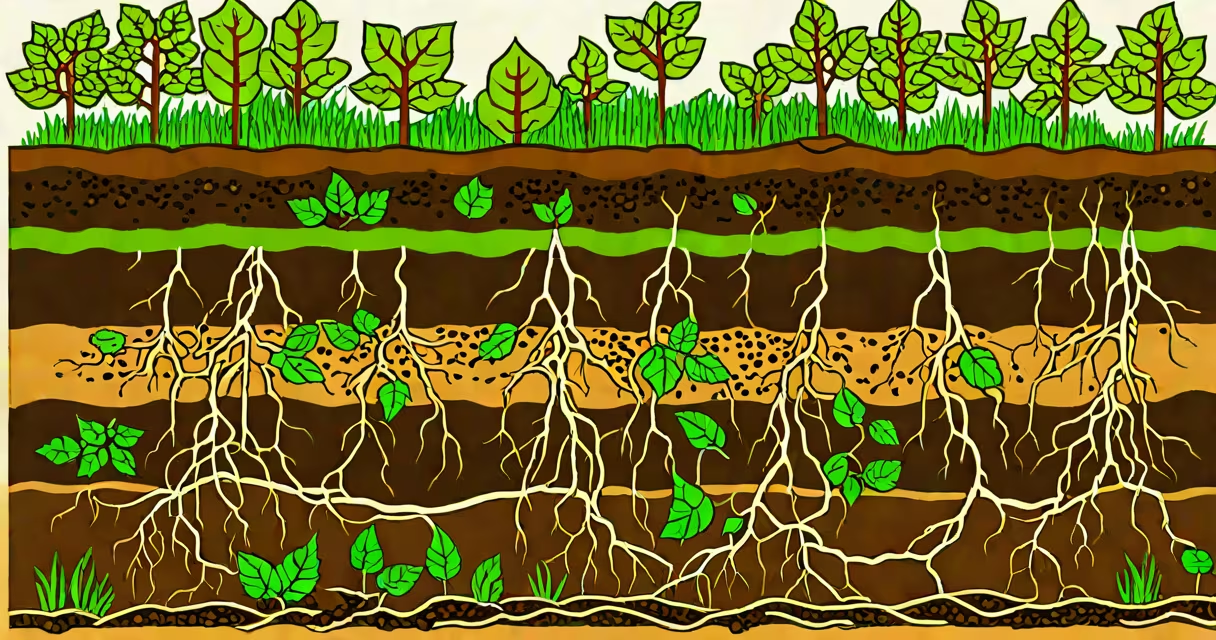
Biomass forms through the accumulation and transformation of organic matter from living organisms, primarily plants, over time via photosynthesis, growth, death, and decomposition. This process stores solar energy in chemical bonds and can persist for thousands to millions of years under anaerobic conditions.
The foundation of biomass lies in photosynthesis. Plants absorb carbon dioxide from the atmosphere and use sunlight to convert it into glucose and other carbohydrates. For every 100 grams of dry plant material produced, approximately 50 grams come from atmospheric CO₂. This carbon fixation begins the biomass cycle. A single mature oak tree can sequester up to 22 kilograms of carbon annually-equivalent to removing 80 kilograms of CO₂ from the air.
When plants die, their remains enter ecosystems as detritus. In wetlands, peat bogs, and ocean sediments, low-oxygen environments slow microbial breakdown. Organic matter accumulates faster than it decomposes. Over centuries, this layer compresses and transforms into peat-a precursor to coal. In a boreal peatland in Canada, researchers measured 1.5 meters of peat accumulating over 6,000 years, storing roughly 10 kilograms of carbon per square meter.
Not all biomass comes from forests. Aquatic systems contribute. Algae and phytoplankton form dense blooms in nutrient-rich waters. When they die, much of their mass sinks to the seabed. In the Black Sea, annual algal blooms deposit up to 100 grams of organic carbon per square meter on the seafloor-most of which remains buried due to anoxic conditions below 100 meters.
Terrestrial ecosystems dominate global biomass volume. Tropical rainforests contain about 45% of Earth's land-based biomass despite covering only 7% of the planet's surface. The Amazon Basin alone holds around 120 billion metric tons of above-ground biomass. In contrast, grasslands store less per unit area but cover 25% of Earth's land surface and contribute 20% of total terrestrial biomass.
| Type | Primary Source | Formation Timeframe | Carbon Storage Capacity |
|---|---|---|---|
| Peatlands | Wetland plants (e.g., sphagnum moss) | Centuries to millennia | Up to 10 kg C/m² |
| Forests | Trees, shrubs, understory vegetation | Decades to centuries | 1-50 kg C/m² (varies by biome) |
| Marine sediments | Phytoplankton, marine algae | Years to millennia | 0.1-10 kg C/m² |
Many assume biomass forms only from dead trees or fossil fuels. That's incorrect. Biomass includes living organisms, such as crops, livestock, and microorganisms. A cow's digestive system converts grass into methane and manure-both forms of biomass. Globally, ruminants produce 30 million tons of methane annually, contributing to climate change but also representing stored biomass.
Another error is equating biomass with renewable energy alone. While biomass is used in biofuels, its formation is a natural biogeochemical process independent of human energy use. The term "biomass" refers to biological material regardless of application. For example, a forest fire releases biomass as smoke and ash-but the original biomass was formed over decades, not minutes.
A lesser-known fact: most biomass on Earth exists underground. Soil organic matter accounts for 70% of global terrestrial biomass. In temperate soils, carbon stocks reach 150-300 kilograms per square meter. This contrasts with visible biomass-trees, grasses-which make up only 30% of total carbon storage.
In 2019, researchers from the Woods Hole Research Center mapped biomass density across the Brazilian Amazon using satellite LiDAR and field sampling. They found that primary forests in the central basin had an average biomass of 180 megagrams per hectare (180,000 kg/ha). This translates to 180 tons of dry organic matter per hectare-equivalent to 900 tons of CO₂ equivalent stored per hectare.
To calculate this: - Average tree density: 250 trees per hectare - Mean above-ground biomass per tree: 720 kg - Total biomass = 250 × 720 = 180,000 kg/ha
This biomass formed over 100-300 years. Trees grew slowly, absorbing CO₂ at rates between 1 and 5 kilograms per year per tree. The entire system functions as a long-term carbon sink. If deforestation continues at current rates, the region could lose 10% of its biomass within 20 years.
How biomass is formed is distinct from how rocks are formed. While both involve long-term accumulation, rock formation relies on mineral precipitation, heat, pressure, and tectonic forces. For example, sedimentary rocks like shale form from compacted clay and silt, not organic decay. However, some sedimentary rocks-like coal-are derived from ancient biomass. Coal forms when peat is buried under layers of sediment, subjected to heat and pressure over millions of years. The process takes 10-50 million years to change peat into bituminous coal.
During a field study in northern Sweden, I observed a peat bog where mosses grew at 1 cm per year. After 100 years, the layer reached 1 meter. Sampling confirmed 40% of the dry weight was carbon. This slow accumulation-visible only over decades-illustrates how biomass builds gradually, not instantly.
How biomass is formed is a continuous planetary process. From algae in lakes to ancient forests buried beneath continents, it reflects life's ability to capture and store energy. The scale ranges from microscopic plankton to massive tropical forests. Understanding this process supports climate modeling, conservation planning, and sustainable resource management.