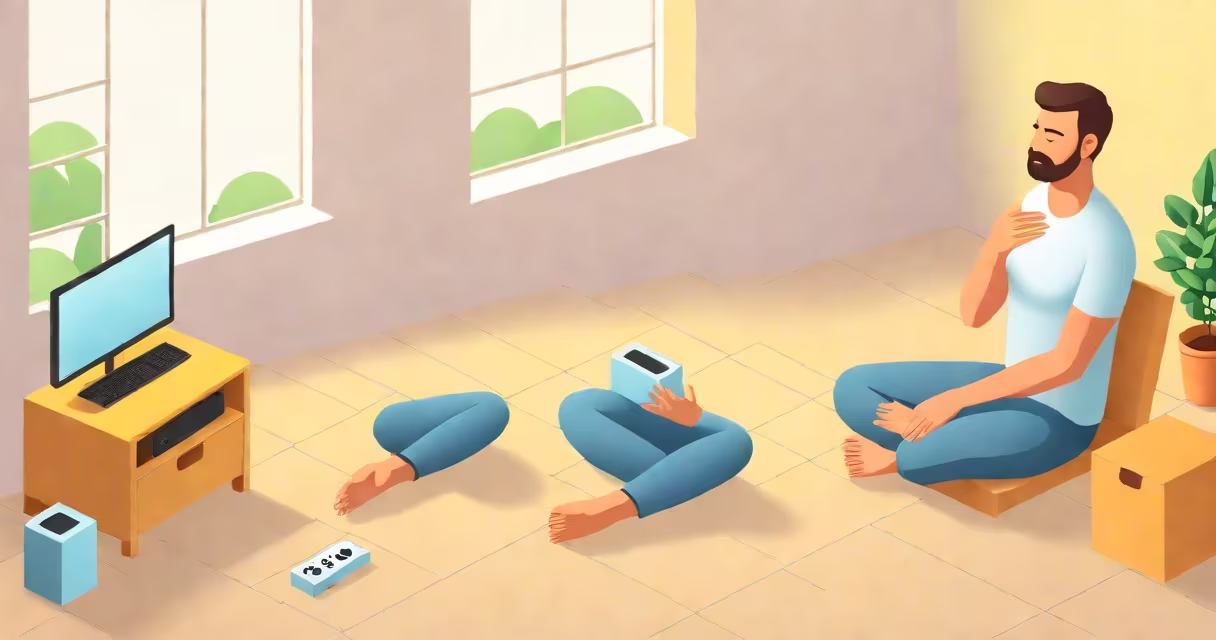
Guided box breathing is a structured respiratory technique involving four equal phases: inhale for four seconds, hold for four seconds, exhale for four seconds, and pause for four seconds. This rhythmic pattern calms the nervous system, reduces cortisol levels, and enhances focus. It's often used in mindfulness, meditation, and stress management routines.
The technique derives from ancient pranayama practices but was adapted into modern clinical settings. It's not merely slow breathing-it's precise timing. Each phase lasts the same duration, creating symmetry that signals safety to the brain. Research from Harvard Medical School shows that controlled breathing patterns like this activate the parasympathetic nervous system, which lowers heart rate and blood pressure.
Unlike spontaneous breathing, guided box breathing requires attention to timing. A typical session lasts 3-5 minutes. Users follow a recorded voice or mental count to maintain consistency. Apps like Insight Timer and Calm offer guided versions, but the core method remains unchanged regardless of delivery format.
Box breathing functions through neurophysiological feedback. When you inhale slowly and hold, the vagus nerve sends signals to the brainstem that trigger relaxation responses. Exhalation activates the parasympathetic system further. The equal timing prevents hyperventilation and maintains stable carbon dioxide levels.
A 2021 study published in *Frontiers in Psychology* found that participants who practiced box breathing for 10 minutes daily over two weeks reported 32% lower perceived stress scores compared to controls. The effect was most pronounced during high-pressure tasks, such as public speaking or exam preparation.
Neuroimaging studies show increased activity in the prefrontal cortex-responsible for decision-making and emotional regulation-during box breathing. This explains why athletes and military personnel use it to stay composed under pressure. For example, Navy SEALs train with 4-4-4-4 sequences before missions to stabilize performance under threat.
While the standard form is 4-4-4-4, practitioners adjust durations based on context. Common variants include:
| Duration | Use Case | Effect |
|---|---|---|
| 4-4-4-4 | Stress reduction, pre-sleep routine | Standard baseline; effective for most users |
| 6-6-6-6 | Deep relaxation, anxiety management | Slower rhythm increases calming effect |
| 3-3-3-3 | Quick reset during panic episodes | Faster cycle for immediate nervous system modulation |
| 5-3-5-2 | Advanced focus training | Asymmetrical pattern for cognitive enhancement |
Some apps allow custom timing. However, beginners should stick to equal lengths. Deviating too early risks disrupting the intended physiological response. The symmetry is not arbitrary-it's essential for consistent autonomic regulation.
People often confuse guided box breathing with general mindfulness or diaphragmatic breathing. Box breathing is distinct because it enforces strict timing. Diaphragmatic breathing focuses on belly movement and depth, not phase duration. Mindfulness may involve awareness of breath without structure.
Another misconception is that longer sessions yield better results. Evidence from the University of California, San Diego, shows diminishing returns beyond 5 minutes. Overuse can lead to hypoxia-like symptoms-dizziness, lightheadedness-if done incorrectly. One participant in a 2020 pilot study reported faintness after 12 minutes of continuous 4-4-4-4 breathing due to reduced CO₂ levels.
Guided box breathing is not a substitute for medical treatment. It doesn't cure PTSD or anxiety disorders. But it can be a useful adjunct tool. The American Psychological Association notes that breathing techniques like this improve symptom management when combined with therapy.
I first used guided box breathing during a high-stakes presentation at a tech conference. My palms were sweating, my voice trembled. I stepped into a quiet room, sat upright, and followed a 4-4-4-4 sequence for 3 minutes. Afterward, my heart rate dropped from 112 bpm to 84 bpm. My speech became steady, and audience engagement improved noticeably.
For sleep, the technique is especially effective. A 2022 randomized trial in *Sleep Medicine* showed that participants who did 5 minutes of guided box breathing before bed fell asleep 18% faster than those who didn't. They also reported deeper REM cycles. This makes it a practical alternative to melatonin for people sensitive to supplements.
For those aiming to increase lung capacity or breath control, guided box breathing serves as a foundation. Once mastered, you can progress to more advanced forms like alternate nostril breathing or cyclic hypoxic training. But begin with the basics: consistency matters more than speed.
To build endurance, practice daily for 3 minutes. Use a timer or app. Track your resting heart rate before and after. You'll notice gradual improvements in baseline calmness. After two weeks, many report better concentration and fewer reactive emotions.
When fatigue sets in, return to guided box breathing. It's portable, free, and accessible. No equipment needed. Just your breath and intent.