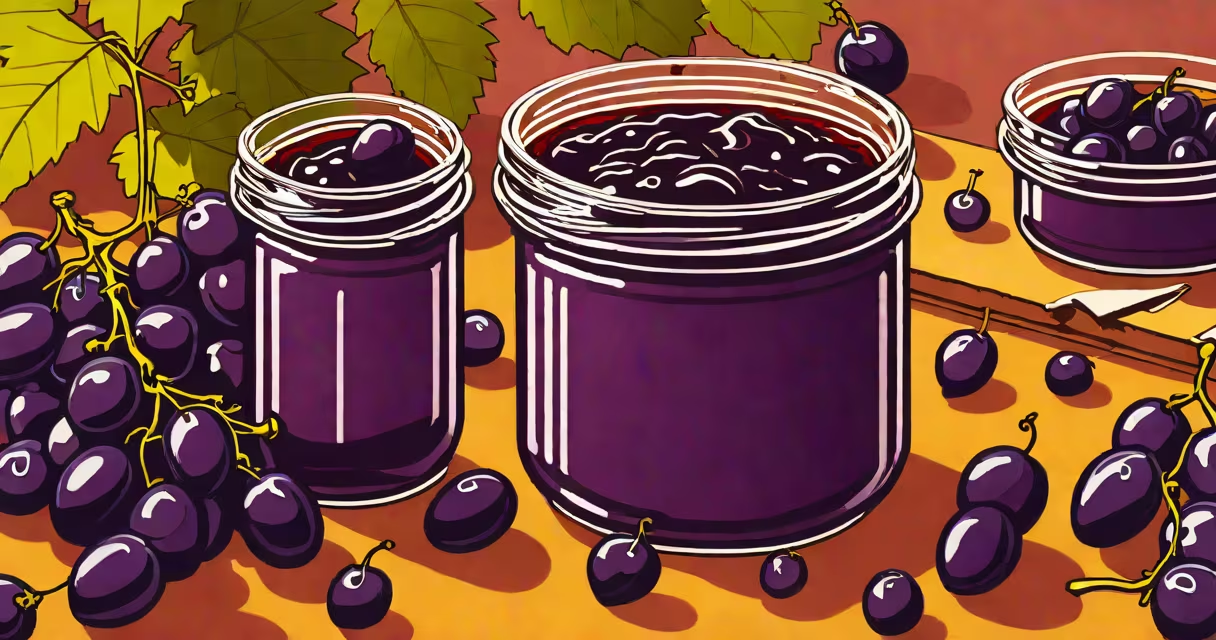
A grape jam recipe without pectin relies on the natural pectin in grapes and extended cooking to thicken into a spreadable consistency. It requires no added commercial pectin, using only fresh grapes, sugar, and time.
Natural pectin is a soluble fiber found in the cell walls of fruits. Grapes contain moderate levels-especially red and black varieties-enough to form a gel when heated with sugar. This process takes longer than using store-bought pectin, but results in a richer flavor and deeper color.
The method involves crushing grapes, simmering the pulp with sugar, and cooking until the mixture reaches a gel point. A spoon test or plate chill test confirms doneness. Most recipes take 45 to 60 minutes of active simmering after initial boiling.
When sugar is added to crushed grapes and heated, it draws out water and dissolves the natural pectin. As the mixture boils, pectin molecules bond with each other and form a network that traps liquid. This creates the gel-like texture of finished jam.
Without added pectin, the process depends entirely on the fruit's inherent pectin and prolonged heat. Grapes have less pectin than apples or citrus, so they require longer cooking times-typically 45 to 60 minutes-to reach the gelling stage. Overcooking risks burning or losing fruit flavor.
Temperature plays a role. The mixture must reach 220°F (104°C) at sea level-the standard gel point for jams. A candy thermometer ensures accuracy. If the temperature doesn't rise, the jam won't set properly.
Basic ingredients: 4 cups fresh red or black grapes (about 2 pounds), 2½ cups granulated sugar, 1 tablespoon lemon juice (optional, adds acidity to boost pectin activity).
Tools: Large heavy-bottomed pot (non-reactive, like stainless steel), wooden spoon, ladle, measuring cups, clean jars with lids, funnel, and a candy thermometer.
Use ripe but firm grapes. Overripe ones release too much water and thin the jam. Black grapes yield a deeper color and slightly higher pectin than green ones. Lemon juice balances sweetness and enhances setting by lowering pH.
For safety, always use sterilized jars and lids. Boiling water bath processing is recommended for shelf-stable storage, though refrigerated jam lasts 3 weeks unopened.
Undercooking is the most frequent error. If the jam runs off the spoon or doesn't wrinkle when tested, return it to low heat and cook 5-10 minutes longer. Do not rush the process.
Overcooking causes caramelization and bitterness. Watch the bubbles-when they slow and become thick, reduce heat immediately. A consistent simmer, not a rolling boil, prevents scorching.
Some users report grainy texture. This happens when sugar doesn't fully dissolve before boiling. Always stir until sugar disappears before increasing heat.
Commercial grape jam often contains added pectin, citric acid, and preservatives. It sets quickly and stores longer. Homemade no-pectin jam takes more time, has a looser texture, and spoils faster.
But it tastes fresher. The fruit flavor is brighter because there's no chemical interference. The color is deeper-red grapes produce a rich burgundy hue, not the pale pink of mass-produced versions.
According to the USDA, natural pectin content in red grapes averages 0.3% to 0.5% by weight. Black grapes have slightly more. This is enough to set jam, but not as efficiently as apple pectin, which ranges from 1.5% to 2.5%. That's why grape jam needs longer cooking.
| Feature | No-Pectin Recipe | Pectin-Based Recipe |
|---|---|---|
| Set time | 45-60 min simmer | 10-15 min after adding pectin |
| Flavor profile | Darker, fruit-forward, less sweet | More uniform, sometimes artificial-tasting |
| Texture | Slightly runny, spreads easily | Firmer, holds shape better |
| Yield | ~2 cups | ~2.5 cups |
| Best for | Small batches, pure fruit taste | Large-scale production, quick results |
For home cooks seeking authenticity, the no-pectin version wins. For those needing speed or consistency, pectin-based recipes are faster. But neither is inherently better-each suits different goals.
I once tried making grape jam without testing the set. I boiled it for 40 minutes, assumed it was done, and poured it into jars. After cooling, the jam remained liquid. I had undercooked it.
On the second try, I used the cold plate test. After 55 minutes, the spoonful wrinkled. The result was thick, glossy, and held its shape. The difference wasn't just texture-it tasted like real grapes, not sugar water.
Now I always test. Even if the jam seems thick, the plate test catches false positives. A single failed batch taught me that time and touch matter more than any recipe step.
Use this grape jam recipe without pectin when you want a natural, flavorful spread with minimal additives. It's ideal for breakfast toast, yogurt, or pairing with cheese.
It works best with seasonal grapes. Late summer yields the ripest fruit. Freezing excess grapes for winter use preserves freshness. You can also blend in a few chopped strawberries or raspberries for complexity.
For a variation, try reducing sugar to 2 cups. The jam will be tart and less sweet-perfect for savory dishes or as a glaze on roasted meats.
Every batch teaches something new. The absence of pectin forces attention to detail. The result is not just jam-it's a memory of summer, captured in a jar.