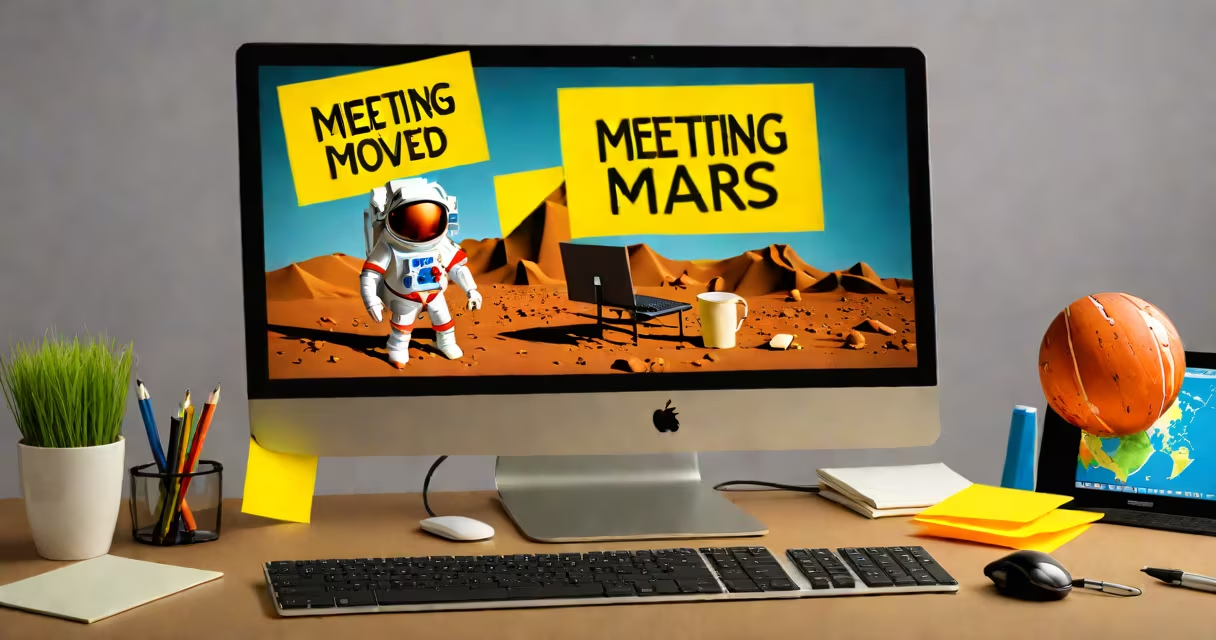
Good April Fools jokes for work are lighthearted, non-disruptive pranks designed to amuse coworkers without causing stress, embarrassment, or damage to tools or data. They rely on timing, context, and group dynamics to land safely.
These jokes succeed when they're anonymous, reversible, and universally understood as playful. A well-executed prank makes people laugh, then shrug and move on. A bad one triggers complaints, spreads distrust, or leads to HR involvement.
According to the Society for Human Resource Management (SHRM), 64% of employees view office pranks as acceptable if they don't interfere with work or target individuals. The key is avoiding anything that mimics security breaches, financial fraud, or personal attacks.
They function through misdirection and shared cultural understanding. The prank creates a false reality briefly-like a fake system outage or a sudden change in office policy-and then reveals itself as a joke.
The success depends on the audience's familiarity with the setup. A team that regularly shares memes and inside jokes handles a fake "mandatory vacation" email better than one that rarely interacts outside formal channels.
Timing matters. A joke sent at 9:05 AM on April 1st lands better than one at 4:55 PM. The earlier the prank, the more time people have to process it before leaving. A late joke risks being dismissed as a mistake.
Not all pranks are equal. Some are low-risk, easy to reverse, and widely accepted. Others cross into territory that damages morale or violates company policy.
| Type | Examples | Risk Level | Best For |
|---|---|---|---|
| Visual gag | Sticky note on monitor: "Your screen is now live on internal TV." | Low | Open-plan offices, teams with casual culture |
| Message prank | Group chat: "New policy: no more coffee until Friday." | Low | Remote or hybrid teams |
| Supply swap | Replacing printer paper with blank sheets labeled "This is not a test." | Medium | Teams with high trust, low pressure |
| Document hoax | Inserting a fictional "employee of the month" award into a shared folder. | High | Only if the team knows it's satire and the file is deleted quickly |
Visual gags and message pranks are safest because they're temporary, visible, and easily corrected. Supply swaps carry higher risk-they can delay work or cause confusion during urgent tasks.
A prank involving a fake email from IT saying "Your password expired" may seem funny-but if it includes a link to a fake login page, it violates cybersecurity policies. Even if no one clicks, it raises red flags.
Good April Fools jokes for work appear most often in creative, collaborative, or informal environments. Tech teams, marketing departments, and remote-first companies tend to embrace them more than legal, finance, or healthcare roles.
They serve social functions: reducing tension, reinforcing group identity, and signaling psychological safety. A shared laugh builds rapport faster than a team-building retreat.
At Google, April Fools' Day has long been a tradition. In 2018, the company launched a fake "Google Maps for Time Travel," which included a feature to "visit past events." The prank was posted on the official blog and received over 1.2 million views. It wasn't harmful-just absurd-and aligned with the company's playful brand.
But not all companies allow such stunts. IBM's internal guidelines prohibit any prank that could be interpreted as harassment or disruption. Employees who violate this risk disciplinary action.
Many people assume that "prank" equals "surprise." But surprise doesn't guarantee fun. A prank that blindsides someone-even playfully-can trigger anxiety, especially for neurodivergent staff or those managing mental health conditions.
One common error is targeting individuals. Pranks that single out someone-like replacing their chair with a wobbly stool-are not inclusive. They can feel like bullying, even if intended as humor.
I once set up a fake "urgent update" in our Slack channel: "All team members must attend a mandatory meeting in the basement." The message vanished after five minutes. Half the team responded with panic. One person called IT. I had to apologize and explain it was a joke. The lesson: even harmless pranks can spiral if not vetted.
Another mistake is using tech-based hoaxes. Fake system alerts, corrupted files, or altered calendars disrupt workflows. Even if the prank is reversed within minutes, the lost time adds up. The American Psychological Association notes that repeated interruptions reduce focus and increase stress.
They are not practical jokes that involve physical contact, property damage, or emotional manipulation. They are not disguised as real announcements. They do not exploit power imbalances.
For example, pretending to fire someone via email-even jokingly-is inappropriate. So is locking a coworker out of their desk with a fake password. These actions breach workplace norms and can lead to formal complaints.
Also, avoid pranks that mimic serious issues. A fake "data breach alert" or "company shutdown notice" can trigger fear, especially in high-stakes industries like finance or healthcare. The consequences outweigh the laughs.
When in doubt, ask: "Would this make someone feel unsafe?" If yes, skip it. If no, consider whether it's reversible and whether the team would find it funny-or confusing.
In March 2023, a design team at a mid-sized agency planned a simple April Fools' prank. They replaced the standard paper tray in the office printer with a stack of blank sheets labeled "This is not a test - we're playing April Fools."
At 9:03 AM, a colleague tried to print a client proposal. The printer jammed. She checked the tray. Found blank paper. Laughed. Reported it to the team lead. The team lead confirmed it was a joke. Everyone laughed. The prank lasted 17 minutes.
No one felt pressured. No work was delayed. The printer returned to normal after 10 seconds of reloading. The team later added the prank to their internal "fun calendar."
This example shows how a small, reversible prank can build camaraderie without risk.
Good April Fools jokes for work thrive on mutual respect. They're not about tricking people into stress. They're about sharing a moment of joy that everyone walks away from smiling.