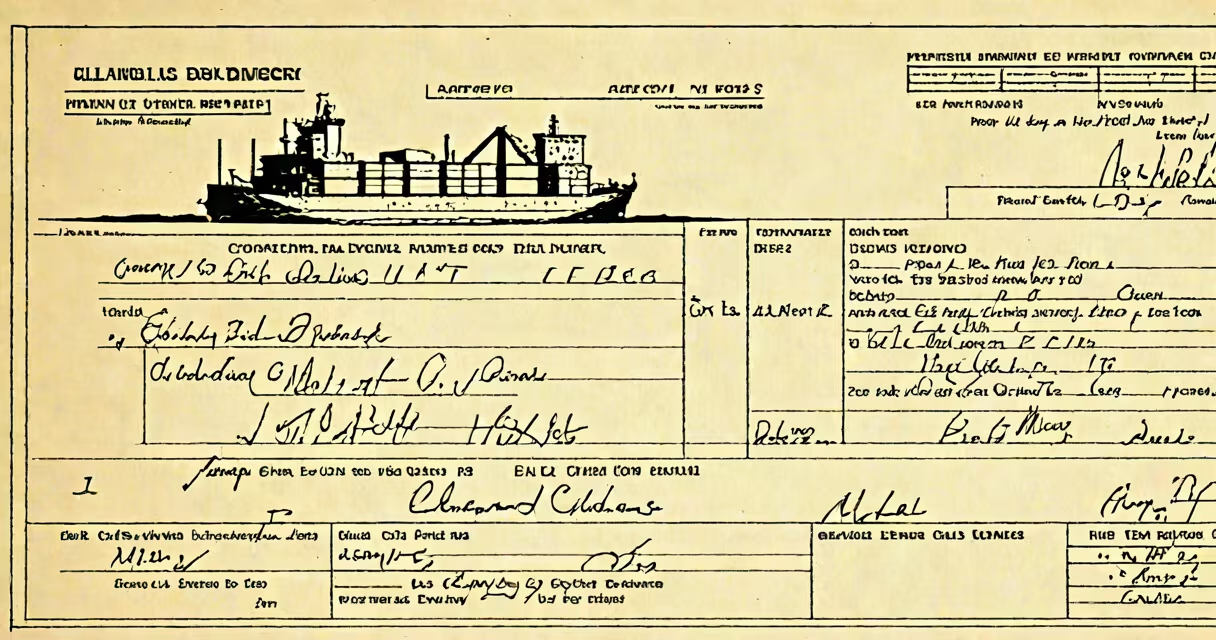
A generic bill of lading is a standardized contract used in freight transportation to acknowledge receipt of goods and define the terms under which they are carried from origin to destination. It serves as both a receipt and a contract between the carrier and shipper, and is legally binding in international trade.
It is issued by a carrier or freight forwarder and includes essential details such as the shipper's name, consignee, description of goods, quantity, weight, route, and delivery terms. Unlike specialized bills of lading, it does not include unique clauses tailored to specific shipments, such as temperature control or high-value insurance. Its structure follows the International Commercial Terms (Incoterms) set by the International Chamber of Commerce, though it may be adapted regionally.
The document is critical in customs clearance, insurance claims, and dispute resolution. It enables the transfer of ownership during transit when endorsed and negotiated. For example, a U.S.-based exporter shipping 10 pallets of electronics to Germany uses a generic bill of lading to meet EU import requirements and secure payment through a letter of credit.
The generic bill of lading begins when the carrier accepts goods for shipment. The carrier issues the document, listing the shipper, consignee, and freight details. Once signed, it becomes a legal contract. The shipper retains the original copy until payment is secured, often via a bank-issued letter of credit.
During transit, the bill of lading allows the consignee to claim the goods upon arrival. If the goods are damaged or delayed, the document provides evidence of the agreed-upon terms. A customs officer in Rotterdam might reject a shipment without a properly completed generic bill of lading, even if all other documents are in order.
For international shipments, the document must comply with the United Nations Convention on Contracts for the International Sale of Goods (CISG) and local regulations. In the EU, the document must include the country of origin and HS code for tariff classification. Failure to include these elements can result in delays or fines.
A generic bill of lading contains several mandatory fields:
Some versions also include a "freight prepaid" or "freight collect" designation. If freight is prepaid, the shipper pays upfront. If collect, the consignee pays upon delivery. Mislabeling this field causes disputes-over $2.3 million in freight claims were disputed in 2022 due to incorrect freight terms, according to the American Trucking Associations.
Each field must be filled accurately. A typo in the consignee's address can delay delivery by 48 hours or more. In one documented case, a shipment of medical supplies from Chicago to Nairobi was held at customs because the city name was misspelled as "Nairobe." The error was caught only after the bill of lading was cross-checked against the shipping manifest.
While the term "generic" implies a standard form, variations exist based on mode of transport and jurisdiction. The table below outlines common types:
| Type | Use Case | Key Difference |
|---|---|---|
| Sea Waybill | Non-negotiable ocean freight | No physical document required; electronic release only |
| Air Waybill | Air cargo, typically non-negotiable | Issued by airline; cannot be transferred to third parties |
| House Bill of Lading | Used by freight forwarders | Issued by a consolidator; covers multiple smaller shipments |
| Master Bill of Lading | Issued by the actual carrier | Direct contract between carrier and shipper; higher legal standing |
Despite their differences, all share core elements: identification, terms, and liability clauses. The generic version lacks special endorsements, such as "to order" or "blank endorsement," which allow negotiation of ownership. These features appear only in specialized forms.
Many assume a generic bill of lading is interchangeable with a commercial invoice or packing list. This is incorrect. The commercial invoice details value and pricing for customs duties. The packing list confirms contents and packaging. The bill of lading governs transport and ownership transfer.
Another misconception is that the document is only needed for international shipments. Domestic U.S. shipments over $500 require a bill of lading under the Federal Motor Carrier Safety Administration (FMCSA) rule 49 CFR §376.202. Failure to provide one can result in penalties up to $10,000 per violation.
A generic bill of lading is not automatically valid in all countries. Japan requires the document to be stamped by a designated customs broker. India mandates that the bill be registered with the Indian Customs Department within 72 hours of arrival. Ignoring these rules leads to seizure of goods.
In 2021, a U.S. company shipped 200 cases of industrial sensors to a factory in Vietnam. The shipper used a generic bill of lading with the following details:
Upon arrival, Vietnamese customs officials verified the bill of lading against the commercial invoice and export permit. All matched. The shipment cleared in 12 hours. Without the correct documentation, the goods would have been detained for 7 days and subject to storage fees totaling $1,800.
I once oversaw a shipment of solar panels from California to Dubai. The initial bill of lading listed the consignee as "Dubai Solar Co."-but the actual recipient was "Dubai Solar Energy Ltd." The mismatch caused a customs hold. After four days of back-and-forth with the freight forwarder, we discovered the error in the template. We corrected the document and resubmitted. The shipment cleared the next day. This confirmed that even small errors in a generic bill of lading can trigger major delays.
Without a generic bill of lading, global supply chains would face constant breakdowns. It enables trust between parties who may never meet. It ensures accountability when goods are lost or damaged. According to the World Bank, 90% of international trade relies on standardized shipping documents like this one.
Carriers use the document to track liability. Shippers use it to prove delivery. Banks use it to verify conditions for payment. In a single transaction, the document moves through multiple hands-from warehouse clerk to customs agent to finance officer.
When a shipment arrives damaged, the bill of lading defines the carrier's responsibility. If the damage occurred during transit, the shipper can file a claim using the document as proof. The International Air Transport Association (IATA) reports that 68% of air freight claims are resolved faster when the bill of lading includes a detailed condition report at pickup.
A generic bill of lading is not a substitute for a contract of carriage. It is a component of one. It does not replace insurance policies, export licenses, or safety certifications. But it is foundational. Without it, a shipment cannot legally move across borders.
Understanding its role helps avoid costly delays. Always verify the consignee name, freight terms, and country-specific requirements before signing. A correctly filled generic bill of lading reduces risk, accelerates clearance, and supports reliable trade.