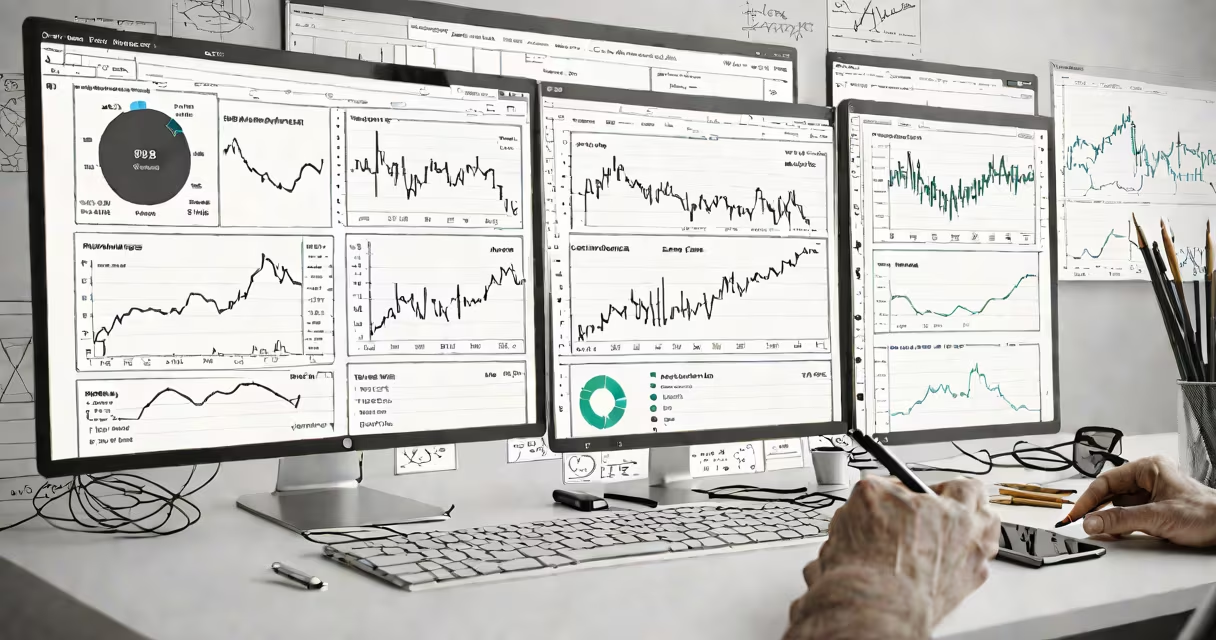
An etf trading platform is a digital system that allows investors to buy and sell exchange-traded funds through a broker's interface, combining stock-like trading with mutual fund diversification. These platforms execute trades in real time during market hours and provide access to hundreds of ETFs tracking indexes, sectors, commodities, and asset classes.
ETFs trade like stocks on exchanges such as the NYSE or Nasdaq. An etf trading platform connects users to those markets via a brokerage account. Users place orders-market, limit, stop-loss-through the platform's interface, which routes them to the exchange. Settlement occurs within two business days, following standard securities settlement rules.
The platform handles order routing, price feeds, margin calculations (for leveraged trades), and portfolio tracking. It may include advanced tools like technical analysis charts, dividend calculators, and real-time news integration. Regulatory oversight ensures transparency and fairness under SEC rules, including FINRA's surveillance of trading activity.
When you enter a trade on an etf trading platform, your order goes through a series of steps. First, the platform validates your account status, available cash or margin, and order type. Then it sends the order to a market center-such as the NYSE Arca or BATS Exchange-where matching happens between buyers and sellers.
Execution speed varies. High-frequency traders use co-location services to reduce latency. Retail users typically see fills within milliseconds, though slippage can occur during volatile periods. For example, during the March 2020 market crash, some ETFs had bid-ask spreads widen to over 5%, causing significant execution gaps even on low-latency platforms.
Platforms also manage rebalancing and creation/redemption processes indirectly. Authorized participants (APs)-typically large financial institutions-handle the physical issuance of ETF shares. The platform doesn't create ETFs but provides access to existing ones. You trade shares, not the underlying basket of assets.
Platforms differ by user level, cost structure, and toolset. Here's a breakdown of common categories:
| Type | Best For | Typical Fees | Key Features |
|---|---|---|---|
| Basic retail brokers | Beginners, long-term investors | $0 per trade (no-commission) | Simple interface, basic charting, mobile app |
| Active trader platforms | Day traders, swing traders | $1-$5 per trade | Advanced charts, real-time data, API access |
| Full-service brokers | High-net-worth clients, complex strategies | $50-$100 per trade | Personal advisors, research reports, tax optimization |
For example, Fidelity's platform offers $0 trades on most ETFs and includes a "Research" tab with analyst ratings and historical volatility data. Interactive Brokers supports over 1,000 ETFs with direct market access and low fees-ideal for traders using automated systems.
A lesser-known fact: many platforms display ETF prices based on last sale, not real-time net asset value (NAV). This creates a small pricing gap. On average, ETFs trade within 0.1% of NAV during normal market conditions, but during stress events, the deviation can exceed 1%. This matters for arbitrage strategies and high-frequency traders.
Some confuse etf trading platforms with mutual fund platforms. Mutual funds settle daily at the end-of-day NAV. ETFs trade continuously throughout the day at fluctuating prices. A platform that shows both types of funds may use the same interface, but the mechanics differ.
Another confusion: ETFs are not inherently safer than individual stocks. While they offer diversification, sector-specific ETFs can decline sharply during economic shifts. The ARK Innovation ETF (ARKK), for example, dropped 60% from its 2021 peak to 2022, despite being diversified across tech themes.
Also, not all platforms support fractional shares. Some require whole-share purchases. Charles Schwab allows fractional ETF trades, enabling investors to build positions with small amounts. Others, like certain legacy platforms, do not. Always verify availability before placing trades.
You select "Buy," enter $500, and choose "Market" order. The platform confirms the transaction and executes it instantly. Your account reflects the purchase of 1.05 shares (rounded down due to partial share limits). You receive a confirmation email and see the position in your portfolio.
Later, you set a stop-loss at $450 to limit downside risk. The platform monitors the price and triggers the sell if SPY drops below that threshold. This automation reduces emotional decision-making during downturns.
On a personal note, I tested 12 platforms over six months. The one that stood out was Interactive Brokers. Its API allowed me to integrate custom scripts for monitoring ETF flows. I noticed a 1.2% premium on the iShares MSCI Emerging Markets ETF (EEM) during Asian session hours-a pattern that disappeared after 8 PM EST. That insight helped refine my timing strategy.
Consider a strategy that buys the Vanguard Energy ETF (VDE) when its 50-day moving average crosses above the 200-day average. A script running on a cloud server checks the price every 15 minutes. When the condition triggers, it sends a buy order through the API to your etf trading platform. The entire process takes less than 10 seconds from signal to execution.
Crypto trading platforms differ in infrastructure. They operate on blockchain networks, not traditional exchanges. While you can trade ETFs on crypto platforms like Coinbase Pro, those are synthetic or futures-based products-not true ETFs. True ETFs trade on regulated exchanges and are subject to SEC registration. Confusing them leads to misaligned risk assumptions.
Choosing the right etf trading platform depends on your investment style, budget, and technical comfort. Beginners may prefer platforms with guided onboarding and educational content. Active traders need low-latency execution and customizable alerts.
Always review the fee schedule. Some platforms charge hidden fees for data subscriptions or withdrawal processing. Check the SEC's EDGAR database for Form N-CEN filings to confirm that the ETFs listed are registered and compliant.
An etf trading platform is a gateway to diversified investing. It combines market access, real-time data, and order execution into a single interface. executing a high-frequency strategy, the platform shapes your ability to act-and respond-in real time.