Engie Middle East is the regional division of the French multinational energy company Engie, focused on delivering renewable energy solutions, smart grid technologies, and sustainable infrastructure across the Gulf Cooperation Council (GCC) countries.
Founded as part of Engie's global expansion into high-growth markets, Engie Middle East operates under the parent company's mission to decarbonize energy systems. It delivers large-scale solar and wind projects, energy efficiency upgrades for public and private facilities, and integrated energy services tailored to national net-zero targets.
The entity manages projects across the UAE, Saudi Arabia, Qatar, and Oman. It partners with governments, utilities, and industrial clients to deploy clean power systems and support national energy transition strategies. Its work aligns with regional commitments such as Saudi Vision 2030 and the UAE's Net Zero 2050 goal.
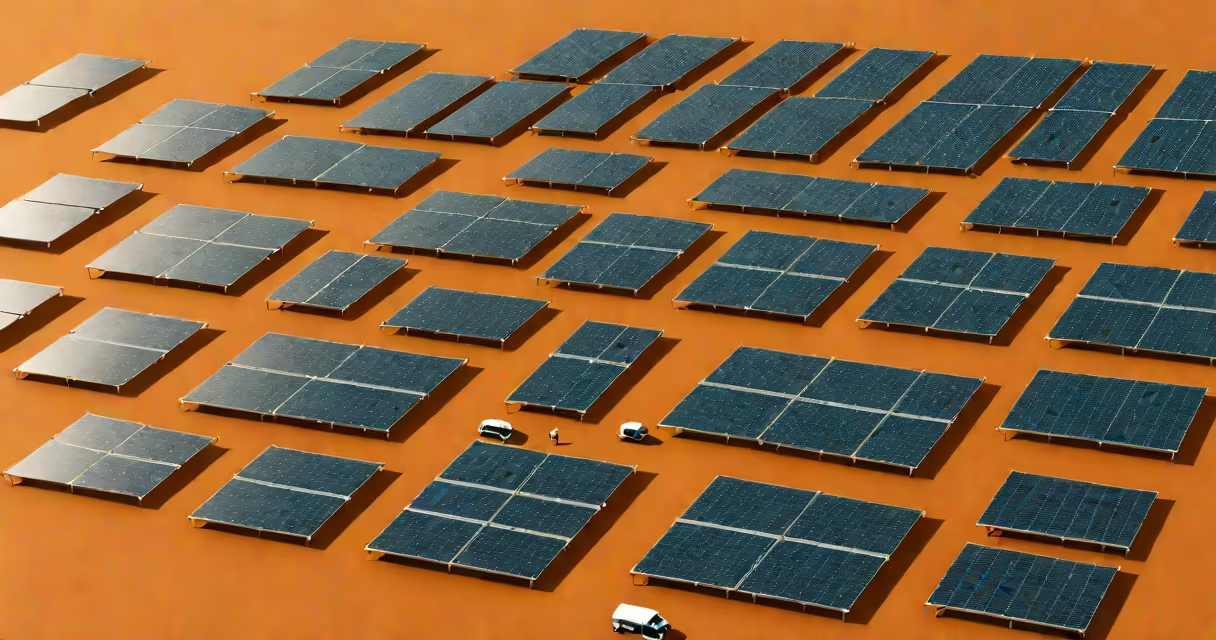
Engie Middle East functions through a mix of direct project development, joint ventures, and long-term service contracts. It owns and operates several utility-scale solar installations, including the 100 MW Al Dhafra Solar Plant in Abu Dhabi, one of the largest single-site solar projects in the world.
Projects follow a standard lifecycle: feasibility study, financing, construction, commissioning, and ongoing maintenance. Engie often uses a build-own-operate-transfer (BOOT) model, where it funds and runs a plant for 20-25 years before handing it over to a client or government agency.
For example, in 2022, Engie Middle East signed a 25-year power purchase agreement (PPA) with the Abu Dhabi Water and Electricity Authority (ADWEA) for the Al Dhafra plant. The facility generates enough electricity annually to power over 100,000 homes and avoids approximately 500,000 tons of CO₂ emissions each year.
Engie Middle East specializes in four core areas: solar photovoltaic (PV), wind energy, energy storage, and smart city integration. It deploys both utility-scale and distributed generation systems.
| Type | Technology | Application | Example Location |
|---|---|---|---|
| Solar PV | Monocrystalline panels, tracking systems | Utility-scale power plants | Al Dhafra, UAE |
| Wind | Onshore turbines (up to 3 MW) | Industrial zones, remote communities | Al Khafji, Saudi Arabia |
| Energy Storage | Lithium-ion batteries, grid-scale systems | Peak shaving, grid stability | Dubai, UAE |
| Smart Infrastructure | IoT-enabled meters, AI-driven load forecasting | Public buildings, campuses | Riyadh, Saudi Arabia |
One lesser-known fact: Engie Middle East was among the first international firms to integrate battery storage with solar farms in the GCC. In 2021, it launched a 50 MWh battery system paired with a 20 MW solar site in Dubai, reducing reliance on fossil-fuel peaker plants during evening demand spikes.
Engie Middle East is sometimes mistaken for a local UAE or Saudi energy provider due to its visible presence in national infrastructure projects. However, it remains a subsidiary of Engie S.A., headquartered in Paris, France.
Another confusion arises around ownership. While Engie Middle East develops and operates assets, it rarely owns the land outright. Instead, it secures long-term leases or concessions from national entities like the Abu Dhabi Future Energy Company (Masdar) or Saudi Aramco's renewable arm.
The company is not involved in oil and gas extraction. Despite operating in a region dominated by hydrocarbon production, Engie Middle East focuses exclusively on low-carbon alternatives. Its business model is based on performance-based contracts, not commodity trading.
Launched in 2022, the Al Dhafra Solar Plant is a flagship project managed by Engie Middle East. It spans 2.6 square kilometers and features over 3.2 million solar panels.
Key metrics:
Engie Middle East handled engineering, procurement, and construction (EPC) through a consortium with local partners. The plant supplies power directly to the UAE's national grid via a 132 kV transmission line. Maintenance is performed using drone inspections and predictive analytics to minimize downtime.
This project exemplifies how Engie Middle East combines international expertise with local execution. It also demonstrates the financial viability of large-scale renewables in arid climates-despite high ambient temperatures, panel efficiency remains stable due to advanced cooling systems and anti-reflective coatings.
I visited the Al Dhafra site in early 2023. The scale was immediate: endless rows of silver panels stretching toward the horizon under a clear desert sky. A control room monitored real-time output, temperature, and fault alerts. Engineers used augmented reality glasses to diagnose issues remotely, reducing response time from hours to minutes.
What stood out was the integration of sustainability beyond energy generation. The site includes native vegetation buffers, bird-safe fencing, and a water recycling system for cleaning panels-reducing freshwater use by 70% compared to conventional methods.
Engie Middle East plays a critical role in accelerating the energy transition across the Middle East. Its projects reduce dependence on imported fuels, lower carbon intensity, and create skilled jobs in engineering, data analysis, and operations.
According to the International Renewable Energy Agency (IRENA), the GCC region could generate 40% of its electricity from solar by 2030. Engie Middle East contributes directly to that target through technical execution and policy alignment.
For developers, investors, and policymakers, Engie Middle East represents a proven model for deploying clean energy at scale in complex regulatory environments. Its success hinges on long-term partnerships, transparent reporting, and adherence to international standards like ISO 14001 for environmental management.
Engie Middle East continues to grow its footprint. In 2024, it announced plans to develop a 1 GW offshore wind project off the coast of Qatar, marking its first marine energy initiative in the region.