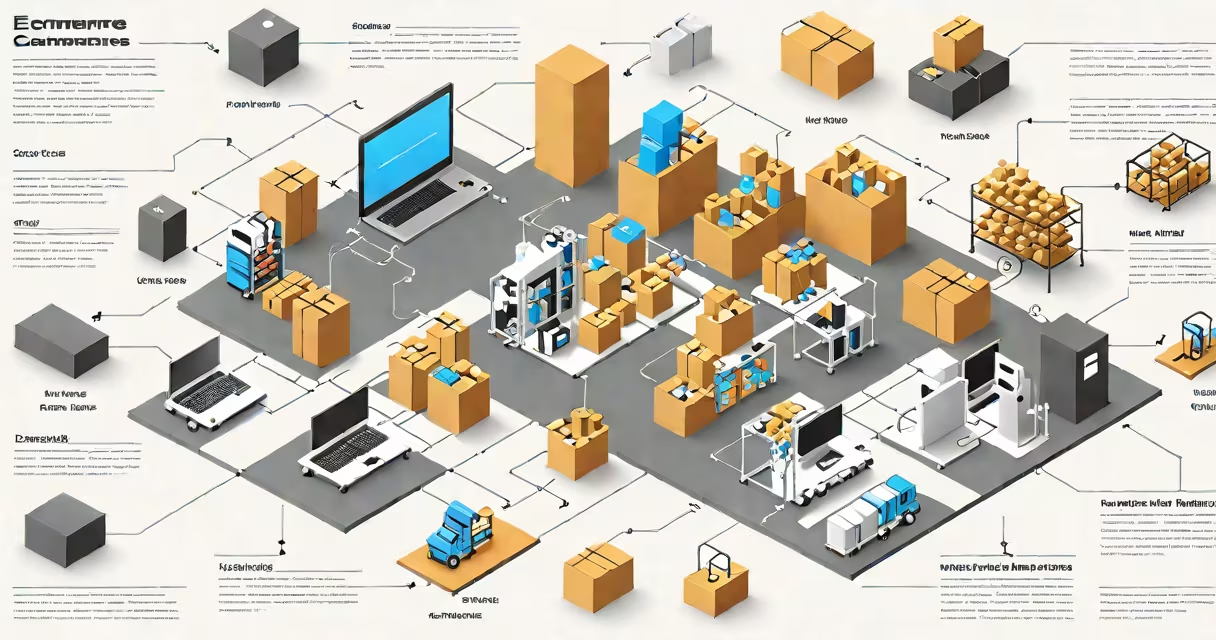
A custom ecommerce platform is a web-based storefront designed and developed specifically for a business's unique workflows, branding, and technical requirements. Unlike off-the-shelf tools, it is built from the ground up using custom code rather than relying on pre-built templates or third-party frameworks.
It handles everything from product listings and inventory tracking to payment processing, shipping integration, and customer account management-all tailored to the business's operational model. This level of control enables precise alignment with brand identity, user experience goals, and long-term growth strategies.
For example, a luxury fashion brand requiring real-time inventory sync across 12 international warehouses, multi-currency pricing, and AI-driven personalization based on user behavior would struggle with standard platforms. A custom solution allows direct integration with existing ERP systems, custom reporting dashboards, and proprietary recommendation engines.
Developers begin by analyzing the business's core processes: sales channels, fulfillment models, customer segmentation, and compliance needs. They then design a system architecture that supports those functions through APIs, databases, and server-side logic.
The frontend is built using modern frameworks like React or Vue.js, enabling fast load times and responsive layouts across devices. The backend uses languages such as Node.js, Python, or Ruby, paired with databases like PostgreSQL or MongoDB. All components are coded to work together smoothly under one unified stack.
Security is embedded throughout. Custom platforms implement role-based access controls, encrypted transaction handling, and regular penetration testing-features often locked behind premium tiers in hosted platforms. According to OWASP, 70% of web application vulnerabilities stem from misconfigured or poorly maintained third-party software, making custom builds safer when properly managed.
Custom ecommerce platforms fall into two main categories: monolithic and microservices-based. Monolithic systems run as a single application, simplifying deployment but limiting scalability. Microservices break functionality into independent services-product catalog, cart engine, payment gateway-each deployed and scaled separately.
| Type | Best For | Scalability | Development Time |
|---|---|---|---|
| Monolithic | Small to mid-sized stores with stable traffic | Low to moderate | 3-6 months |
| Microservices | High-traffic brands, global expansion, frequent feature updates | High | 6-12 months |
For instance, a U.S.-based outdoor gear retailer expanding into Southeast Asia chose a microservices architecture. Their product service runs in AWS Singapore, their payment service integrates with local gateways via API, and their customer support portal pulls data from a centralized analytics layer. This setup reduced latency by 42% during peak holiday seasons compared to a monolithic alternative.
Businesses choose custom ecommerce platforms when they need to differentiate themselves beyond standard features. High-end retailers, B2B suppliers, subscription services, and niche marketplaces rely on them to deliver unique experiences.
Consider a medical device distributor selling FDA-approved equipment to clinics. Their platform required HIPAA-compliant data handling, audit trails for every purchase, and integration with hospital procurement systems. Off-the-shelf platforms lacked the necessary compliance modules and API flexibility. A custom build enabled secure, auditable transactions while maintaining full control over data residency.
Another common use case is when a company owns legacy systems-like an inventory management tool written in COBOL-and wants to connect them to a modern storefront. A custom platform can bridge old and new technologies through middleware, avoiding costly data migration or system replacement.
Many assume "custom" means "expensive" or "over-engineered." While custom platforms do cost more upfront-typically $50,000 to $250,000 depending on complexity-they offer better long-term value. A 2023 study by McKinsey found that businesses using custom platforms reported 37% higher customer retention rates over five years compared to those using Shopify or BigCommerce.
Some confuse custom platforms with headless commerce setups. Headless refers to separating frontend from backend-using a CMS or API to power the site. You can have a headless platform built on a custom stack, but you can also use a hosted platform in headless mode. The key difference lies in ownership of the underlying code.
Also, custom doesn't mean "unmaintainable." A well-documented, modular custom platform can be easier to update than a black-box SaaS solution. When a major security flaw emerged in a popular hosted platform in 2022, companies using custom builds were able to patch their systems within 48 hours-some hosted users waited over two weeks for vendor fixes.
A sustainable fashion brand based in Portland had outgrown its Shopify Plus store. Their site crashed during seasonal launches due to high traffic spikes. They also wanted to integrate a carbon footprint calculator for each product, display real-time supply chain data, and allow customers to co-design limited-edition pieces.
They partnered with a dev agency to rebuild the entire platform using React for the frontend, Node.js with Express for the backend, and PostgreSQL for data storage. They added a custom API layer to pull live data from suppliers and a machine learning model trained on past purchases to suggest collaborative designs.
After launch, the site handled 12,000 concurrent users during a flash sale-up from 3,000 previously. Customer engagement rose 68%, and average order value increased by 22%. The brand now manages all features internally, including adding new sustainability metrics without waiting for platform updates.
Not every business needs a custom platform. If your primary goal is speed-to-market, low maintenance, and predictable costs, a hosted solution like Shopify or WooCommerce may be sufficient. These platforms handle hosting, security patches, and basic integrations out of the box.
For startups testing a concept or small retailers with fewer than 500 SKUs, the time and budget required for custom development often outweigh the benefits. The average cost to maintain a custom platform is $15,000-$30,000 annually- higher than the $30-$300/month fees for hosted options.
However, if you're planning to scale beyond 10,000 monthly visitors, enter regulated markets, or require deep customization, investing in a custom platform early prevents costly rewrites later. One e-commerce consultancy found that 62% of companies that started with hosted platforms eventually rebuilt their stores as custom systems when growth exceeded 10x their original capacity.
A custom ecommerce platform is not a one-size-fits-all solution. It's a strategic decision rooted in business goals, technical capacity, and long-term vision. It offers unmatched control, performance, and brand alignment-but demands investment in development, ongoing maintenance, and specialized talent.
A custom ecommerce platform gives you the foundation to grow without constraints. It's not just a website-it's a scalable, branded, and fully controllable digital storefront built around your business, not a template.