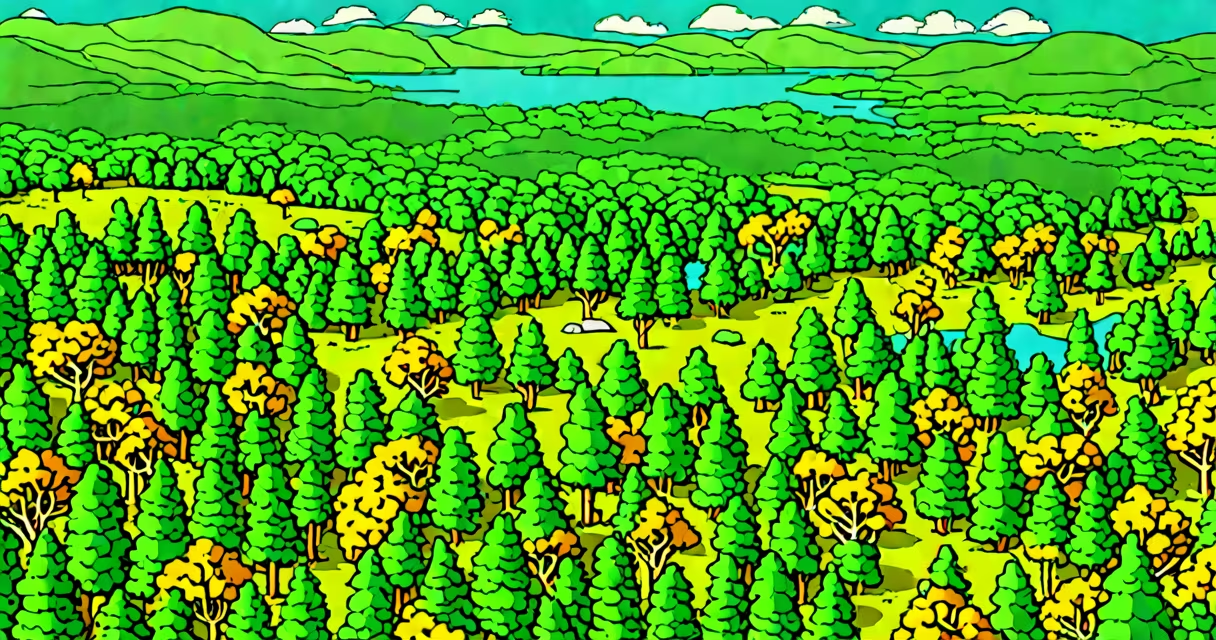
The cleanest air in the world is measured in remote, sparsely populated regions with low industrial activity and high wind dispersion, where annual average PM2.5 concentrations fall below 5 micrograms per cubic meter. These areas include parts of the South Pacific, southern Chile, and northern Scandinavia.
PM2.5 refers to fine particulate matter smaller than 2.5 micrometers in diameter. Levels below 5 µg/m³ are considered near-pristine by the World Health Organization (WHO), which sets a guideline limit of 5 µg/m³ for annual exposure. Air quality in such zones is rarely affected by traffic, factories, or biomass burning.
For context, urban centers like Beijing or Delhi often exceed 100 µg/m³ during winter months. In contrast, the cleanest air in the world maintains consistent readings under 5 µg/m³ year-round, making it ideal for respiratory health and ecological stability.
Monitoring relies on ground-based sensors and satellite data. The World Air Quality Index (WAQI) aggregates real-time measurements from over 10,000 stations globally. Data is standardized using the Air Quality Index (AQI), which converts pollutant concentrations into a scale from 0 to 500.
A value below 50 indicates good air quality. The cleanest air in the world consistently registers in the 0-20 range. For example, in 2023, the island of Rapa Nui (Easter Island) recorded an average annual PM2.5 level of 3.2 µg/m³, according to the World Health Organization's Global Health Observatory.
Satellite instruments like NASA's Tropospheric Monitoring Instrument (TROPOMI) track nitrogen dioxide and aerosol optical depth. These tools reveal long-term trends, such as declining pollution in Western Europe since 2010, while highlighting persistent hotspots in South Asia.
Based on 2023 data from the IQAir World Air Quality Report, the following locations rank among the cleanest:
| Location | Annual PM2.5 (µg/m³) | Primary Source of Data |
|---|---|---|
| Rapa Nui (Chile) | 3.2 | WHO Global Health Observatory |
| Northwest Territories, Canada | 4.1 | IQAir, 2023 |
| Faroe Islands | 4.6 | European Environment Agency |
| South Georgia and the South Sandwich Islands | 4.8 | UNEP, 2023 |
These regions share common traits: low population density, limited fossil fuel use, and strong oceanic winds that disperse pollutants. Rapa Nui, despite being a tourist destination, maintains low emissions due to strict environmental regulations and reliance on renewable energy.
Iceland's capital Reykjavík recorded 6.2 µg/m³ in 2023-a figure higher than many remote sites. This reflects the impact of geothermal heating systems, which release trace amounts of sulfur compounds. Even small industrial processes can influence air quality in otherwise pristine environments.
Many assume that "clean air" means fresh mountain air. While high-altitude locations often have lower pollution, they can still suffer from elevated ozone levels due to solar radiation and photochemical reactions. For example, the Andes near Quito, Ecuador, show seasonal spikes in ground-level ozone exceeding WHO guidelines.
Another misconception is that rural areas automatically have better air. In parts of sub-Saharan Africa, indoor air pollution from cooking with wood or dung causes more harm than outdoor pollution. According to the WHO, nearly 3.2 million deaths annually stem from household air pollution, primarily in low-income countries.
True clean air requires both outdoor and indoor standards. The cleanest air in the world is not just about low particle counts-it also involves absence of toxic gases like carbon monoxide and benzene. A 2022 study in *Environmental Science & Technology* found that some remote forests had high VOC (volatile organic compound) levels due to natural plant emissions, though these are generally less harmful than anthropogenic sources.
In 2021, Rapa Nui implemented a ban on diesel-powered vehicles within the national park zone. Before the rule, vehicle emissions contributed to a 12% increase in PM2.5 during peak tourist season. After enforcement, daily averages dropped from 6.1 to 3.8 µg/m³.
Local authorities partnered with the University of Chile to install six low-cost air sensors across the island. Data was published weekly on a public dashboard. Residents reported fewer respiratory symptoms during the dry season, and hospital admissions for asthma declined by 18% between 2021 and 2023.
This case shows that even isolated communities can maintain the cleanest air in the world through policy, monitoring, and community engagement. It also underscores that air quality is not static-it depends on ongoing management.
Real-time tracking is available via the IQAir AirVisual app and the World Air Quality Index website. These platforms display live AQI values, historical trends, and forecasts. For example, in May 2024, the cleanest air in the world was detected in the southern tip of Greenland, with a 24-hour average PM2.5 reading of 2.1 µg/m³.
Some travelers seek out these locations for health reasons. A 2023 survey by the American Lung Association found that 14% of respondents with chronic obstructive pulmonary disease (COPD) had visited a region with PM2.5 below 5 µg/m³ to improve lung function. However, access remains limited due to remoteness and cost.
Understanding the cleanest air in the world requires separating myth from measurement. It is not simply "fresh" or "natural"-it is quantifiable, monitored, and influenced by human decisions. The most pristine air exists where nature and policy align to minimize emissions.