The Chester County Food Bank is a nonprofit organization that collects, stores, and distributes food to individuals and families experiencing food insecurity across Chester County, Pennsylvania. It partners with local agencies, schools, and community centers to deliver meals to those in need.
Operating under a network model, the food bank does not distribute food directly to individuals. Instead, it supplies partner organizations-such as pantries, soup kitchens, and shelters-with bulk food items based on demand forecasts. These partners then serve clients through their own intake processes. This system ensures efficient reach and consistent supply while maintaining local oversight.
According to Feeding America's 2023 report, 1 in 7 people in Chester County live below the poverty line, and nearly 10% face food insecurity. The Chester County Food Bank serves approximately 160 partner agencies and delivers over 4 million pounds of food annually, supporting more than 100,000 individuals each year.
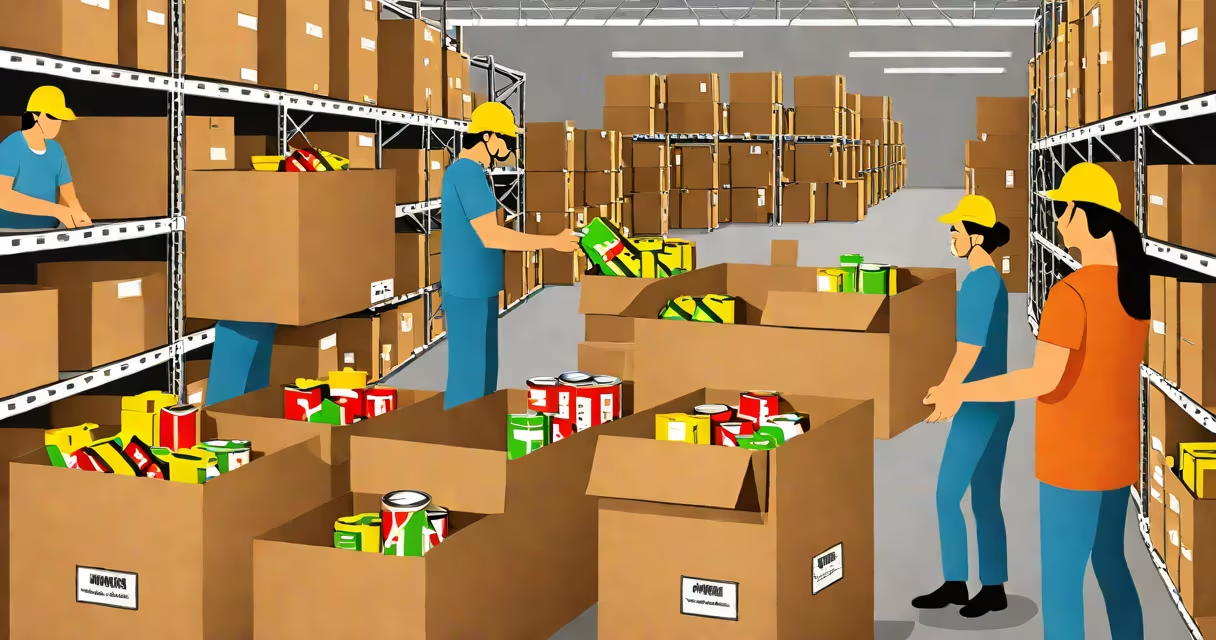
Food arrives at the central warehouse via donations from grocery stores, farms, manufacturers, and public campaigns. The food is sorted by category-canned goods, fresh produce, dairy, grains-and stored in climate-controlled areas to preserve quality. Once processed, it is distributed weekly to partner sites based on pre-submitted requests.
Each partner agency submits a weekly order form detailing required quantities and types of food. The food bank's logistics team verifies inventory, allocates shipments, and schedules deliveries using route optimization software. On average, delivery trucks cover 120 miles per day and visit 35 locations weekly.
A key operational feature is the "mobile pantry" program. These are semi-trucks equipped with refrigeration and freezer units that travel to underserved neighborhoods-rural townships, senior housing complexes, and low-income apartment buildings-where traditional pickup points are inaccessible. In 2023, mobile pantries visited 22 communities and served over 4,500 households.
Individuals must receive food through a partner agency, not directly from the food bank. To qualify, most programs require proof of residency in Chester County and documentation of income at or below 185% of the federal poverty level. Some agencies accept a self-declaration of hardship if formal documents are unavailable.
For example, the West Chester Community Pantry requires clients to present a photo ID and a recent utility bill or rent receipt. Clients may receive up to 15 pounds of groceries per household every two weeks. Items include shelf-stable foods, fresh fruits and vegetables, meat, and baby formula.
Non-citizens and undocumented residents are eligible. The U.S. Department of Agriculture confirms that SNAP and food assistance programs do not restrict benefits based on immigration status. The Chester County Food Bank follows this policy, ensuring no one is turned away due to legal status.
The food bank maintains three primary tiers of partner engagement:
| Type | Frequency | Delivery Method | Example Site |
|---|---|---|---|
| Fixed Location Pantry | Weekly | On-site pickup | St. John's Lutheran Church, Downingtown |
| Mobile Pantry | Biweekly | Drive-through or walk-up | East Caln Township Senior Center |
| School-Based Distribution | Monthly during school year | After-school pickup | Unionville High School |
These models reflect different community needs. Fixed pantries serve stable populations with regular schedules. Mobile pantries address transportation barriers. School-based programs ensure children receive food during weekends and holidays.
One non-obvious distinction: the food bank does not provide prepared meals. All distributions are uncooked, unprepared food. This allows recipients to prepare meals according to dietary preferences and cultural practices. For example, a family from a Middle Eastern background can choose halal-certified meat or ethnic-specific grains like bulgur or freekeh.
Many assume the Chester County Food Bank is a government-run service. It is not. It is a 501(c)(3) nonprofit registered with the IRS and accredited by the Food Bank for New York City's National Network. Its funding comes from private donations, corporate sponsorships, and grants-not taxpayer dollars.
Another misconception is that only low-income individuals qualify. While income thresholds apply, the food bank serves anyone facing temporary hardship. A single parent who lost hours at work due to illness, a retiree whose pension didn't cover rising grocery costs, or a student working part-time while attending college-all meet eligibility criteria.
I once observed a Saturday morning distribution at the Avondale United Methodist Church site. A man in his 60s arrived with a backpack and asked for "just enough for dinner." He was given a box containing canned beans, rice, pasta, and a frozen chicken breast. He thanked the volunteer and left quietly. That moment reminded me that food assistance is not just about calories-it's about dignity.
To find a nearby partner site, visit the official website and use the location finder tool. Enter your ZIP code or neighborhood name. The map displays real-time availability and operating hours. As of 2024, 142 sites are active across 34 municipalities.
Volunteers are needed year-round. Training sessions occur monthly at the main warehouse in West Chester. Shifts last four hours and include sorting, boxing, and loading. Over 2,000 volunteers contributed 15,000 hours in 2023.
Donations are accepted in-kind or financially. A $10 donation provides 10 meals. The food bank accepts non-perishables, fresh produce, and hygiene kits. It does not accept opened packages, expired items, or homemade food due to safety regulations.
For organizations seeking to partner, the application process includes a site audit, compliance review, and orientation. Approval takes 4-6 weeks. More than 80% of applicants are approved.
The Chester County Food Bank is not a one-size-fits-all solution. It functions as a connector between surplus and need, relying on trust, coordination, and local knowledge. Its strength lies in decentralization-each partner tailors services to their community's unique challenges.
When you need emergency food aid in Chester County, the food bank is a reliable resource. It operates on principles of equity, efficiency, and compassion. a donor, your role supports a system designed to reduce hunger and strengthen community resilience.