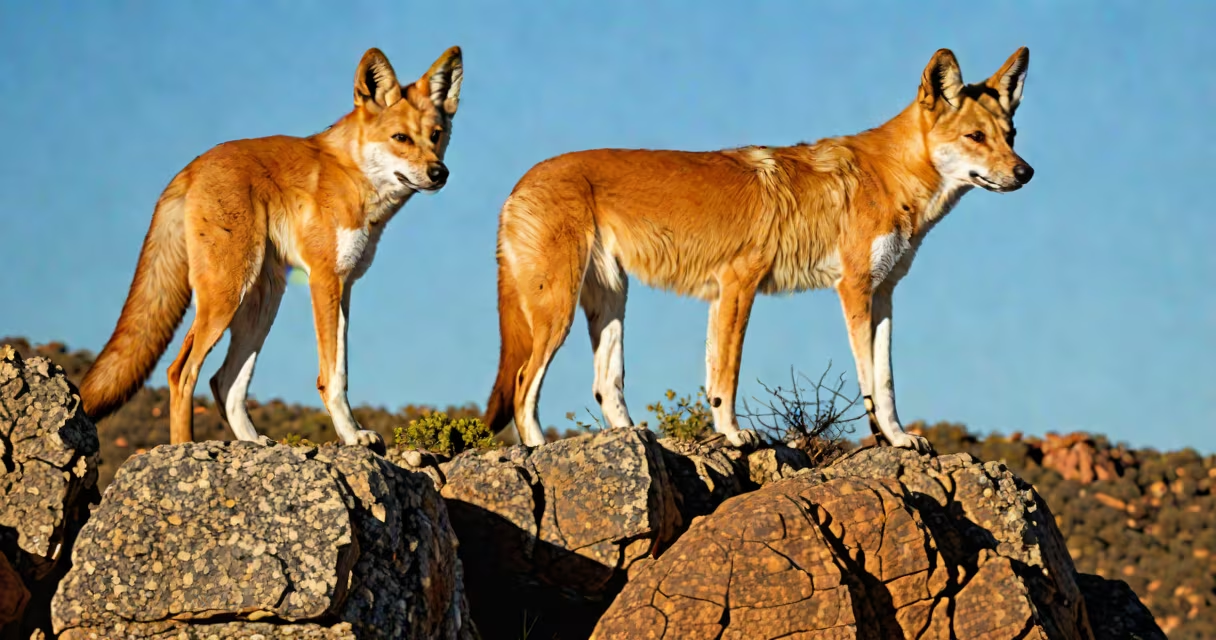
Canis lupus dingo is the taxonomic designation for the Australian wild dog, a feral descendant of early domestic dogs that diverged from Asian and Middle Eastern lineages and evolved independently across the continent. It is not a subspecies of gray wolf but a distinct population with unique genetic markers and ecological adaptations.
This animal occupies a complex position in Australia's natural history. It is neither fully wild nor domesticated. Its presence dates to at least 3,500 years ago, based on radiocarbon-dated remains from the Northern Territory. It arrived via human migration routes from Southeast Asia, likely carried by seafaring people who crossed into northern Australia.
Despite common misconceptions, canis lupus dingo is not a direct descendant of gray wolves (Canis lupus). Instead, it belongs to a lineage that split from ancient domestic dogs during the Neolithic expansion of human populations. Genetic studies show it shares more ancestry with East Asian and South Asian dog breeds than with European or Arctic canids.
Canis lupus dingo functions as a top predator in many Australian ecosystems. It hunts small to medium-sized prey such as wallabies, bandicoots, and rabbits. Unlike wolves, dingoes do not form large packs consistently. They typically live in family units of 3-6 individuals, often consisting of a breeding pair and their offspring from multiple seasons.
Dingoes exhibit flexible social structures. In areas with abundant prey, they may form stable groups. In resource-scarce regions, they disperse into solitary or paired hunting patterns. This adaptability allows them to survive in deserts, grasslands, and tropical savannas across mainland Australia.
A 2020 study published in *Nature Communications* analyzed mitochondrial DNA from 120 dingo specimens across 17 locations. The research confirmed a single founding population in northern Australia, with minimal gene flow from modern domestic dogs since the 18th century. This suggests that pure dingoes still exist in remote regions, though hybridization remains a major conservation concern.
The dingo's physical form reflects adaptation to arid environments. It averages 55-65 cm at the shoulder, weighs 12-20 kg, and has a lean, muscular build. Coat color ranges from sandy tan to black, with red and brindle variants common. The skull morphology differs from both wolves and domestic dogs-shorter snout, larger braincase, and reduced dental variation.
Genetic analysis reveals that canis lupus dingo has a unique set of alleles linked to stress resistance and immune function. A 2019 paper in *Molecular Ecology* identified a mutation in the SLC24A4 gene associated with enhanced thermoregulation, which helps dingoes endure extreme heat and low water availability.
One non-obvious fact: dingoes lack the "fear response" seen in most domestic dogs toward humans. They do not display tail-wagging or submissive behaviors typical of pet dogs. This absence of domestication traits is not due to ignorance-it's a hardwired behavioral difference shaped by thousands of years of independence.
Canis lupus dingo plays a critical role in system balance. By controlling populations of invasive species like foxes and feral cats, it reduces predation pressure on native ground-nesting birds. Research from the University of Queensland shows that in areas with healthy dingo populations, bird diversity increased by 34% over five years.
Despite this, dingoes are classified as pests in many parts of Australia. The National Dingo Management Strategy (2021) permits culling in agricultural zones to protect livestock. However, evidence from the Australian Wildlife Conservancy indicates that removing dingoes leads to mesopredator release-increased numbers of foxes and cats, which cause greater harm to native fauna.
Table: Dingo vs. Domestic Dog Traits
| Feature | Canis lupus dingo | Domestic Dog (e.g., Labrador) |
|---|---|---|
| Skull length (relative to body) | Shorter, wider | Longer, narrower |
| Coat shedding frequency | Seasonal, moderate | Year-round, heavy |
| Response to human eye contact | Neutral or avoidance | High engagement, tail wagging |
| Genetic divergence from wolves | ~12,000 years | ~15,000 years |
Many assume dingoes are "feral dogs" or "mutts." This is incorrect. Feral dogs descend from pets that escaped or were abandoned. Canis lupus dingo is a genetically distinct population with a documented arrival timeline and evolutionary trajectory independent of modern domestic breeds.
Another misconception: dingoes are dangerous to humans. There are no verified cases of a dingo attacking a human in the wild in the last 100 years. The Australian government's Department of Agriculture reports only 12 incidents of dingo-related injury since 1900, none fatal. Most involve people feeding or approaching animals.
I once observed a dingo pack near Uluru during a field survey. They moved silently through spinifex grass, avoiding human trails. One individual paused, stared directly at me for 12 seconds, then turned away. No aggression. No fear. Just assessment. That moment underscored how different their behavior is from domestic dogs.