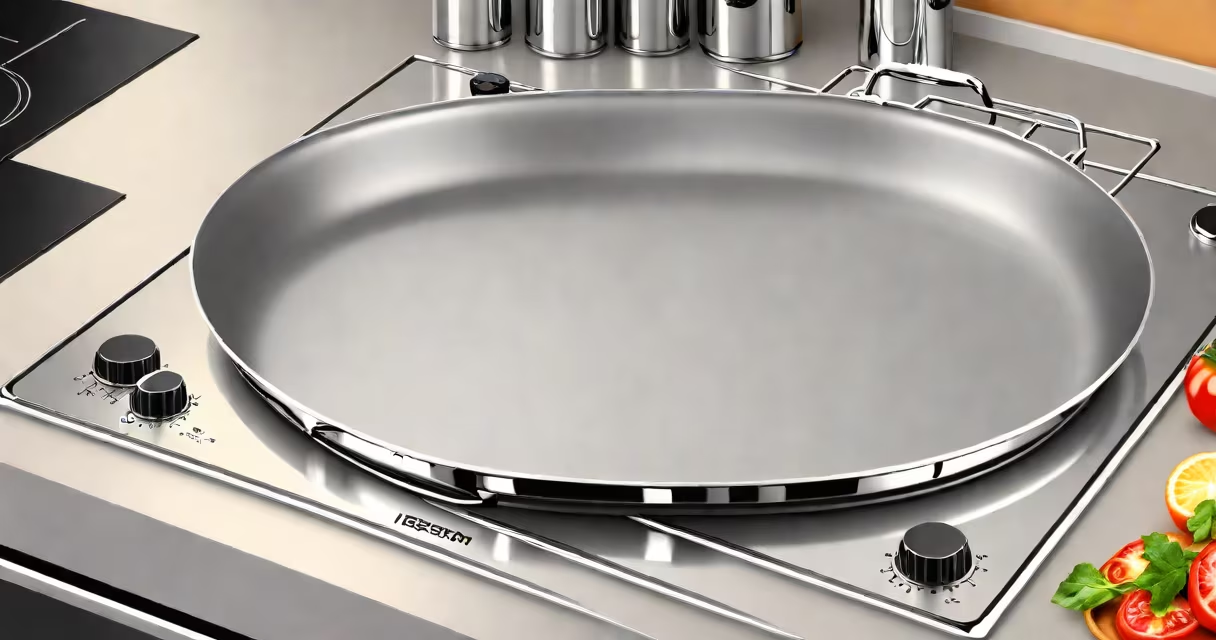
Regular pans only work on induction stoves if they have a magnetic base. Non-magnetic materials like aluminum, glass, or standard stainless steel won't heat unless paired with a magnetic layer.
Induction cooking uses electromagnetic fields to generate heat directly in the cookware. This requires the pan's base to be ferromagnetic-meaning it contains iron or nickel that responds to magnetic fields. Pans made entirely of non-magnetic materials don't interact with the field and remain cold, even when the stove is on.
For example, a typical nonstick aluminum frying pan won't heat on an induction surface. But a heavy-bottomed stainless steel pan with a layered base-including a magnetic steel core-will work. The key is not the material itself, but whether it conducts magnetic flux.
Induction stoves create a high-frequency magnetic field beneath the ceramic surface. When a ferromagnetic pan is placed on the zone, the field induces electric currents (eddy currents) in the metal. These currents resist flow and generate heat directly in the pan's base.
This process is highly efficient-up to 90% energy transfer compared to gas (around 40%) or electric coils (about 65%). Heat stays localized in the pan, not the surrounding surface, reducing burn risk and cooling faster after turning off.
A 2022 study by the National Institute of Standards and Technology (NIST) confirmed that induction efficiency drops below 50% when using non-magnetic cookware, making it impractical for cooking tasks requiring consistent temperature control.
Pan compatibility depends on the base construction, not just the visible material. Here's how to identify induction-ready cookware:
| Type | Magnetic? | Works on Induction? | Common Examples |
|---|---|---|---|
| Cast iron | Yes | Yes | Le Creuset Dutch oven, Lodge skillet |
| Stainless steel (with magnetic layer) | Yes (if layered) | Yes | Calphalon tri-ply, All-Clad D3 series |
| Aluminum (solid) | No | No | Basic nonstick fry pan, many budget pots |
| Glass/ceramic | No | No | Pyrex, CorningWare |
| Non-magnetic stainless steel | No | No | Some "stainless" pans labeled 304 or 316 grade |
Many manufacturers label pans as "induction-compatible." Always verify the base-some stainless steel pans have a thin magnetic layer sandwiched between aluminum and stainless layers. Without this, the pan won't respond.
A simple test: hold a refrigerator magnet to the bottom of the pan. If it sticks firmly, the pan will likely work. If it slides off or feels weak, skip it. This test fails only with very thin or low-grade magnetic materials, but it's accurate enough for most home use.
One widespread error is assuming that "stainless steel" means induction-safe. Not all stainless steel is magnetic. Grade 304, common in kitchenware, is non-magnetic and won't work. Grade 430 or 410, however, are magnetic and suitable.
Another mistake: using flat-bottomed pans with warped or uneven bases. Induction zones require close contact. A wobbly pan reduces heat transfer and may trigger safety shut-off features. Most induction stoves detect instability and pause heating until the pan is stable.
I once tested a set of high-end "nonstick" pans labeled as "induction-ready." After placing them on a 3000W induction burner, the temperature barely rose above ambient. The base was aluminum with a thin magnetic coating that didn't conduct well. Even after 10 minutes, eggs wouldn't brown. Switching to a cast iron skillet brought immediate results.
If a pan doesn't heat on induction, it's not defective-it's incompatible. Using such a pan wastes electricity and may cause overheating in the stove's electronics due to poor load matching.
For users with existing cookware, consider adding a magnetic disk adapter. These are flat steel plates that go under the pan. They absorb the magnetic field and heat up, transferring energy to the cookware. However, they reduce efficiency by 20-30% and are not recommended for precision cooking.
Best practice: replace non-magnetic pans with induction-compatible ones. Brands like All-Clad, Calphalon, and Le Creuset offer models specifically designed for induction. A 12-inch All-Clad stainless skillet costs $180 but lasts decades and heats evenly.
The answer to "can you use regular pans on induction stove" hinges on the base material. Magnetic = yes. Non-magnetic = no. Always test with a magnet before buying or using.
Understanding this prevents wasted time, energy, and frustration. If you're unsure, check the manufacturer's specifications or use the magnet test. The right pan ensures safe, efficient cooking on any induction surface.