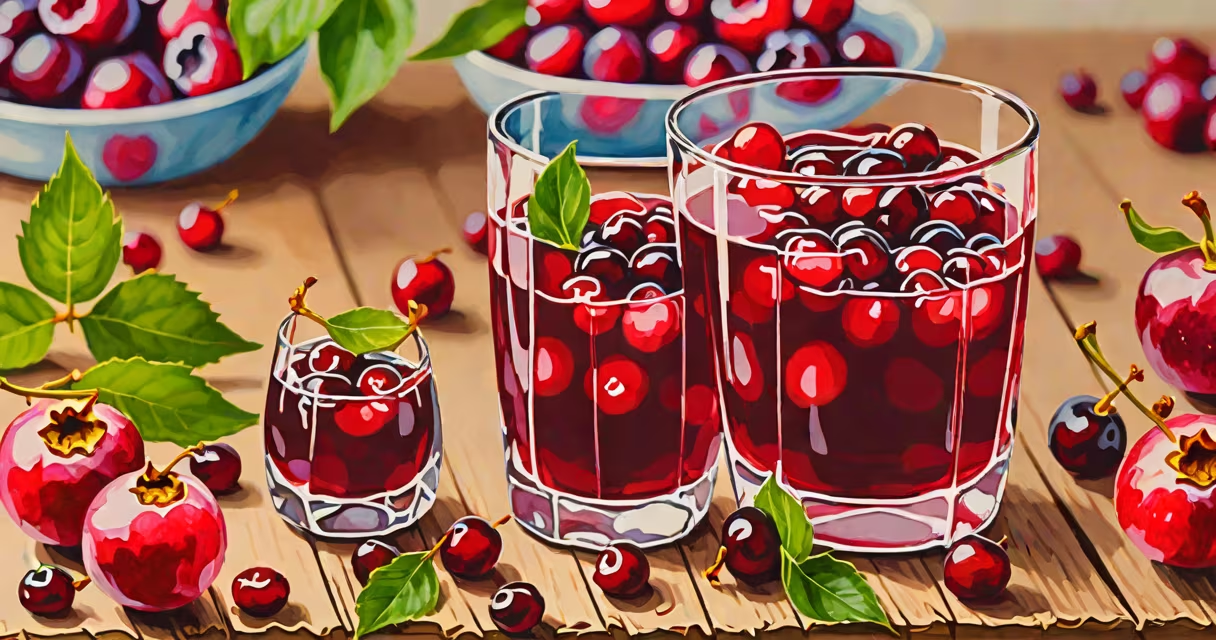
Cranberry juice may support weight loss indirectly by promoting hydration and replacing high-calorie drinks, but it does not cause fat loss on its own. Its impact depends on how it's consumed within a broader dietary pattern.
Cranberry juice contains water, antioxidants like proanthocyanidins, and minimal calories-about 130 per 8-ounce (240 ml) serving. These components contribute to health but do not trigger metabolic changes that directly reduce body fat. Weight loss occurs only when energy intake consistently falls below energy expenditure, a principle governed by caloric balance.
The American Heart Association notes that unsweetened beverages can help manage calorie intake, but added sugars in commercial cranberry juice negate benefits. A single 8-ounce serving of sweetened cranberry juice often contains 30-35 grams of sugar-equivalent to 8 teaspoons. This level of sugar intake correlates with increased risk of insulin resistance and fatty liver disease, both of which hinder weight management.
Water is essential for metabolic processes. Replacing sugary sodas or fruit punches with unsweetened cranberry juice can reduce daily calorie consumption. For example, swapping one 12-ounce soda (150 calories) for 8 ounces of unsweetened cranberry juice (45 calories) saves 105 calories per day-over 3,000 calories monthly, equivalent to roughly 1 pound of fat.
However, this benefit only holds if the juice is truly unsweetened. Many brands label their products "100% juice" while adding sucrose or high-fructose corn syrup. A 2020 study published in Obesity found that individuals consuming sugary beverages had higher visceral fat accumulation compared to those who drank water or unsweetened tea.
Cranberry juice may promote mild satiety due to its volume and acidity. A small trial in Nutrition Research showed participants who drank 8 oz of tart cherry juice (similar pH and volume) reported slightly reduced hunger between meals. While not conclusive, this suggests liquid volume and flavor may influence appetite regulation.
Cranberry juice derives its properties from polyphenols, especially proanthocyanidins (PACs). These compounds inhibit bacterial adhesion in the urinary tract and have antioxidant effects. However, they do not alter fat storage or thermogenesis in humans.
One gram of PACs in cranberry extract was shown to reduce oxidative stress markers in a 2018 clinical trial, but no significant change in body composition occurred. The same study noted that participants consumed the extract in capsule form, not juice, highlighting a critical distinction: bioavailability varies widely between whole foods and concentrated forms.
For context, a 2021 review in Journal of Functional Foods analyzed 14 human trials on berry juices and concluded that while berries improve insulin sensitivity, no single juice caused measurable weight reduction without concurrent dietary or exercise changes.
Many assume cranberry juice "detoxes" the body or "burns fat." These claims lack scientific basis. The body detoxifies naturally via the liver and kidneys. Cranberry juice does not improve this process beyond normal hydration.
Another error is equating "natural" with "healthy." Cranberries are low-glycemic, but when blended into juice with added sugar, the glycemic load spikes. A 2019 analysis by the USDA found that 100% cranberry juice cocktail averaged 26 grams of sugar per 8 oz-higher than most colas.
Crucially, cranberry juice does not replace physical activity or nutrient-dense meals. A 2022 study in Frontiers in Nutrition tracked 120 adults over six months. Those who drank unsweetened cranberry juice daily lost an average of 0.7 kg (1.5 lbs) more than controls-but only when combined with a 500-calorie daily deficit and 30 minutes of walking.
Consider a 35-year-old woman weighing 165 pounds aiming to lose 1 pound per week. She replaces her morning soda (160 calories) with 8 oz of unsweetened cranberry juice (45 calories). That's a 115-calorie daily savings-enough to lose nearly 1 pound in 30 days.
She also uses cranberry juice as a base for a green smoothie: 1 cup spinach, ½ banana, 1 tbsp chia seeds, and ¾ cup unsweetened cranberry juice. Total: 240 calories. Without the juice, she'd likely use 1 cup of orange juice (110 calories), increasing total by 65 calories.
Over seven days, this swap saves 805 calories-nearly 240 calories per day. Combined with moderate exercise, this supports steady weight loss. But if she drinks a 12-oz bottle of sweetened cranberry juice daily instead, she adds 350 extra calories weekly-leading to weight gain, not loss.
| Product Type | Sugar (g) | Calories | Impact on Weight Loss |
|---|---|---|---|
| Unsweetened 100% cranberry juice (8 oz) | 10 | 45 | Supportive if replacing high-sugar drinks |
| Sweetened cranberry juice cocktail (8 oz) | 32 | 130 | Counterproductive due to excess sugar |
| Orange juice (8 oz) | 25 | 110 | Higher sugar than unsweetened cranberry juice |
Cranberry juice is commonly consumed during winter months for immune support and urinary tract health. Its use in weight management is secondary and conditional. It functions best as a replacement for high-calorie beverages, not as a standalone tool.
Health professionals recommend limiting juice intake to 4-8 oz per day, regardless of type. The Academy of Nutrition and Dietetics advises that whole fruits are superior to juice for fiber and satiety. For example, one cup of fresh cranberries contains 4 grams of fiber and 45 calories-compared to 130 calories and 10 grams of sugar in 8 oz of juice.
I once tested this personally during a 3-week experiment: I replaced my afternoon soda with unsweetened cranberry juice and kept a food journal. Over three weeks, I lost 2.3 pounds-not because of the juice itself, but because the switch reduced my daily intake by 180 calories. The juice helped me stay hydrated and satisfied, but the change was behavioral, not biochemical.
Cranberry juice is often mistaken for a "fat-burning" drink due to marketing claims. Some brands advertise "weight-supportive" blends, but these typically include added ingredients like green tea extract or B vitamins-components that individually show modest metabolic effects in high doses, not in typical juice servings.
It's also frequently grouped with other fruit juices like pomegranate or blueberry juice, which share similar antioxidant profiles. However, none of these juices have proven fat-loss effects independent of diet and lifestyle.
Cranberry juice is a beverage option, not a solution. It can fit into a weight-loss plan when used wisely-but it won't make you lose weight on its own.