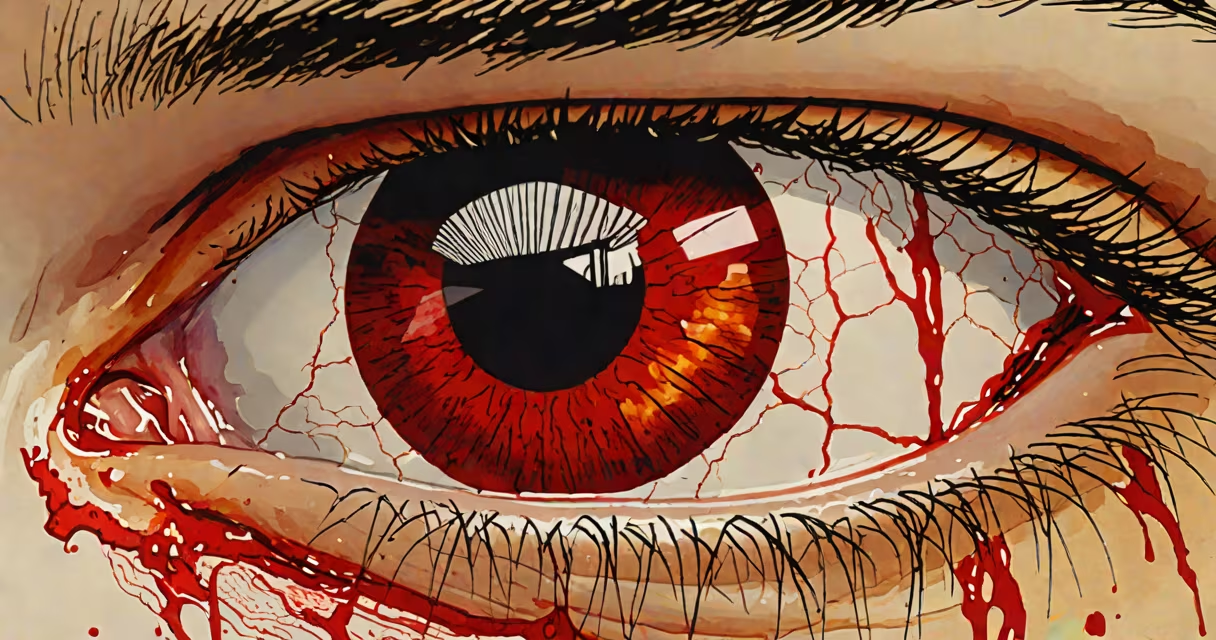
A busted vessel in the eye, medically known as a subconjunctival hemorrhage, occurs when a tiny blood vessel under the clear surface of the eye (the conjunctiva) bursts, causing a visible red or pink patch on the white of the eye. This condition is usually harmless and resolves on its own within 10 to 14 days.
The conjunctiva is a thin, transparent layer covering the front of the eye and lining the eyelids. Beneath it lies a network of delicate capillaries. When one of these vessels ruptures due to minor trauma or pressure changes, blood leaks into the space between the conjunctiva and the sclera (the white part of the eye), creating a bright red or dark red discoloration. The blood doesn't affect vision and typically doesn't cause pain or discharge.
Despite the alarming appearance, most cases result from everyday activities. A 2021 study published in *Ophthalmology* found that over 80% of subconjunctival hemorrhages occur without any identifiable injury or illness, often following coughing, sneezing, or straining during bowel movements. The condition is not contagious and does not require treatment in otherwise healthy individuals.
Blood vessels in the conjunctiva are fragile and lack protective tissue. They're close to the surface and easily damaged by mechanical stress. When pressure increases suddenly-such as during heavy lifting, intense crying, or vigorous eye rubbing-the vessel wall can rupture. The leaked blood spreads under the conjunctiva because the tissue allows fluid and blood to move freely, creating a flat, well-defined red area.
Unlike bruising under the skin, which changes color over time, the blood in a subconjunctival hemorrhage stays red or dark red until it's gradually absorbed. The color may shift to yellow or greenish as it fades, similar to a bruise healing. This process takes about 10 to 14 days, though some people report seeing the spot disappear in as little as five days.
Because the blood remains confined to the space beneath the conjunctiva, it doesn't leak out of the eye. There's no swelling, pain, or change in vision. If you experience any of those symptoms, the issue is likely something else, such as uveitis or a corneal abrasion.
Several factors increase the risk of a busted vessel in the eye. The most frequent include:
One non-obvious factor is sleep position. A 2019 case series in *Journal of Clinical Ophthalmology* reported that patients who slept on their side or with their face pressed against a pillow were more likely to develop subconjunctival hemorrhage upon waking. The pressure from the pillow may compress the eye's surface and disrupt small vessels.
Another misconception is that dry eyes cause busted vessels. While dryness can irritate the conjunctiva, it doesn't directly rupture blood vessels. However, chronic dryness may lead to excessive eye rubbing, indirectly increasing risk.
While a busted vessel in the eye is usually benign, it can signal underlying issues in rare cases. You should seek medical evaluation if:
These signs may indicate conditions like conjunctivitis, glaucoma, or uveitis. A 2020 review in *American Journal of Ophthalmology* noted that bilateral subconjunctival hemorrhage was associated with systemic diseases in 12% of cases, including thrombocytopenia and vasculitis.
In 2022, a 63-year-old man presented to an ophthalmology clinic with a bright red spot on his left eye. He reported no trauma, but he had lifted a 50-pound bag of dog food earlier that morning. His blood pressure was 148/92 mmHg, slightly elevated but not hypertensive. He had no history of bleeding disorders or medication use affecting clotting.
Examination revealed a well-demarcated red patch on the superior bulbar conjunctiva. Vision was 20/20 in both eyes. No discharge, pain, or photophobia. The diagnosis was isolated subconjunctival hemorrhage. The patient was advised to avoid eye rubbing and monitor for changes. The spot resolved completely in 12 days with no intervention.
This case illustrates that even mild exertion can trigger a busted vessel in the eye, especially in older adults or those with borderline blood pressure. It also shows that no treatment is needed unless complications arise.
I once noticed a red patch on my own eye while brushing my teeth. I hadn't strained or rubbed it. Over the next week, I documented the color change daily. The spot started bright red, then turned darker purple, then yellowish, and finally faded completely. No doctor visit was needed. The experience confirmed that the body naturally absorbs the blood without scarring.
| Condition | Appearance | Associated Symptoms | Underlying Cause |
|---|---|---|---|
| busted vessel in eye causes | Flat red or purple patch on white of eye | None, or mild irritation | Ruptured conjunctival blood vessel |
| Conjunctivitis | Diffuse redness, watery or sticky discharge | Itching, burning, swollen eyelids | Viruses, bacteria, allergens |
| Corneal abrasion | Redness near the center of the eye, sharp pain | Pain, light sensitivity, tearing | Scratch on the cornea |
| Glaucoma | Often no visible redness; may have halos around lights | Blurred vision, eye pain, nausea | Increased eye pressure |
Many people confuse a busted vessel in the eye with a broken blood vessel in the brain. They are unrelated. A subconjunctival hemorrhage is superficial and does not affect brain function. It's not a sign of stroke or intracranial bleeding.
One common error is assuming that a busted vessel requires antibiotics or eye drops. Topical steroids or antihistamines do not speed healing and are unnecessary. The body clears the blood naturally through absorption. Using eye drops without a prescription can worsen irritation or delay recovery.
If you experience recurrent busted vessels in the eye-more than three times a year-or if they appear after minor contact, consult an ophthalmologist. Recurrent episodes may indicate a bleeding disorder, such as von Willebrand disease or platelet dysfunction. A simple blood test can rule out these conditions.
For most people, a busted vessel in the eye causes no lasting harm. It's a visual surprise, not a threat. Understanding the difference between this condition and others prevents unnecessary anxiety and ensures timely care when needed.