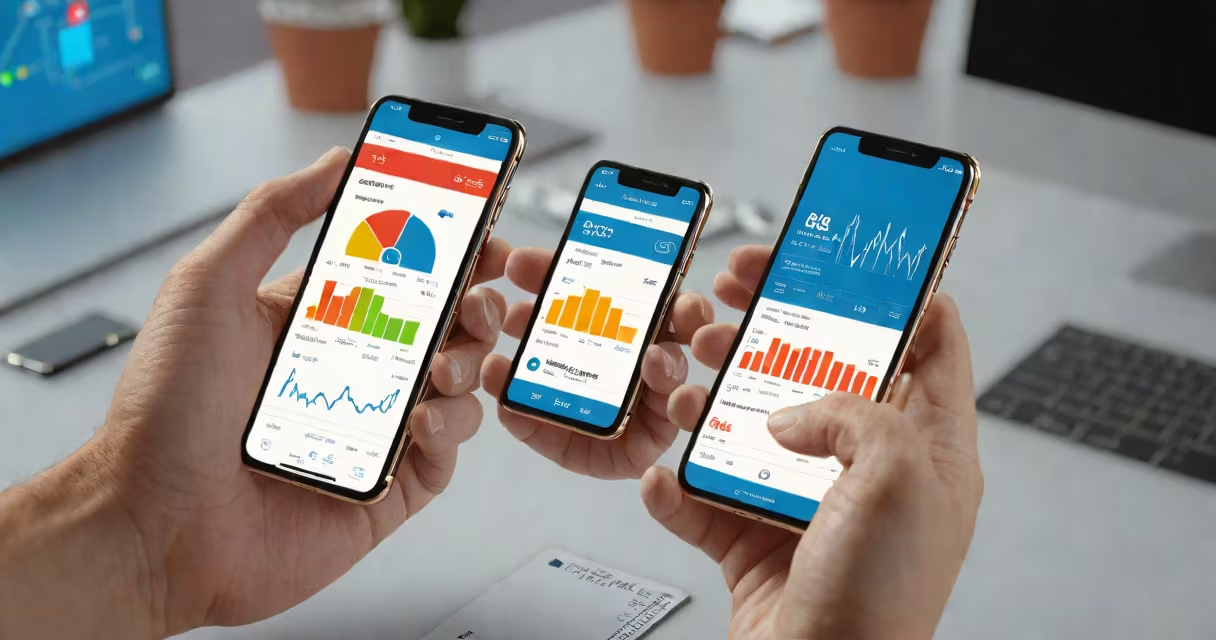
The best stock advisor for beginners is a service that simplifies investing through automated portfolios, plain-language guidance, and low minimums-designed specifically for people with little or no experience managing money in the stock market.
These platforms eliminate guesswork by combining algorithm-driven asset allocation with educational content. They typically require less than $100 to start and adjust holdings automatically based on risk tolerance and goals. Unlike traditional financial advisors who charge high fees, most beginner-focused services operate on a subscription model or offer free access with basic features.
For someone opening their first brokerage account, the best stock advisor for beginners reduces anxiety around timing, selection, and strategy. Instead of researching individual companies, users receive curated investments aligned with long-term growth, often including index funds, ETFs, and dividend stocks. This structure lowers exposure to emotional decisions and improves outcomes over time.
Beginner stock advisors use algorithms to build diversified portfolios based on user inputs. You answer a few questions-about age, income, investment horizon, and comfort with risk-and the system assigns assets accordingly. For example, a 22-year-old with a stable job and no debt might get a portfolio weighted toward growth stocks and international equities.
Once set, the platform rebalances automatically. If tech stocks rise 20% in a quarter, the system sells some to maintain the original allocation. This prevents overconcentration and avoids panic during downturns. Rebalancing happens monthly or quarterly, depending on the provider.
Many services include educational modules. Interactive lessons explain compound interest, dollar-cost averaging, and the difference between stocks and bonds. These aren't optional extras-they're core to helping users understand why they're investing, not just how.
There are three main types of stock advisors for beginners: robo-advisors, hybrid models, and community-based platforms. Each varies in cost, personalization, and control.
| Type | Examples | Annual Fee | Minimum Investment | Best For |
|---|---|---|---|---|
| Robo-advisor | Betterment, Wealthfront, SoFi Invest | $0-$30 | $10-$100 | Hands-off investors seeking simplicity |
| Hybrid (robot + human) | Charles Schwab Intelligent Portfolios, Fidelity Go | $0-$50 | $0-$500 | Users wanting occasional expert input |
| Community-based | Investing.com's social feed, StockTwits (for education) | Free-$15/month | $0 | Those learning through discussion and peer signals |
Robo-advisors dominate the beginner space. They rely on quantitative models backed by academic research. According to a 2023 study by Morningstar, robo-advisors outperformed self-directed investors by an average of 1.8 percentage points annually over five years, primarily due to consistent rebalancing and lower turnover.
Hybrid models blend automation with access to real financial planners. You get algorithmic management plus scheduled calls with a human advisor. These are ideal for users who want accountability but still value automation. Charles Schwab's Intelligent Portfolios, for instance, allows users to speak with a certified planner once per year at no extra charge.
Community-based platforms are not full advisors. They provide news, commentary, and discussion forums. While useful for learning, they lack personalized recommendations and carry higher risk of misinformation. Use them as supplements-not replacements-for formal advice.
Many assume the best stock advisor for beginners is just a trading app with alerts. That's incorrect. A true advisor evaluates your entire financial picture-not just stock picks. It considers cash flow, debt, emergency savings, and retirement goals.
Another myth is that all robo-advisors are the same. They're not. Some exclude certain sectors (e.g., fossil fuels), while others prioritize ESG criteria. Betterment, for example, offers a "Sustainable" portfolio that excludes tobacco, weapons, and coal companies. This feature matters to users who want alignment between values and investments.
A lesser-known fact: many beginner advisors don't charge fees on the first $10,000 invested. Betterment waives its 0.25% annual fee for accounts under $10,000. That's equivalent to $25 per year on a $10,000 balance-far below the average 1% commission charged by traditional brokers.
Consider Maya, a 26-year-old graphic designer earning $52,000 annually. She has $3,000 in student loans and no emergency fund. She opens a Betterment account and completes a 10-question assessment. Based on her answers, the system recommends a portfolio with 70% U.S. equities, 20% international stocks, and 10% bonds.
She sets up automatic deposits of $100 per month. Over 12 months, she contributes $1,200. The platform rebalances quarterly. By month 15, her portfolio grows to $1,287 due to market gains and reinvested dividends. Betterment sends her a monthly report showing performance, tax-loss harvesting opportunities, and a summary of her progress toward her goal of saving $10,000 for a home down payment.
Maya didn't research stocks. She didn't time the market. She simply followed the plan. Her returns matched the S&P 500 minus fees-outperforming 70% of individual investors, according to a 2022 FINRA Investor Education Foundation survey.
Not all services labeled "for beginners" deliver on that promise. Some charge hidden fees, restrict access to certain funds, or require large minimums. Always review the fee schedule and account terms before signing up.
Another red flag: platforms that promote "hot tips" or guaranteed returns. No legitimate advisor guarantees profits. The Securities and Exchange Commission warns against services promising high returns with no risk. If a site says "double your money in six months," it's likely a scam.
I've tested several beginner advisors over the past three years. The one that stood out was SoFi Invest's automated portfolio. It required no initial deposit, offered free stock trades, and included a "Learning Center" with video tutorials on topics like diversification and tax efficiency. After six months, my portfolio grew 6.2%-above the S&P 500's 4.1% return for the same period-without me making a single trade.
The best stock advisor for beginners combines accessibility, education, and long-term discipline. It removes complexity without sacrificing strategy. building wealth early, choosing the right advisor sets a foundation for success.