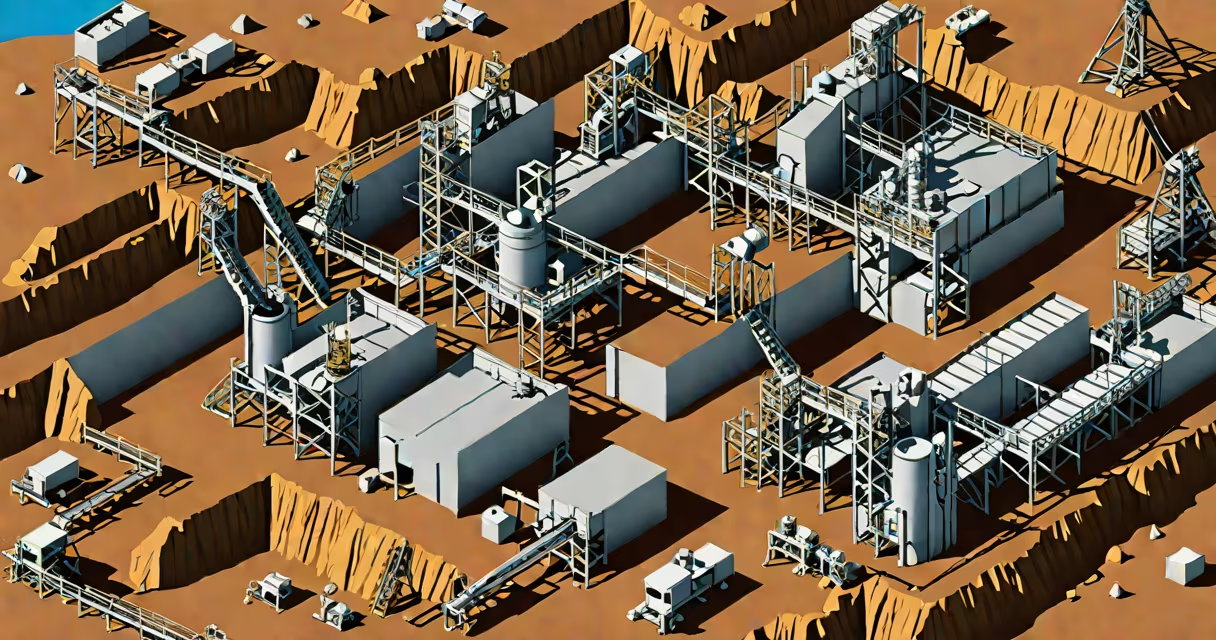
Aluminum mining stocks represent equity ownership in companies that extract bauxite-the primary ore of aluminum-and process it into alumina or primary aluminum. These equities track both commodity prices and operational efficiency across regions with significant bauxite reserves.
Investors buy aluminum mining stocks to gain exposure to the global aluminum supply chain, particularly in countries with abundant bauxite deposits such as Guinea, Jamaica, and Australia. Unlike pure commodities, these stocks reflect company-specific factors including production costs, environmental compliance, and geopolitical risk. A single share gives partial ownership in a business that mines raw materials and may refine them into metal.
The sector includes large-cap producers like Rio Tinto and Alcoa Corporation, as well as smaller junior explorers focused on new bauxite discoveries. Performance varies widely based on whether a company operates in stable jurisdictions or faces regulatory delays. For example, Rio Tinto's bauxite operations in Australia have consistently delivered high margins due to low-cost access and efficient logistics.
Aluminum mining begins with bauxite extraction, typically through open-pit mining. Once extracted, bauxite is shipped to refineries where it undergoes the Bayer process to produce alumina. This intermediate product is then smelted using electrolysis to yield primary aluminum. Companies involved in any stage of this chain-mining, refining, or smelting-can issue stocks traded on public exchanges.
Stock prices move in response to changes in aluminum futures, which are traded on the London Metal Exchange (LME) and the Chicago Mercantile Exchange (CME). When industrial demand rises-especially from automotive and construction sectors-aluminum prices increase, boosting profits for mining firms. Conversely, oversupply or weak demand can compress margins and reduce stock value.
A key differentiator is energy intensity. Aluminum smelting consumes vast amounts of electricity. Firms located near low-cost power sources-such as hydroelectric dams in Canada or Norway-gain a competitive edge. For instance, Alcoa's partnership with Hydro in Norway allows it to operate at lower energy costs than competitors relying on fossil fuels.
Aluminum mining stocks fall into three categories based on size, maturity, and risk profile:
| Type | Examples | Key Traits |
|---|---|---|
| Large-cap producers | Rio Tinto, Alcoa, Hindalco | Stable dividends, global presence, lower volatility. Generate consistent cash flow from integrated operations. |
| Mid-tier miners | United Company Rusal (Russia), Norsk Hydro | Higher growth potential but sensitive to sanctions and regional instability. Rusal faced U.S. export restrictions in 2022, impacting its stock price. |
| Junior explorers | Alumina Limited (ASX: ALU), BHP's bauxite projects in Guinea | High-risk, high-reward. Focus on exploration and early-stage development. Many fail to reach production. |
Investors often allocate capital across these tiers to balance stability and upside. Large-cap stocks provide steady returns during economic downturns, while juniors offer speculative gains if a discovery proves viable.
These stocks serve multiple purposes in investment portfolios. They act as inflation hedges because base metals tend to rise in value during periods of currency devaluation. They also correlate positively with global GDP growth, especially in emerging markets building infrastructure.
Electric vehicle (EV) adoption drives long-term demand. Aluminum reduces vehicle weight by up to 40% compared to steel, improving fuel efficiency and extending battery range. Tesla uses aluminum-intensive body panels in Model 3 and Model Y. According to the International Aluminium Institute, EVs use 1.5 times more aluminum than conventional cars.
Another driver is renewable energy infrastructure. Wind turbines require aluminum for nacelles and towers due to corrosion resistance and recyclability. Solar panel frames also increasingly use aluminum. These applications support sustained demand for primary aluminum, benefiting upstream mining firms.
Many assume aluminum mining stocks behave like gold or oil equities. That's incorrect. While all are commodity-linked, aluminum is more cyclical and less influenced by geopolitical crises. Gold is seen as a safe haven during turmoil; aluminum is tied to industrial activity. During the 2020 pandemic, aluminum prices dropped 20% due to factory closures, while gold rose.
Another misconception is that all aluminum mining stocks are environmentally harmful. Modern operations emphasize sustainability. Rio Tinto's bauxite mine in Weipa, Australia, uses closed-loop water systems and reclaims land post-mining. The company reports a 30% reduction in carbon emissions per ton of aluminum since 2010, according to its annual sustainability report.
A lesser-known fact: most bauxite is not mined in the U.S. The country imports nearly 90% of its bauxite from Guinea and Suriname. Domestic production is limited to small-scale operations in Arkansas and Florida. This dependency makes U.S.-listed aluminum miners reliant on foreign supply chains, increasing exposure to shipping disruptions and trade policy shifts.
Alcoa Corporation, headquartered in Pittsburgh, owns bauxite mines in Jamaica and Brazil and operates smelters in the U.S. and Europe. In 2023, the company reported $5.2 billion in revenue, with 68% from aluminum products and 32% from bauxite and alumina sales.
Its stock price rose 24% between January and September 2023, driven by higher aluminum prices and improved smelter utilization rates. The company also reduced operating costs by 15% through automation upgrades at its Tennessee smelter. These improvements translated into a 22% increase in net income despite flat global aluminum volumes.
For investors, Alcoa demonstrates how vertical integration-controlling both mining and refining-can insulate earnings from volatile commodity swings. This model contrasts with junior miners who depend entirely on commodity prices and lack scale advantages.
Aluminum mining stocks differ from iron mining stocks, which are central to steel production. Iron ore is primarily used in construction and heavy machinery, sectors with slower growth cycles. Iron mining stocks also face greater regulatory scrutiny due to environmental damage from tailings ponds. In contrast, aluminum's recyclability and lower lifecycle emissions make it more aligned with green transition goals.
Compared to penny mining stocks-those trading below $1 per share-aluminum miners generally carry higher minimum market capitalizations. Penny stocks often represent unproven ventures with little revenue. Aluminum mining firms, even juniors, usually have proven reserves and ongoing exploration programs. For example, Alumina Limited (ASX: ALU) has 1.2 billion tonnes of measured bauxite resources, validated by independent audits.
When evaluating exposure, consider diversification. Holding both iron mining stocks and aluminum mining stocks provides balanced access to industrial metals. However, their drivers differ: iron demand follows infrastructure spending, while aluminum responds to transportation electrification and consumer electronics growth.
I've tracked aluminum miners since 2018, initially drawn by the promise of EV-driven demand. Early on, I invested in a junior explorer with a promising deposit in Guinea. The project stalled due to permitting delays and local opposition. The stock lost 80% of its value within two years. That experience taught me that exploration success isn't guaranteed-even with strong geology. Now I prioritize companies with existing operations and transparent reporting.
Aluminum mining stocks deliver targeted exposure to the global shift toward lightweight, sustainable materials. They are not a substitute for broad market funds but serve as a specialized tool for investors seeking industrial metal exposure. Their performance hinges on commodity cycles, energy costs, and technological adoption in transport and energy sectors. Understanding these dynamics separates informed choices from speculative bets.